Why Visit Lake Titisee?
Lake Titisee is where the Black Forest loosens its tie. After days of hiking dark fir forests and climbing misty ridges, you suddenly step out onto a glassy lake ringed by hills, half-timbered guesthouses, kids squealing on pedal boats, and the smell of grilled trout drifting across the water. It’s not wild in the Alpine sense, nor is it a polished resort in the Swiss style. It’s something in between: soft-edged, deeply German, and increasingly international, yet stubbornly local at its core.
I’ve been coming to Titisee for more than a decade—first as a broke student taking regional trains, then as a guide leading small hiking groups, and more recently just for myself, slipping down from Freiburg on quiet weekdays to write, swim, or sit with a coffee and pretend I’ll only eat half the slice of Schwarzwälder Kirschtorte in front of me.
In 2026, Lake Titisee is still one of the best places to visit in the Black Forest if you’re after a compact, easy-to-navigate base with plenty of things to do in Lake Titisee in any season: lakeside walks, forest trails, family-friendly attractions, romantic boat rides, and hearty local food in Lake Titisee that tastes better after a long hike or a cold swim.
This long-form travel guide for Lake Titisee is written the way I actually use the lake: circling the shore, hopping on boats, ducking into coves, and chasing the kind of quiet corners that never make brochure covers. It’s a story of 12+ distinct spots around the lake—villages, coves, viewpoints, trails—and how to weave them into a 2 day itinerary for Lake Titisee, a 3 day itinerary for Lake Titisee, or even a 4 day itinerary for Lake Titisee, depending on how deeply you want to sink into the Black Forest.
Table of Contents
- Why Visit Lake Titisee?
- Lake Titisee at a Glance
- Suggested 2–4 Day Itineraries
- 12 Key Lakeside Villages, Coves, Viewpoints & Trails
- Lakeside Dining & Local Food in Lake Titisee
- Evenings at Lake Titisee
- Day Trips & Nearby Attractions
- Cultural Etiquette & Local Customs
- Practical Logistics & Travel Advice for Lake Titisee (2026–2027)
- Events & What’s New in 2026–2027
- Summary & Final Recommendations
Lake Titisee at a Glance
Location: Southern Black Forest (Schwarzwald), Baden-Württemberg, Germany, roughly 30–40 minutes from Freiburg by regional train.
Elevation: ~845 m above sea level – high enough that evenings stay cool in summer and the lake often freezes in a good winter.
Character of the lake: Long and slender, aligned east–west. The north shore is more built-up (Titisee village, promenades, family beaches), while the south shore stays quieter and more forested, with a scattering of coves and walking paths.
Vibe: A mix of family resort, nature escape, and low-key spa town. On sunny Saturdays it can feel busy; on misty November weekdays you may have entire stretches of shore to yourself.
Best base: The village of Titisee-Neustadt (usually just called “Titisee” for the lakeside part) is the obvious hub, but I’ll show you some quieter bases around the south and eastern shores if you prefer mornings with more birds than people.
Recommended 2–4 Day Itineraries Around Lake Titisee
All three itineraries below are built on my own repeated circuits around the lake—sometimes as a guide, sometimes alone, sometimes with friends and kids in tow. You can compress, stretch, or swap days, but I’ll give you a clear sense of rhythm: busy mornings, lazy afternoons, and where to find those hidden gems in Lake Titisee that most day-trippers overlook.
2 Days in Lake Titisee: Classic Highlights & Gentle Exploration
If you only have 2 days in Lake Titisee, focus on the essentials: the lakeside promenade, a boat ride, one or two forest walks, and a taste of local cuisine. This is the itinerary I give visiting friends when they’ve squeezed Titisee between Freiburg and the Rhine falls, and it works well for couples, families, and solo travellers alike.
Day 1: First Glimpse of the Lake & North Shore Promenade
I usually arrive on the morning train from Freiburg. As you step out of Titisee station in 2026, you’ll notice the modest but well-organised interchange: buses fanning out to Feldberg, Hinterzarten, and smaller Black Forest villages. Ignore them for now—walk straight ahead, following the signs for “See” (lake). Within five minutes, you’ll smell the water, sausages grilling, and sugar from the waffle stands.
The moment the lake opens up in front of you never gets old. On my last visit, it was one of those crystalline October mornings: the far shore a perfect mirror, a few ducks leaving V-shaped ripples, and somewhere a cowbell clinking faintly in the hills. This is the iconic view that defines many must-see attractions in Lake Titisee—and yes, everyone takes the same first photo. Take yours, then step aside and breathe.
Morning: Stroll the Seepromenade & Orient Yourself
Start with an easy loop along the Seepromenade, the main lakeside promenade hugging the northern shore. It’s touristy—no point pretending otherwise—but it’s also the best place to get your bearings and feel the lake’s energy.
- Walk east first, past the main boat piers, to the quieter end near the small marina. You get postcard views back towards the village.
- Stop at one of the information boards that explain the lake’s glacial origins and local wildlife. They’re newly refreshed in 2025/26, with English summaries that are finally readable.
- Dip your hand in the water. In late June last year, I arrived later than planned, and by 11:00 the surface was already warm enough that families were wading in while grandparents guarded towels and beer.
Late Morning: Boat Trip – The Easiest Way to Understand the Lake
For first-timers, I always recommend a round-trip boat tour before anything else. It’s one of the classic things to do in Lake Titisee and gives you a gentle overview of the shorelines, coves, and trails you’ll explore later.
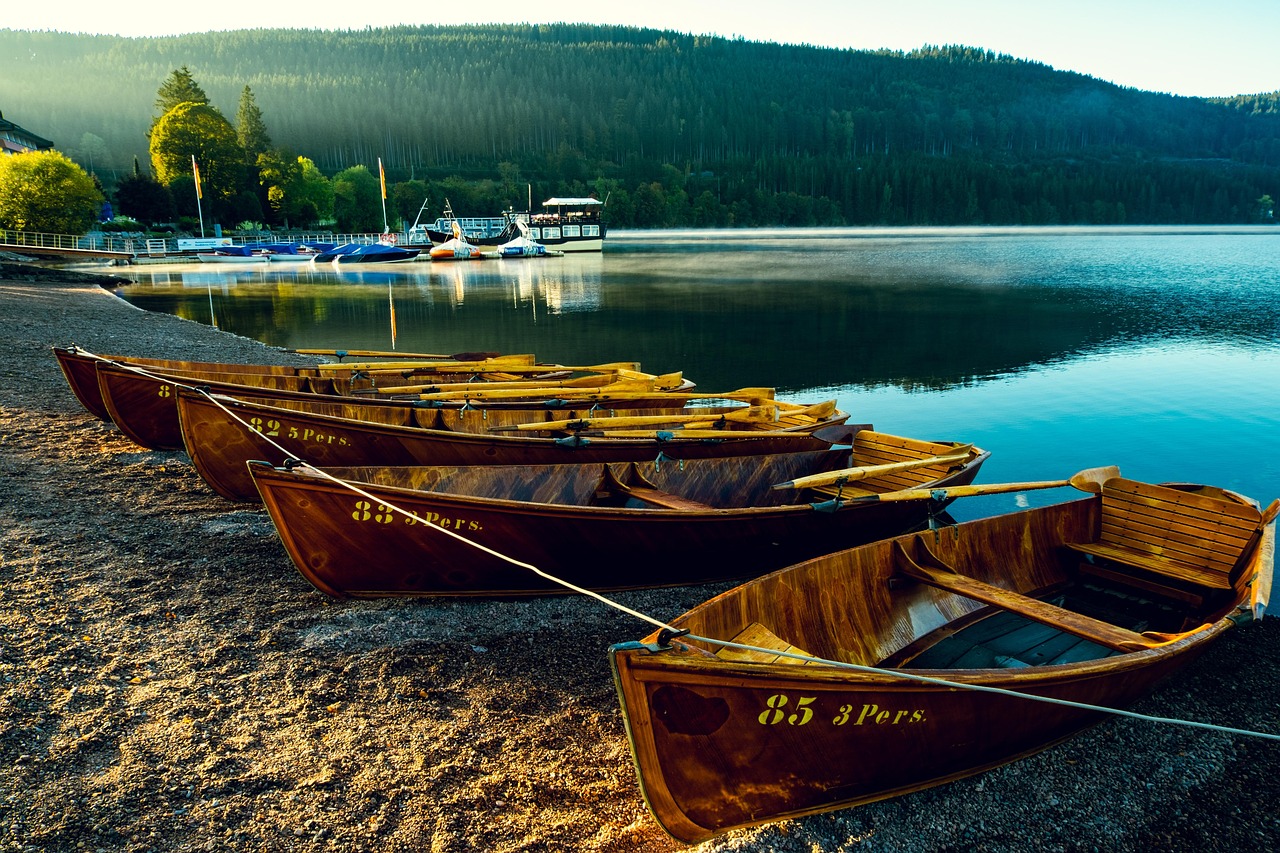
The main departure point is directly in front of the promenade, where electric sightseeing boats and smaller rental pedal boats cluster around a wooden pier. Check the day’s schedule posted at the pier—typically, from May to October, boats leave roughly every 30–45 minutes in good weather.
- Duration: About 30–35 minutes.
- Language: German commentary comes standard; English pamphlets are usually available. I like to sit on the right side for the north-shore views as the boat heads east.
- Tip: If you’re here with kids, the big electric boats are easier. Couples often prefer a pedal boat or rowboat for a more romantic drift—you can find your own quiet angle on the lake, especially if you head towards the more secluded south shore.
On a foggy March morning two years ago, I took the earliest boat and we slid through milky mist; the far shore was invisible, and everyone whispered, as if a loud voice might disturb something. On a bright July afternoon, the same route was filled with laughter and selfie sticks. That’s Titisee: mood swings dictated entirely by weather.
Lunch: Lakeside Terrace with a View
This is your first chance to sample local food in Lake Titisee. The north shore is lined with restaurants; some are tourist mills, but a few are worth sitting down for.
- Order: “Schwarzwälder Forelle” (Black Forest trout), ideally grilled or pan-fried, with potatoes and a light salad. This is the lake’s culinary calling card.
- Don’t skip dessert: A proper slice of Schwarzwälder Kirschtorte (Black Forest gateau). Yes, it’s touristy; no, you shouldn’t pretend you’re above it.
On busy summer weekends, I often duck one row back from the promenade for lunch. You lose a little of the lake view but gain calmer service and better prices—one of my favourite budget tricks when waterfront views command a premium.
Afternoon: North Shore Walking Path & Family-Friendly Swimming
Spend your first afternoon getting to know the north shore, the most “resort-like” part of the lake but still charming if you know where to look.
From the main promenade, follow the well-marked Uferweg (lake shore path) westwards. The paved path quickly softens into a more natural track, with short side paths leading to:
- Public swimming spots with shallow water—ideal for children. Bring water shoes if you have sensitive feet; the lakebed is pebbly.
- Small piers where locals sunbathe. On one September visit, I spent an hour scribbling notes while older residents played cards under a tree, every now and then breaking off to shout a greeting to passing walkers.
The north shore is best for family beaches and easy access. If you only swim once during your stay, this is the most straightforward place: changing cabins, lifeguards in peak season, and kiosks selling ice cream and drinks.
Late Afternoon: Titisee Village & Cuckoo Clocks
Loop back into Titisee village and wander its short main drag. Yes, you’ll see more cuckoo clocks than you thought existed in the world. Some shops are pure kitsch; others are family-run and serious about craftsmanship.
- Look for: Clock shops where the workshop is visible behind the showroom. I’ve spent happy half-hours watching a craftsman adjust tiny weights and gears.
- Tip: If you’re buying a clock, ask about export and power compatibility; good shops are used to international customers and will sort shipping for you.
Evening: Sunset & Quiet North-Shore Corners
Sunset on the north shore is surprisingly peaceful once the day-trippers leave. I like to walk back to the west end of the promenade, where the view opens up directly down the axis of the lake.
- Romantic option: Pack a bottle of local wine (a light Baden Spätburgunder works beautifully) and sit on one of the benches just past the last big hotel terrace.
- Family-friendly option: Grab ice creams and let kids play in the small lakeside playground while the sky softens and the boats return to their moorings.
By 21:00 on most summer nights, the lake is glass again, a few last kayakers sliding home. It’s one of my favourite cultural experiences in Lake Titisee: watching the Black Forest settle down after the day’s bustle, church bells marking the hour, and the smell of wood smoke drifting over from barbecue spots along the shore.
Day 2: South Shore, Forest Trails & Panoramic Viewpoints
Your second day dives deeper into the quieter, more natural parts of Lake Titisee, especially the south shore, which I personally prefer for walking and reflective moments. You’ll also touch one of the area’s best viewpoints.
Morning: South-Shore Walk – The Quieter Side
From Titisee village, head east along the north shore first, then cross towards the south shore using signed forest paths. Depending on your exact route, it’s a 30–45 minute walk to feel like you’ve left the resort zone behind.
Here, the shore path is narrower, shaded by fir and beech. Birdsong replaces chatter. I remember a chilly April morning where I met only two other people in two hours: an elderly man with Nordic walking poles and a young couple with a sleepy baby in a carrier.
- Best for: Quiet retreats, couples, photography, longer walks with older kids who enjoy nature.
- Swimming: Possible but less managed—no lifeguards, fewer facilities. Water feels wilder here.
Midday: Picnic Cove on the South Shore
One of my favourite hidden gems in Lake Titisee is a small grassy clearing on the south shore—no signs, just a worn side path leading to a cluster of rocks and a perfect sitting log. I won’t drop a GPS pin here; finding your own version is half the fun.
Before you set out, pick up supplies in Titisee: fresh rolls, Black Forest ham, local cheese, fruit, and maybe a slice of Bienenstich (honey-almond cake) from a bakery. Spread out your picnic, watch light shift on the water, and understand why locals keep returning even when they live just an hour away.
Afternoon: Hochfirst Viewpoint – Big Views over Lake Titisee
For a panoramic view that makes sense of the entire valley, head up to Hochfirst, one of the best viewpoints around Lake Titisee. The summit is crowned by a viewing tower and offers sweeping vistas over the lake, Feldberg, and the surrounding Black Forest ridges.
- Access: You can hike up from the lake (longer, steeper) or take a bus/taxi to a higher starting point near Saig and walk a shorter route. If you’re short on time on a 2-day itinerary, I recommend the easier approach.
- Tip: In late afternoon, the light often glows golden over the water. I’ve stood there in October with the lake a shard of silver and the forests blazing rust and gold.
Evening: Back to the Lake – A Last Stroll
End your second day with a gentle return to the lake. If your legs still have energy, walk part of the shore again; if not, sink into a lakeside bar stool for your last evening. I like to linger until the lamps cast soft halos on the water and the last murmurs from terraces fade.
If you’re continuing deeper into the Black Forest, this is your transition moment. If you’re heading back to cities, savour the final quiet—Titisee has a way of resetting your internal pace, and you’ll miss it in traffic.
3 Days in Lake Titisee: Deeper Forest, More Water
With 3 days in Lake Titisee, you can push beyond the immediate shore: hike forest loops, explore nearby valleys, and enjoy slower mornings. This is my favourite rhythm for couples and slow-travel families.
Day 1: Classic North Shore & Village (as above)
Follow the Day 1 plan from the 2-day itinerary: promenade, boat trip, first swim, and village wandering. Sleep early; tomorrow, the forest calls.
Day 2: Forest Trails & Hidden Bays
On your second day of a 3-day itinerary, leave the lake behind for a few hours. Several well-marked trails loop out from Titisee into classic Black Forest landscapes: tall spruce, occasional meadows, farmhouses with heavy roofs.
- Family-friendly option: Short loop paths signposted from Titisee with minimal elevation gain and benches along the way.
- Adventurous option: Longer circuits towards Hinterzarten or Bärental, with steeper climbs and broader views.
Pack a light lunch; you’ll find benches and viewpoints. On an August weekday last year, I hiked one of these loops and met only a handful of people, mostly local retirees with walking sticks and time.
Afternoon: Hidden Bays & Quiet Piers
Drop back down to the lake in mid-afternoon and aim for one of the less-visited bays—small indentations where the shore curves and trees lean over the water. These make perfect nap spots or reading corners.
Day 3: Viewpoints, South Shore & Spa Time
On your third day, combine one more viewpoint (Hochfirst or a ridge path), a leisurely south-shore walk, and some proper spa or wellness time—Titisee has embraced its role as a low-key spa destination.
- Morning: Hike or bus-assisted walk to Hochfirst or another hilltop viewpoint.
- Afternoon: Book a spa slot (local hotels offer day passes), then drift between saunas, pools, and relaxation rooms. I often end my working weeks this way, laptop finally closed, watching clouds move across the lake.
- Evening: Slow lakeside dinner, maybe finally ordering that second dessert you promised you’d skip.
4 Days in Lake Titisee: Full Immersion
With 4 days in Lake Titisee, you can settle in like a temporary local: repeat your favourite spots at different times of day, explore side valleys, and take a proper day trip.
Day 1 & 2: As per the 2-Day Itinerary
Use the 2-day itinerary for your first two days: you’ll cover the core must-see attractions in Lake Titisee.
Day 3: Day Trip – Feldberg or Hinterzarten
On your third day, take a bus or train to one of the nearby highlights (more in the day-trip section below):
- Feldberg: Highest peak in the Black Forest, with alpine-style views, ski infrastructure, and summer hiking.
- Hinterzarten: Pretty village with meadows, ski jumps, and gentle trails.
Return to Lake Titisee in late afternoon for a swim or a lazy drink by the water. It’s always grounding to come back to the lake after bigger vistas.
Day 4: Personal Favourites & “Do-Over” Day
Your fourth day is about repetition and deepening, not newness. Revisit a cove you loved, or walk the entire shore in one go, or rent a kayak and explore with more intention.
On one 4-day stay, I spent the final morning simply circling the lake slowly, stopping whenever a bench called my name. In the afternoon, I sat at the same café table as on day one, ordered the same cake, and marvelled at how much more the scene meant now that I knew the folds and coves behind it.
12 Key Lakeside Villages, Coves, Viewpoints & Trails Around Lake Titisee
Lake Titisee may be physically small, but its shore is varied. As you move clockwise from the main village, the lake’s personality shifts: from buzzing promenade to hushed forest, from family beaches to meditative viewpoints. Below are the 12 (plus a couple of bonus) spots I return to year after year, with history, atmosphere, and personal tips.
1. Titisee Village & Seepromenade: The Beating Heart
Historically, Titisee grew from a small settlement of farmers and foresters into a lakeside resort in the late 19th and early 20th centuries, when train lines opened up the Black Forest to urban visitors. Post-war, it rebuilt as a classic German holiday village, with pensions, guesthouses, and a focus on family-friendly holidays.
These days, the Seepromenade is where most visitors spend the bulk of their time: strolling, eating cake, renting boats, and buying souvenirs.
- Best for: First-time orientation, people-watching, boat tours, shopping, easy access to the lake.
- Personal anecdote: During a heatwave in July a few years ago, I watched a sudden afternoon thunderstorm blow in. Within five minutes, the promenade emptied, umbrellas bloomed, and the lake turned charcoal grey—only to return to turquoise an hour later as kids rushed back into the water. Bring a light rain jacket; the Black Forest loves dramatic mood swings.
- Food tip: Look for restaurants offering “Forelle Müllerin Art” (trout meunière-style) and “Brägele” (pan-fried potatoes). Pair with a local wheat beer.
2. North Shore Family Beaches & Piers
The north shore west of Titisee village is the most developed for swimming and family fun. Several small bays offer shallow entry, grassy lawns, and easy access to snacks and toilets.
- Best for: Families with small children, casual swimmers, sunbathers, multi-generational groups.
- My routine: On hot August days, I often work the morning in a café, then walk 15 minutes along the shore to one of these beaches, swim, read in the shade, and only reluctantly head back to the laptop.
- History note: Locals still tell stories of the exceptionally cold summer of ’76 when the lake barely warmed, and hardy grandmothers swam daily anyway. These days, with climate change, the lake warms up earlier and stays swimmable longer into autumn.
3. West Bay: Evening Light & Calm Water
The western end of the lake, where the shore curves and the hills rise more gently, is my favourite spot for evening walks. The light lingers here long after the sun has dipped behind the ridges.
- Best for: Sunset strolls, low-key photography, reflective moods.
- Couples’ tip: There are a few unassuming benches with world-class views. Bring a light blanket in shoulder season; evenings can get crisp at this altitude.
- Personal memory: One November, I walked here alone under a soft drizzle, the lake a sheet of pewter. A single fisherman stood at the end of a pier, motionless. It felt like the whole valley was holding its breath between seasons.
4. South Shore Forest Path: Titisee’s Quiet Soul
Once you cross to the south shore, the energy changes. Fewer cafés, more trees; fewer towels, more moss. A narrow path threads between forest and water, sometimes ducking inland, sometimes brushing right up against the shore.
- Best for: Quiet walks, birdwatching, introverts, nature photography.
- Trail conditions: Mostly easy but with occasional roots and small up-and-down sections. Good walking shoes recommended.
- Wildlife: Expect to hear more than you see—woodpeckers, songbirds, and sometimes the rustle of deer further uphill. I’ve never seen anything dangerous; this is gentle forest country.
5. Secluded Coves of the Southeast Shore
The southeastern arc of Titisee hides several tiny coves reachable by short side paths. They’re not marked as official beaches, which keeps them calmer.
- Best for: Semi-wild swimming, reading, napping, quiet conversations.
- My advice: Arrive before late afternoon; locals also know these spots and drift down after work on warm days.
- Leave no trace: There are no bins here. Pack all rubbish out, and resist the urge to build fire rings—the forest floor is fragile and summer fire risk is real.
6. Hochfirst Viewpoint & Tower
Hochfirst (1,190 m) has long been a classic viewpoint above Titisee, popular since the days when early tourists arrived in horse-drawn carriages. The modern wooden observation tower gives you a 360° panorama over Lake Titisee, the Feldberg massif, and on clear days even the distant Alps.
- Best for: Hikers, photographers, anyone wanting a sense of the lake in its wider landscape.
- Personal note: I’ve climbed the tower in every season. My favourite? Late October, when fog sits in the valleys like spilled milk and the sun lights up copper forests above.
- Practical tip: Bring a windproof layer—even on warm days, the tower can be breezy.
7. Eastern Bay & Boat-Tour Turnaround
Most sightseeing boats swing out towards the eastern end of the lake before looping back. From the water, this bay feels wider, more open, with the village shrinking behind you and forested slopes wrapping around.
- Best for: Feeling the expanse of the lake, watching sunlight play across waves, boat-based photos.
- Memory: One late May afternoon, a sudden breeze roughened the water just as we entered the bay; the captain cut the engine for a moment, letting us drift. The silence—broken only by wind in the pines—was unexpectedly profound for such a “touristy” experience.
8. Small Marina & Local Boaters’ Corner
East of the main promenade lies a small marina, home to private boats and local sailing clubs. It’s less polished than big-resort marinas and all the more charming for it.
- Best for: Quiet morning walks, watching local life, photography of boats and reflections.
- Local life: On Sunday mornings, you’ll often see small regattas or sailing lessons. It’s a reminder that Titisee is not just a backdrop for your holiday; it’s a real community.
9. Hinterzarten–Titisee Forest Trails
The forested ridge between Hinterzarten and Titisee is laced with trails that gently rise and fall, offering glimpses of the lake and the ski jumps in Hinterzarten.
- Best for: Half-day hikes, families with active kids, trail runners.
- History: These paths have been used by locals for centuries, first as practical routes between farms and later as “Kurwege” (health walks) for spa guests.
- Personal ritual: When I need to clear my head, I take the early train to Hinterzarten, hike across the forest, and drop down to Titisee for lunch by the lake.
10. Spa & Wellness Hotels Belt
Clustered mostly along the north and northeast shores are several spa hotels that have shaped Titisee’s reputation as a place to rest and reset. Even if you’re not staying in one, many offer day passes.
- Best for: Couples, wellness-focused travellers, off-season escapes.
- What to expect: Indoor and outdoor pools, saunas (often nude in German tradition—see the etiquette section), relaxation rooms with lake views.
- My tip: Book a late-afternoon slot and watch dusk slip over the lake from a warm pool. It’s an indulgence that doesn’t feel excessive when you’re also hiking and swimming between sessions.
11. Winter Lakeshore & Frozen Scenes
In good winters (which are a bit less predictable now, but still possible), Lake Titisee partially or fully freezes, turning from swimming hole into winter stage. Snow lines the shore; ice crunches underfoot; ski tracks cross the hillsides above.
- Best for: Winter walkers, photographers, families combining skiing and lakeside strolls.
- Safety note: Only trust the ice if local authorities explicitly declare it safe. Do not venture onto the ice independently—warm winters have made thickness unpredictable.
- Atmosphere: On a still January afternoon, with snow-muted sound and breath visible in the air, the lake feels sacred, even if you don’t use that word often.
12. Dusk on the Lake – The Blue Hour Circuit
If I had to choose one time to walk the shore, it would be the blue hour—that sliver of time after sunset but before full dark. The sky deepens to cobalt; lights from the village and hotels float on the water like scattered coins.
- Best for: Romantic walks, gentle reflection, unwinding after active days.
- My habit: I like to walk partway along the shore, then turn back when the first real chill creeps in. It’s the perfect appetite-builder before dinner.
Lakeside Dining at Lake Titisee
You don’t come to Titisee for cutting-edge gastronomy; you come for mountain-pasture comfort food, freshwater fish, and cakes that would make your grandmother proud. That said, standards have been rising quietly—2026 sees several kitchens experimenting with lighter, seasonal takes on classics.
Where to Eat on the Water
The north shore hosts most of the terraced restaurants over the water. Expect menus in German and English, often French as well.
- Freshwater fish dishes: Trout (forelle) is the star. Order it “blau” (poached) if you like delicate flavours, or “gegrillt” (grilled) if you want crispy skin and smokier notes.
- Alpine-style plates: Käsespätzle (cheesy noodles), game stews in autumn, hearty soups with local bread. Portions are generous; don’t over-order at lunch if you plan to swim after.
- Cakes & coffee: Nearly every café will offer Schwarzwälder Kirschtorte and seasonal fruit tarts. Locals tend to take cake seriously around 15:00–16:00.
Where Locals Eat Off-Pier
Step one or two streets back from the lake and you’ll find where locals eat off-pier: simpler Gasthäuser with fair prices and fewer frills.
- What to look for: Daily chalkboard menus, a mix of families and older couples, no mega photo menu.
- Budget tip: The lunchtime “Tagesgericht” (daily special) is often under 15 € and filling.
- My favourite order: A plate of Bratwurst with sauerkraut and Brägele, plus a small beer. Humble, perfect after a long hike.
Lakefront vs. Village vs. Outskirts
- Lakefront: Best views, highest prices, more international offerings. Great for a special dinner.
- Village streets: Better value, more local clientele, still easy to reach on foot.
- Further out: Country inns in surrounding hills; you’ll need a car, bike, or bus. Rewarded with calmer atmospheres and more seasonal menus.
Evenings at Lake Titisee
After the day-trip buses pull out, a hush settles over Titisee. Even in high summer, evenings feel gentler than afternoons—more couples, fewer inflatable flamingos.
Sunset Spots & Dusk Boat Trips
- North-shore promenade: Classic sunset view down the lake, easy access to drinks and snacks.
- West bay: Softer light, fewer people, more benches. My pick for a reflective end to the day.
- Dusk boat trips: In peak season, some operators run slightly later cruises; check boards at the pier. The lake at dusk from the water feels wider, deeper, more mysterious.
Lakeside Bars & Low-Key Nightlife
Titisee is not a party town. You’ll find lakeside bars and hotel lounges, but no thumping clubs. Think wine, good conversations, soft music, and occasional live bands in summer.
Festivals & Village Events
In summer, look for small-scale music evenings, folk events, or fisherman-themed days along the shore. These aren’t massive festivals but give a glimpse of local culture: brass bands, traditional dress, grilled fish stands, beer under the trees.
Extras: Day Trips & Nearby Attractions from Lake Titisee
One of the strengths of using Titisee as a base is how many classic Black Forest sights sit within an easy radius.
Feldberg – The Black Forest’s Roof
How to get there: Regular buses from Titisee station (around 30–40 minutes). In winter, ski buses are frequent; in summer, hikers share them with mountain bikers.
What to do: Hiking in summer, skiing and snowboarding in winter, panoramic views all year. Cafés and mountain huts offer hearty food.
Hinterzarten
How to get there: 6–8 minutes by regional train or a pleasant forest walk.
Highlights: Pretty village, meadows, famous ski jumps, gentle trails suitable for families and those wanting a quieter village atmosphere.
Freiburg im Breisgau
How to get there: Frequent regional trains, about 30–40 minutes.
Why go: Cathedral, medieval lanes, lively market, and some of the best food and wine in the region. A perfect contrast to the lake’s calm.
Cultural Etiquette & Local Customs
Germany is straightforward, but the Black Forest has a few quirks worth knowing to smooth your stay and deepen your cultural experiences in Lake Titisee.
Greetings & Politeness
- Say “Guten Tag” when entering small shops or restaurants; a friendly nod goes a long way.
- On forest trails, locals often greet with a simple “Hallo” or “Grüß Gott.” Returning the greeting is appreciated.
In Restaurants & Cafés
- Service is generally relaxed; don’t expect U.S.-style hovering. Signal for the bill with eye contact and a small hand gesture, or say “Zahlen bitte.”
- Tipping: 5–10% is common. Round up the total and state the final amount you’d like to pay.
Sauna & Spa Culture
- Many saunas in spa hotels are textile-free (no swimsuits). This is normal in Germany. A towel to sit on is obligatory.
- If you’re uncomfortable, choose “family” or “textile” areas where swimsuits are worn.
Nature & Noise
- Germans value quiet, especially in nature. Keep music low on trails and at secluded coves.
- Respect quiet hours in accommodations, usually from 22:00 onward.
Practical Logistics & Travel Advice for Lake Titisee (2026–2027)
Getting There & Around
- By train: Direct regional trains from Freiburg; connections from Basel, Karlsruhe, and beyond.
- By car: Good roads but parking near the lake can be tight on sunny weekends. Paid lots are clearly signposted.
- Local transport: Buses radiate from Titisee station to Feldberg, Hinterzarten, and smaller villages. Many hotels provide a “KONUS” guest card for free regional transport—ask at check-in.
- Boats: Sightseeing tours and rental boats operate mainly from April/May to October, with reduced schedules in shoulder months. Boats on the lake are generally electric or human-powered; motorboats are restricted to protect water quality and tranquillity.
Swimming & Seasons
- Swimming temperature window: Typically late June to early September for comfortable swims. Hardy locals start earlier and continue later.
- Freeze/thaw: In cold winters, the lake may freeze from late December or January; thaw comes between February and March, but varies widely.
- Altitude considerations: At ~845 m, evenings can be cool even in summer. Bring layers.
Where to Stay
- Lakefront: Best views, highest prices, unbeatable convenience. Great for short stays.
- Village backstreets: Better value, walkable to the lake in 5–10 minutes.
- Nearby towns: Staying in Hinterzarten or smaller hamlets often saves money and offers more peace; the lake is a short train/bus ride away.
Money-Saving Tips
- Picnic at least one meal a day—local bakeries and supermarkets make it easy and delicious.
- Use the KONUS card if your accommodation provides it; free regional transport adds up.
- Swim at public areas rather than private hotel beaches; lake access itself is free.
SIM Cards & Connectivity
- German prepaid SIMs (e.g., from Telekom, Vodafone, O2) are available in larger towns like Freiburg; coverage around Titisee is generally good.
- Most hotels, cafés, and restaurants around the lake now offer free Wi-Fi, though speeds can dip during peak hours.
Driving, Licenses & Visas
- Foreign drivers’ licenses: Most non-EU licenses are accepted for short stays; an International Driving Permit is recommended if your license is not in Latin script.
- Visas: Lake Titisee is in Germany’s Schengen area. Check current Schengen visa requirements for your nationality; many travellers can enter visa-free for up to 90 days.
Water & Mountain Safety Basics
- Only swim where you’re comfortable with depth and temperature; the lake can feel very cold early and late in the season.
- Watch children carefully—shorelines can slope more steeply than they look.
- On hikes, carry water, a light jacket, and check weather; thunderstorms can build quickly on warm afternoons.
Events & What’s New in 2026–2027
While Titisee isn’t a major festival hub, a few recurring events and trends shape the 2026–2027 travel scene:
- Summer lakeside concerts (2026–2027): Small open-air performances on or near the promenade, mostly on weekends in July and August.
- Sporting events: Regional running and triathlon events occasionally use the lake and surrounding trails; check local listings if you’d like to participate or avoid crowds.
- Sustainability upgrades: Continued transition to more electric boats and improved recycling facilities along the shore, making eco-conscious travel easier.
Summary & Final Recommendations
Lake Titisee isn’t the biggest lake in Europe, nor the most dramatic, but it’s one of the most human-scale. In a few days, you can learn its moods: the bustle of the promenade, the hush of the south shore, the long views from Hochfirst, the mirror-calm of early mornings and blue-hour evenings.
If you’re planning a 2 day itinerary for Lake Titisee, the north shore, a boat tour, and a taste of the south-shore paths will give you a satisfying snapshot. With 3 days in Lake Titisee, you can add forest loops, spa time, and quieter coves. And with 4 days in Lake Titisee, you can truly settle in—folding in day trips, repeating favourite spots, and living to the rhythm of the lake rather than your calendar.
Best seasons:
- Late spring (May–June): Fresh greens, cooler but pleasant temperatures, fewer crowds.
- Summer (July–August): Warm water, full services, lively atmosphere—great for families, but busier.
- Autumn (September–October): My personal favourite: golden forests, still-suitable swimming early on, and calmer shores.
- Winter (Dec–Feb): For those combining snow sports and quiet lakeside walks, if conditions are right.
Come for the lake, stay for the way it slows you down. Whether you’re pedalling across its surface, circling through its forests, or watching moonlight draw a silver path across the water, Lake Titisee has a way of making even short stays feel longer, in the best possible sense.