Why Visit the Moselle Wine Route?
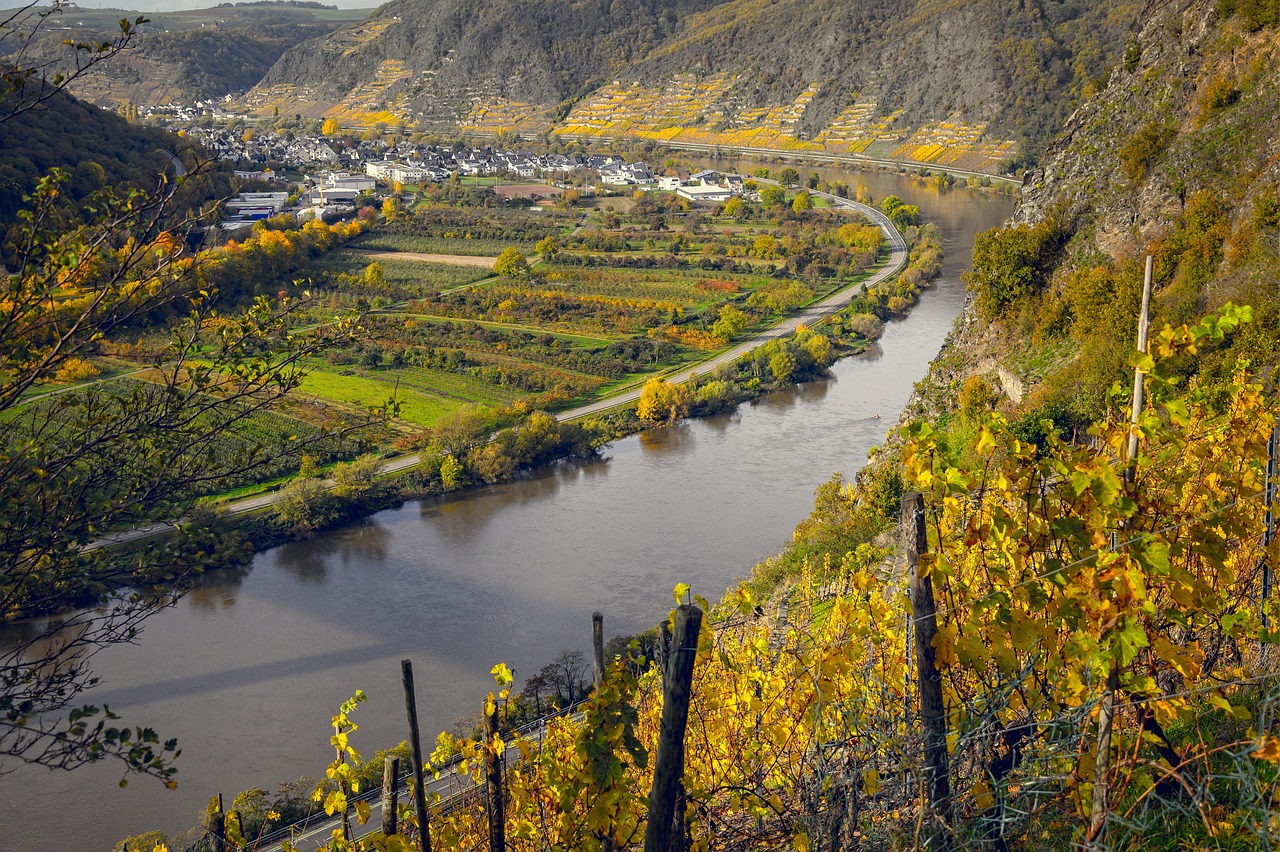
I’ve been driving the Moselle Wine Route almost every year since I moved to Rhineland-Palatinate more than a decade ago. I’ve seen it in frosty February, in blossom-bright April, in the sticky green of August, and in the golden frenzy of harvest each September. And still, every time I round that first bend near Koblenz and see the river flashing below the vineyards, I feel the same quiet rush: this is one of Europe’s great road trips, hiding in plain sight.
The Moselle Wine Route (Deutsche Weinstraße der Mosel, often simply called “die Mosel”) is not a single highway but a ribbon of small roads loosely following the Moselle River between Koblenz and the Luxembourg border near Perl, with some travelers continuing into Luxembourg and France. Unlike the Autobahn, where you barrel through Germany in a blur, the Moselle Wine Route insists that you slow down: 50 km/h through half-timbered villages, hairpin turns above slate cliffs, tractors full of grapes blocking the road in autumn. It’s infuriating if you’re in a hurry—and absolutely perfect if you’re not.
What makes the Moselle Wine Route special is the combination of elements you don’t often find together in one trip:
- World-class Riesling from some of the steepest vineyards on earth, poured by the people who grew it.
- Storybook river towns – half-timbered houses, cobbled alleys, medieval towers, and baroque churches.
- Castles perched on cliffs – from famous Reichsburg Cochem to fairy-tale Burg Eltz hiding in the forest.
- A road that hugs the river, with constant views of terraced vines, trains snaking along the opposite bank, and barges sliding by below.
- Easy distances: this is one of the gentlest “long” road trips in Europe. You can do it in 3–4 days or stretch it to 10–14 without ever repeating yourself.
- Year-round appeal: cycling and river cruises in summer, harvest festivals in autumn, quiet wine cellar tastings in winter, and blossom walks in spring.
- Family-friendly and romantic at once: playgrounds by the river, castle hikes for kids, candlelit wine tastings for couples, and safe cycling paths for everyone.
If you’re debating between the Moselle and the Rhine: the Rhine is grand, dramatic, and busy; the Moselle is more intimate, more winding, and—if you know where to go—still full of hidden corners where you’ll feel like the only visitor in town.
Table of Contents
- 1. Overview: How the Moselle Wine Route Works
- 2. Recommended Itinerary: 7–14 Legs of the Moselle Wine Route
- Leg 1: Koblenz to Winningen & Güls – Gateway to the Moselle
- Leg 2: Winningen to Cochem – Classic Castles & River Curves
- Leg 3: Cochem to Beilstein & Bremm – The Iconic Calmont Bend
- Leg 4: Bremm to Traben-Trarbach – Belle Époque by the River
- Leg 5: Traben-Trarbach to Bernkastel-Kues – Postcard Moselle
- Leg 6: Bernkastel-Kues to Trier – Roman Roots & Urban Pause
- Leg 7: Trier to Saarburg & the Saar Loop – Scenic Detour
- Leg 8: Trier to Schweich & Leiwen – Wine Villages & Panorama Roads
- Leg 9: Leiwen to Neumagen-Dhron & Piesport – Ancient Wine Stories
- Leg 10: Piesport to Trittenheim & Klüsserath – Quiet Curves
- Leg 11: Cochem to Burg Eltz (Side Trip) – The Forest Castle
- Leg 12: Trier to Nittel & Perl – Borderland Moselle
- Leg 13: Cycle & Cruise Variations Along the Route
- Leg 14: Off-the-Beaten-Path Villages & Viewpoints
- 3. Eighteen Key Stops & Viewpoints in Depth
- 4. Eating & Sleeping Along the Moselle Wine Route
- 5. Evenings on the Road: Nights by the River
- 6. Day Trips & Nearby Attractions
- 7. Cultural Etiquette & Local Customs
- 8. Practical Travel Advice & Route Logistics (Driving, Seasons, SIMs, Visas)
- 9. 2026–2027 Events & What’s New on the Moselle
- 10. Summary & Final Recommendations
Overview: How the Moselle Wine Route Works
The Moselle Wine Route broadly follows the river Moselle from its confluence with the Rhine at Koblenz to the border triangle at Perl (Germany–Luxembourg–France). The “route” is actually a network of well-signposted roads, mainly the B49 and B53, plus village lanes that hug the water. The rhythm is simple:
- River on one side, steep vineyards on the other.
- Every few kilometers, a village with a church spire and at least three wineries.
- Periodic bridges that cross you from one bank to the other.
In this travel guide for Moselle Wine Route, I’ll describe it as a sequence from east to west (Koblenz → Trier → Perl), which is my preferred direction: the scenery gradually becomes softer, the crowds thin, and your pace naturally slows. But you can absolutely reverse it. If you’re combining Rhine and Moselle in one trip, it often makes sense to start in Koblenz.
In terms of distance, Koblenz to Trier by the river road is roughly 200 km; add another 40–50 km to reach the border near Perl. It’s entirely manageable, which is why you’ll see a lot of references to a 7 leg itinerary for Moselle Wine Route, an 8 leg itinerary, even 9, 10, 11, 12, 13, or 14 legs of Moselle Wine Route. How many legs you choose is really about how deeply you want to linger in each village. In the sections below, I’ll give you flexible options for 7–14 legs so you can scale the trip to your timeframe.
Recommended Itinerary: 7–14 Legs of the Moselle Wine Route
Across several recent visits (most recently spring and autumn 2025), I’ve refined this into a set of modular legs. You can string them together for a 7 leg itinerary for Moselle Wine Route by combining some sections, or create an 8, 9, 10, 11, 12, 13, or 14 leg itinerary by splitting and adding side trips. I’ll describe it as a 10-leg base trip with 4 optional add-on legs; you can pick and choose.
Leg 1: Koblenz to Winningen & Güls – Gateway to the Moselle
Distance: ~15–20 km • Time: Half-day to full day with stops • Best for: First taste of Moselle scenery, easy walking, wine with a city base.
I often start my Moselle road trips in Koblenz, staying near the Altstadt so I can wander to the Deutsches Eck in the evening and watch the sun fade over the river junction. Early the next morning, when the commuter traffic is still thin, I pick up my rental car and head for the Moselle’s first curves.
Leaving Koblenz, the road quickly shrugs off its urban edges. Within 10 minutes you’re passing your first slate slopes and small boathouses. It’s not yet the wild, dramatic Moselle—more a gentle prelude—but it sets the mood: the river is close, the pace is slower, and the signs for “Weingut” (wineries) start to appear.
Stop: Güls – A Quiet First Sip
Why stop: A low-key village on the edge of Koblenz with authentic winery courtyards and river walks.
My first “real” Moselle glass each year is usually in Güls. It’s essentially a suburb of Koblenz, but emotionally it feels like you’ve crossed a border from city to riverland. There’s a simple riverfront promenade where locals walk their dogs and a handful of family wineries where you can sit in a courtyard under chestnut trees.
On a mild April afternoon in 2025, I arrived here to find the vines just leafing out. I ducked into a tiny Straußwirtschaft (seasonal wine tavern) signed with the traditional bunch of brush at the door. The owner, in a faded sweater, poured me a fresh 2024 Riesling and pointed at the hill: “From there, at sunrise. We picked it in October, hands frozen.” This is what you come here for: wine as a personal story, not a brand.
Tip: In spring and summer, check for open Straußwirtschaften on signs or online; they’re cheaper and more casual than formal restaurants. Many are open only a few months a year.
Stop & Overnight: Winningen – Clinging to the Slopes
Why stop: Steep vineyards, narrow alleys, early taste of Moselle character, convenient first overnight.
Just a short drive further along the river brings you to Winningen, one of my favorite “small but full of character” villages on this part of the Moselle. The houses climb up from the river in tight clusters, and above them the vines tilt at improbable angles. If you want to understand what “steep-slope viticulture” looks like, you can see it here before you hit the famous giants like Calmont later.
On my 2025 trip, I arrived on a Friday evening. The village square was buzzing: kids playing around the fountain, older men in caps arguing about football, and an impromptu brass band rehearsal drifting from a side street. I checked into a half-timbered guesthouse where my room had a view across the river to the railway line, and I fell asleep that night to the soft clatter of distant trains and the occasional barge horn.
What to do in Winningen:
- Walk the vineyard trail above town for a first elevated view of the Moselle curves.
- Visit a small Weingut (estate) for a tasting; ask to compare a dry (trocken) Riesling to an off-dry (feinherb).
- Have dinner at a Weinstube with local specialties like Winzersteak (winegrower’s steak) or Flammkuchen (tarte flambée).
Family-friendly: There’s a playground by the river and gentle walking; kids love watching trains and barges. Keep them away from vineyard edges—steep drops and loose slate.
Driving tip: This first leg is short. If you’re impatient to “get into it,” you can easily push on to Cochem on day one, but I like to savor this gentle opening and overnight in Winningen to adjust to Moselle pace.
Leg 2: Winningen to Cochem – Classic Castles & River Curves
Distance: ~55 km • Time: Full day with stops • Best for: Iconic Moselle scenery, first big castle, family-friendly stops.
Leaving Winningen after breakfast—usually a spread heavy on crusty rolls, local jam, and soft cheeses—you join what most people think of as the “classic” Moselle Wine Route. The river snakes, the road follows, and every 5–10 km there’s a village: Kobern-Gondorf, Lehmen, Oberfell, Alken, Brodenbach, Löf, and more, all tucked between steep slopes and the water.
Stop: Kobern-Gondorf – First Taste of History
I often stop in Kobern-Gondorf purely for a short coffee break, but it’s worth a longer wander if you have time. The twin villages have old stone houses, a riverside promenade, and up above, the ruins of Oberburg and Niederburg. A short uphill walk rewards you with a surprisingly wide view over the Moselle—your first confirmation that this road trip will be as much about vertical as horizontal movement.
On a misty March morning in 2024, I stood up there alone, the vines ghostly below, barges sliding silently through the fog. It felt like I’d slipped into another century.
Stop: Alken & Burg Thurant – A Clifftop Teaser
Why stop: Charming riverside village with a castle above, great for photos and light hikes.
Alken is one of those places I initially drove through with a mental note—“pretty, must stop next time”—and then finally did, and kicked myself for waiting. The village hugs the river in a loose curve, and above it, Burg Thurant rises like something from a child’s drawing: towers, walls, banners in the wind.
The drive up to Burg Thurant is narrow but manageable; if you’re nervous, park in the village and take the signed path up through the vineyards. The castle itself is part-ruin, part-living complex, with quirky interiors and spectacular views in all directions.
Tip for photographers: Late afternoon light from the opposite bank, near Brodenbach or Löf, gives you that classic shot of Alken with the castle above and the river below.
Arriving in Cochem – Postcard Perfection
Cochem is your first real “hub” on the Moselle Wine Route, and it’s one of the best places to visit in Moselle Wine Route for a reason: it has everything first-timers imagine when they hear “German wine valley.”
- A storybook old town with half-timbered facades.
- The Reichsburg Cochem castle perched above on a hill.
- Riverfront promenades with ice cream stands and boat piers.
- Enough restaurants and Weinstuben to keep you busy for days.
My relationship with Cochem is complicated: it’s beautiful but can be very busy in midsummer, especially when multiple river cruise ships dock at once. I love it early and late in the day, when the day-trippers thin and the lights reflect on the water.
Don’t miss in Cochem:
- Reichsburg castle tour: Yes, it’s touristy, but the viewpoints are spectacular, and families love the knight stories.
- Old town ramble: Get lost in the alleys behind the main square; there are quieter courtyards back there.
- Chairlift (Sesselbahn) to Pinnerkreuz: A quick way to a panoramic viewpoint with minimal effort.
Overnight in Cochem: I usually pick a guesthouse a short walk up from the river to escape the noise. If you’re on a tighter 7 leg itinerary for Moselle Wine Route, plan at least one night here; on a 10–14 leg itinerary, two nights allows a side trip to Burg Eltz (see Leg 11).
Food highlight: Try Reibekuchen (crispy potato pancakes) with apple sauce at a casual riverside spot, and pair dinner with a dry Riesling from one of the local steep-slope vineyards.
Leg 3: Cochem to Beilstein & Bremm – The Iconic Calmont Bend
Distance: ~35 km • Time: Full day with hikes • Best for: Classic bends, short hikes, romantic villages, big views.
This is one of my favorite days on the Moselle Wine Route, especially if the weather is clear. You’ll see some of the most must-see attractions in Moselle Wine Route concentrated in a short stretch of river, so resist the urge to rush.
Stop: Beilstein – The Sleeping Beauty of the Moselle
Just 10 km upriver from Cochem lies Beilstein, often called the “Sleeping Beauty of the Moselle.” I remember my first arrival: coming around a bend and suddenly seeing the village tucked beneath the ruins of Burg Metternich, every house seemingly in shades of cream and timber, reflected in the still water. I pulled over at the first layby I found just to stare for a minute.
What to do in Beilstein:
- Climb up to Burg Metternich for a sweeping view; the castle terrace is a superb coffee stop.
- Wander the tiny main square and side alleys; it’s compact, romantic, and extremely photogenic.
- Have a leisurely riverside lunch—this is a wonderful spot for couples on a romantic Moselle Wine Route road trip.
Timing tip: Arrive before 10:00 or after 16:30 to avoid mid-day tour groups. I love it in the soft light of late afternoon; the crowds thin and the village regains its sleepy charm.
Stop: Bremm & the Calmont – Climbing the Steepest Vineyards
Bremm is home to the famous Calmont, one of the steepest vineyards in Europe (slopes up to about 65 degrees). If there is one image that defines the Moselle Wine Route for many travelers, it’s the tight river loop at Bremm with terraced vines stacked above like an amphitheater.
On a clear September day in 2023, I tackled the Calmont Klettersteig, a via ferrata-style trail that traverses the slope. It’s not for those with a serious fear of heights, but you don’t need to be a climber—just sure-footed and okay with ladders and cables. The reward: uninterrupted views of the bend, trains gliding along the far bank, and a visceral sense of what it means to work these vineyards.
If that sounds too intense, there are gentler panorama paths above the Calmont where you can reach famous viewpoints like the Calmont Gipfelkreuz (summit cross) or the Vierseenblick (“four lakes view,” where the river bends create the illusion of separate lakes).
Family & accessibility note: The Calmont Klettersteig is not suitable for very young children or anyone uneasy on ladders. For families, I recommend the easier path up to one of the viewpoints; bring water, as it can be very hot on the slate in summer.
Evening in Bremm or nearby: I’ve spent several cozy evenings here, sipping Riesling in a small courtyard while the cliffs glow orange. If you’re planning an 8 or 9 leg itinerary for Moselle Wine Route, Bremm is an excellent overnight to break up the stretch between Cochem and Traben-Trarbach.
Leg 4: Bremm to Traben-Trarbach – Belle Époque by the River
Distance: ~40 km • Time: Full day with town stops • Best for: Architecture, spa vibes, wine cellars, riverside strolls.
The character of the Moselle shifts subtly as you drive from Bremm toward Traben-Trarbach. The slopes are still steep, but the villages feel a little more spread out, the bends wider. This is a lovely driving leg, with several smaller wine towns like Ediger-Eller, Neef, Senheim, and Zell offering excuses to stop.
Stop: Zell – The Black Cat Town
Zell is famous for its “Schwarze Katz” (black cat) wine label, and yes, you’ll see that cat everywhere: on signs, barrels, even statues. It’s a bit kitschy, but Zell itself is pleasant for a short walk and a coffee on the promenade. If you’re collecting wine souvenirs for friends who love labels, this is an easy win.
Arriving in Traben-Trarbach – Twin Town Charm
Traben-Trarbach is actually two towns, Traben and Trarbach, facing each other across the Moselle and connected by a bridge. In the late 19th and early 20th centuries, this was one of the most important wine trading centers in the world, rivaling Bordeaux. The wealth of that era shows in its Belle Époque villas, art nouveau details, and impressive underground cellars.
On a chilly November afternoon in 2024, I joined a guided tour of the “Unterwelt” (underworld)—a network of former wine cellars beneath the streets. It was like entering a secret city: arched stone tunnels, old barrels, and cool, damp air that smelled faintly of must and history.
Things to do in Traben-Trarbach:
- Stroll the riverfront on both sides; Traben is a bit sleepier, Trarbach more grand.
- Take a cellar tour to understand the town’s wine trading history.
- Visit the Grevenburg ruins above town for wide river views and a relaxed beer garden.
- In winter, experience the underground Christmas market (one of the more unique ones in Germany).
Overnight: Traben-Trarbach is a superb overnight choice on any 8, 9, or 10 leg itinerary for Moselle Wine Route: enough restaurants, a mellow evening vibe, and good connections for wine tasting and boat cruises. Couples often love it for the mix of history and slightly faded glamour.
Leg 5: Traben-Trarbach to Bernkastel-Kues – Postcard Moselle
Distance: ~25–30 km • Time: Full day with long stop in Bernkastel-Kues • Best for: Iconic townscapes, easy walking, wine tasting.
This is a short driving leg but one of the most visually satisfying. The river curves lazily, the road cuts through vineyards, and the approach to Bernkastel-Kues is pure theatre: a tight cluster of half-timbered houses around a square, overseen by the ruined Burg Landshut above.
Stop: Enkirch – Half-Timbered Gem
Enkirch is one of those villages that doesn’t shout for attention but rewards anyone who stops. Its old quarter has an unusually dense concentration of half-timbered houses, some elaborately decorated. On a quiet Tuesday morning in May, I wandered its alleys almost alone, the only sound the river behind me and the clink of dishes from open windows.
Arriving in Bernkastel-Kues – The Postcard Town
Ask Germans to name the most beautiful town on the Moselle and many will say Bernkastel-Kues. The Marktplatz (market square) is almost absurdly picturesque: wonky half-timbered facades, a fountain, small wine taverns squeezed into every angle. It’s also, naturally, very popular.
On a sunny September afternoon in 2023, I watched a busload of visitors spill into the square, cameras held high. It was a little overwhelming, but I knew from experience: stay put. By early evening, the buses leave, the day-trippers retreat to their ships, and the town exhales. That’s when I grab a glass of Riesling at a quiet corner table and just watch the light change on the facades.
Things to do in Bernkastel-Kues:
- Explore the old town: climb up the narrow lanes for quieter corners.
- Walk across to Kues on the opposite bank, birthplace of the philosopher Nicholas of Cusa.
- Hike (or drive) up to Burg Landshut for sweeping views and a modern restaurant with a terrace.
- Book a wine tasting with one of the local producers; some offer vineyard walks combined with tastings.
Overnight: I recommend at least one night here on any Moselle Wine Route road trip. On a longer 11, 12, 13, or 14 leg itinerary for Moselle Wine Route, two nights allow a slower pace and maybe a day trip to nearby villages or a cycling loop.
Food tip: Look for menus featuring Zwiebelkuchen (onion tart) in autumn, often served with Federweißer (partially fermented new wine); it’s a local seasonal ritual.
Leg 6: Bernkastel-Kues to Trier – Roman Roots & Urban Pause
Distance: ~70–80 km • Time: Full day with vineyard and small-town stops • Best for: Wine history, slower curves, city comforts.
Beyond Bernkastel-Kues, the Moselle broadens and the atmosphere shifts again. The valley is still steep in places, but you’re gradually gliding toward Trier, Germany’s oldest city and a wonderful place for a break from pure village life.
Stop: Piesport – Vast Vineyards & Roman Press
Piesport sits in a wide, almost amphitheatrical bend of the Moselle, enveloped by vines. It’s home to some of the region’s most famous Riesling sites, like the “Goldtröpfchen.” If you’re serious about wine, this is a must-pause town.
In 2024, I joined a local guide here for a walk through the vineyards to a reconstructed Roman wine press, a tangible reminder that viticulture along the Moselle stretches back nearly two millennia. Standing there, looking out over the river, it’s easy to imagine Roman merchants loading amphorae onto boats below.
Stop: Trittenheim & Leiwen – River Curves & Panorama Roads
The villages of Trittenheim and Leiwen sit in another gentle loop of the Moselle, with well-marked Panoramawege (panoramic roads) and hiking trails that take you up to viewpoints with names like “Fünfseenblick” (five-lake view). These viewpoints are some of my favorite hidden gems in Moselle Wine Route, often much less busy than Calmont but equally rewarding.
Arriving in Trier – A Roman Pause
Trier is a world unto itself: Roman monuments, baroque churches, a university vibe, and a compact city center framed by hills. For a Moselle Wine Route road trip, it serves as a perfect mid-point break: you can park the car, walk everywhere, and trade vineyard paths for Roman stones for a day or two.
Top sights in Trier:
- Porta Nigra: Massive black Roman gate that once marked the city’s entrance.
- Roman Imperial Baths & Amphitheatre: Atmospheric ruins that kids find surprisingly engaging.
- Cathedral (Dom) and Liebfrauenkirche: A complex of sacred architecture spanning centuries.
- Moselle riverfront: A quieter side of the city for evening walks.
Overnight: I often book 2 nights here on a 10+ leg itinerary, using the full day in between for sightseeing and laundry (romantic, I know, but practical). Families especially appreciate the broader dining options and playgrounds.
Leg 7: Trier to Saarburg & the Saar Loop – Scenic Detour
Distance: Trier to Saarburg ~25 km, then Saar loop detour ~30 km • Time: Full day side trip • Best for: Waterfalls, small-town charm, dramatic viewpoint.
While not strictly part of the Moselle Wine Route, the nearby Saar river is an essential detour if you have more than a week. The Saar loop (Saarschleife) is one of Germany’s iconic viewpoints, and the town of Saarburg has a waterfall running right through its center.
Saarburg – Waterfall in the Old Town
On arrival in Saarburg, you might hear it before you see it: the roar of the Leukbach waterfall dropping between old houses into the river below. Terraces line the gorge, making it an easy place to linger over coffee or ice cream while watching the water crash past.
Above town, the ruins of Saarburg Castle offer classic views over vineyards and rooftops. It’s a relaxed, family-friendly stop where kids can burn off energy running up and down castle steps.
Saar Loop (Saarschleife) – One of Germany’s Great Views
The Saarschleife viewpoint at Cloef is the Saar’s answer to Bremm’s Calmont bend: a dramatic loop of river seen from a high vantage point. There’s a treetop walkway (Baumwipfelpfad) that spirals up to a tower with 360° views, suitable for families and those with limited mobility.
Tip: Come early or late in the day for softer light and fewer tour buses. If you’re building an 11 or 12 leg itinerary for Moselle Wine Route including the Saar, this is a worthy full leg on its own.
Leg 8: Trier to Schweich & Leiwen – Wine Villages & Panorama Roads
Distance: ~30–40 km (depending on detours) • Time: Easy day • Best for: Quieter villages, vineyard drives, local tastings.
If you didn’t explore Schweich, Leiwen, and the surrounding villages on the way to Trier, this leg lets you double back slightly and savor them at a slower pace. It’s also where I send friends who ask for hidden gems in Moselle Wine Route away from the headline names.
Schweich – Gateway to the Upper Moselle
Schweich is a functional small town more than a tourist magnet, but it’s a useful base if you prefer apartments over guesthouses and want easy access to multiple wine villages. There are good supermarkets here; I often stock up on picnic supplies—cheese, bread, seasonal fruit—before a day of vineyard viewpoints.
Leiwen & Surroundings – Panorama & Playgrounds
Leiwen has invested heavily in being family-friendly: riverside promenades, playgrounds, and accessible vineyard walks. There’s also a popular holiday park nearby, which makes this a good stop for travelers with kids who want self-catering and pools.
One of my favorite late-afternoon drives is a loop on the Panoramastraße above Leiwen: narrow roads through vineyards, occasional small chapels, and wide views over multiple river bends. It’s a safe way to get those dramatic vistas without a long hike.
Leg 9: Leiwen to Neumagen-Dhron & Piesport – Ancient Wine Stories
Distance: ~20–25 km • Time: Half to full day • Best for: Roman history, quiet riverside, wine education.
Neumagen-Dhron bills itself as Germany’s oldest wine village, and while such claims are always fuzzy at the edges, there’s no doubt the Romans were deeply entrenched here. A replica of a Roman wine ship now plies the river, and you can book short cruises that explain ancient viticulture.
On a warm June evening in 2025, I watched that ship glide past as I sat on a bench with a takeaway Bratwurst from a local stand. The modern cars behind me on the road felt briefly out of place; for a moment, it was possible to imagine the Moselle as a Roman trade artery again.
This leg can be combined easily with Leg 6 (Bernkastel to Trier) if you’re condensing into a 7 or 8 leg itinerary for Moselle Wine Route, but giving it its own day allows more time for tastings and slow walks.
Leg 10: Trier to Nittel & Perl – Borderland Moselle
Distance: ~50–60 km • Time: Full day with stops • Best for: Quieter vineyards, border-hopping, ending the route.
Southwest of Trier, the Moselle becomes a border river between Germany and Luxembourg. The character changes again: villages are smaller, there are fewer tourists, and you’ll hear more Luxembourgish and French mixed with German.
Nittel – Cliffside Vineyards
Nittel is carved into a narrow shelf between limestone cliffs and the river. Its vineyards have a different geology to the slate-dominated middle Moselle, and the wines reflect that: often a little fuller, sometimes with different grape varieties. If you’ve spent the week drinking Riesling, this is a good place to try something new.
Perl – Edge of Three Countries
Perl sits near the Dreiländereck (three-country corner) of Germany, Luxembourg, and France. It’s a symbolic end to the Moselle Wine Route: one last look at the river, then choices—Luxembourg City? Metz? Back toward Trier?
On my 2022 trip, I ended here in a small guesthouse room with a balcony, watching the sun set over Luxembourg’s vineyards on the opposite bank. It felt like closing a well-loved book: satisfying, a little sad, and already tempting me to start again from the beginning.
Leg 11 (Optional): Cochem to Burg Eltz – The Forest Castle
No comprehensive travel guide for Moselle Wine Route would be complete without Burg Eltz, even though it sits a few kilometers away from the river itself. It’s one of Germany’s most famous castles: fairytale towers rising from a forested ravine, remarkably intact and still owned by the same family after 800+ years.
From Cochem, it’s a ~30–40 minute drive to the Burg Eltz parking area. From there, you either walk down through the forest (highly recommended for the first sight of the castle) or take a shuttle bus partway. Inside, guided tours take you through period-furnished rooms; outside, forest trails offer quieter viewpoints.
Tip: Come early morning or late afternoon, especially in summer. Midday can get very crowded. If you’re building a 9 or 10 leg itinerary for Moselle Wine Route, I’d make this a half- to full-day detour from Cochem.
Leg 12 (Optional): Cycle & Cruise Variations Along the Route
One of the best things about the Moselle Wine Route is that you don’t have to drive every leg. The Mosel-Radweg (Moselle Cycle Path) runs parallel to the river for long stretches, mostly flat and family-friendly. On my 2024 trip, I left the car in Traben-Trarbach for two days and rented a bike, doing a leisurely loop down to Bernkastel-Kues and back by boat.
Many towns offer bike rental, and river cruise boats routinely carry bikes, allowing you to mix cycling one way and cruising the other. If you’re after cultural experiences in Moselle Wine Route beyond just tasting, doing at least one leg by bike or boat changes your relationship with the valley: you notice sounds and smells that driving screens out.
Leg 13 (Optional): Off-the-Beaten-Path Villages & Viewpoints
If you’re crafting an 11, 12, 13, or 14 leg itinerary for Moselle Wine Route and want days with no major “sights,” dedicate a leg to simply drifting between lesser-known villages: Alf, Bullay, Ediger-Eller, Neef, Kröv, Ürzig with its red rock outcrops, and more.
Some of my best Moselle memories are from days like this: pulling over at unsigned laybys, walking 10 minutes into a vineyard, and realizing that the view from here—over some nameless bend and a handful of slate-roofed houses—is just as beautiful as the Instagram-famous ones, and entirely my own for a while.
Leg 14 (Optional): Winter & Shoulder-Season Moselle
For those planning to drive the Moselle Wine Route in late autumn or winter, consider a slower leg structure with more time in larger hubs (Cochem, Traben-Trarbach, Bernkastel-Kues, Trier) and shorter driving days. The river can be hauntingly beautiful under low clouds, with bare vines and quiet promenades.
I spent a week here in January 2023, and while many seasonal Straußwirtschaften were closed, the core wineries and restaurants remained open, and I had some of my most intimate tastings: long conversations with winemakers who had time to talk because there were no buses outside.
Eighteen Key Stops & Viewpoints in Depth
Below is a focused look at at least 18 of the best stops on Moselle Wine Route, many already mentioned in the itinerary. I’ll group them roughly from east (Koblenz) to west (Perl), with personal notes and practical tips.
-
Koblenz & Deutsches Eck
Koblenz is the gateway city where the Moselle meets the Rhine at the Deutsches Eck (“German Corner”). It has a walkable old town, a fortress (Ehrenbreitstein) accessed by cable car over the Rhine, and enough urban infrastructure to stock up for the road trip ahead.
In 2025, I spent an evening here watching the two rivers merge: the darker Moselle folding into the lighter Rhine, boats criss-crossing like busy insects. It’s a good place to reflect on where you’re heading: upriver into narrower, more intimate landscapes.
-
Winningen
A compact village clinging to the slope, with narrow alleys and serious winemaking heritage. In late summer, the Winninger Weinfest fills the streets with music and stalls; book accommodation early if your dates overlap.
-
Alken & Burg Thurant
Alken’s riverside setting beneath Burg Thurant makes it a perfect things to do in Moselle Wine Route stop for castle lovers. The castle’s double tower design is unusual, and the views from the battlements stretch far along the valley.
-
Cochem & Reichsburg
Cochem is an anchor town with comprehensive tourist infrastructure: boat piers, car rental, supermarkets, and countless guesthouses. The Reichsburg castle, while extensively restored in the 19th century, offers dramatic views and kid-friendly tours with knight themes.
-
Beilstein & Burg Metternich
Beilstein is one of the most romantic stops along the Moselle Wine Route. Its compact size makes it ideal for a half-day wander; climb to Burg Metternich for a café with perhaps the best castle-terrace view on this stretch of river.
-
Bremm & Calmont
The Calmont slopes above Bremm are legendary among hikers and wine geeks. Whether you tackle the Klettersteig or stick to safer trails, the viewpoints here are quintessential must-see attractions in Moselle Wine Route.
-
Zell (Mosel)
Home of the Schwarze Katz, Zell is a lively little town with a long riverside promenade and plenty of cafés. It’s a nice lunch stop between Bremm and Traben-Trarbach.
-
Traben-Trarbach
With its art nouveau architecture and elaborate cellars, Traben-Trarbach offers a slightly different flavor of Moselle: less half-timbered, more Belle Époque. It’s also host to one of the region’s best Christmas markets, held in the cellars themselves.
-
Enkirch
Often skipped by bus tours, Enkirch is a treat for fans of traditional architecture, with meticulously preserved half-timbered houses and quiet backstreets that feel almost like a film set.
-
Bernkastel-Kues & Burg Landshut
The showpiece town of the central Moselle, with its famous Marktplatz and ruined castle. It can be crowded, but early mornings and late evenings still feel magical. For photographers, sunset from Burg Landshut is hard to beat.
-
Piesport
Piesport’s amphitheater of vines is a visual metaphor for Moselle viticulture. The reconstructed Roman press and signposted vineyard trails make it a great place to understand the region’s long wine history.
-
Trittenheim
Set in a wide river loop, Trittenheim offers classic Moselle scenery with fewer crowds. The small vineyard chapel above town is one of my favorite quick viewpoints: a short walk, a bench, and a big view.
-
Leiwen
Family-friendly Leiwen combines riverfront recreation (playgrounds, bike paths) with easy access to panoramic vineyard roads. It’s an excellent base for travelers with children who want self-catering options.
-
Neumagen-Dhron
Germany’s self-proclaimed oldest wine village, with Roman roots proudly on display. The wine ship replica is a fun, educational outing, especially for families combining history with river fun.
-
Trier
Trier’s Roman monuments give the Moselle Wine Route its deeper historical anchor. It’s also a logistical hub: car rental, train connections, and a broader range of accommodation.
-
Saarburg
Technically on the Saar, but culturally and geographically linked. The downtown waterfall and hilltop castle make this a standout side trip.
-
Nittel
A quieter border village with limestone-based vineyards and a relaxed vibe. Great for tasting slightly different styles of wine and enjoying uncluttered river walks.
-
Perl & Dreiländereck
The symbolic end (or start) of the German Moselle Wine Route, near the meeting point of Germany, Luxembourg, and France. From here, it’s easy to extend your journey into Luxembourg’s wine region or toward Metz and Nancy in France.
Eating & Sleeping Along the Moselle Wine Route
One of the delights of a Moselle Wine Route road trip is how eating and sleeping become part of the landscape. Instead of anonymous chain hotels and highway rest stops, you get riverside Gasthäuser, vineyard guest rooms, and Weinstuben where the wine list is literally the hill behind the house.
Local Food in Moselle Wine Route
Expect hearty, regional German cooking with some French and Luxembourgish influences, especially toward the west. Key dishes and tastes to look for:
- Riesling, Riesling, Riesling: Dry, off-dry, and sweet styles. Always ask the sweetness level; “trocken” = dry, “halbtrocken” or “feinherb” = off-dry.
- Flammkuchen: Thin, crispy flatbread with crème fraîche, onions, and bacon. Great for sharing; ideal with a glass of wine.
- Winzersteak: Grilled steak often marinated in wine; hearty and flavorful.
- Zwiebelkuchen & Federweißer: Onion tart with cloudy, semi-fermented wine, a classic autumn pairing.
- Matjes & fish dishes: Herring, trout, and other river fish show up regularly.
- Pork and game: Schnitzel, roasts, and in autumn, venison and wild boar.
- Local cheeses & sausages: Great for picnic lunches with bakery bread and a bottle from the last winery visit.
Accommodation Types
- Gasthaus / Gasthof: Traditional inn with simple, often older-style rooms and an on-site restaurant. Lots of character; I stay in these most often.
- Pension / Gästehaus: Guesthouse, often family-run, with breakfast but no dinner. Great value.
- Weingut rooms: Many wineries rent rooms or apartments. Waking up with a vineyard view is hard to beat.
- Hotels: More common in bigger towns like Cochem, Traben-Trarbach, Bernkastel-Kues, and Trier.
- Camping & campervan sites: Numerous along the river; many with direct water access and basic facilities.
Planning Fuel & Overnight Stops
On this route, you’re rarely more than 15–20 km from a fuel station, but they cluster around larger towns. I usually:
- Refuel near Koblenz, Cochem, Zell, Traben-Trarbach, Bernkastel-Kues, Schweich, and Trier.
- Top up when passing a station in late afternoon rather than hunting for one after dark.
- For EVs, plan around Koblenz, Cochem, Bernkastel-Kues, Trier, and larger villages that list chargers in apps like Plugsurfing or Chargemap.
As for overnights, my standard pacing for first-timers on a 9 or 10 leg itinerary for Moselle Wine Route:
- Night 1: Winningen or Cochem
- Night 2: Cochem or Bremm
- Night 3: Traben-Trarbach
- Night 4–5: Bernkastel-Kues
- Night 6–7: Trier (with Saarburg side trip)
- Night 8: Leiwen / Piesport region
- Night 9: Nittel or Perl
On a shorter 7 leg itinerary for Moselle Wine Route, I’d consolidate to: Cochem (2), Traben-Trarbach (1), Bernkastel-Kues (2), Trier (2).
Budgeting
For 2026, realistic mid-range daily costs per couple:
- Accommodation: €90–140 per night (double room with breakfast).
- Meals: €40–70 per day (lunch + dinner, excluding high-end restaurants).
- Wine tastings: €10–20 per person per day, depending on how many estates you visit.
- Fuel: Depends on your car and distance; the route is compact, so this is usually a minor line item.
Evenings on the Road: Nights by the River
Evenings are when the Moselle Wine Route truly breathes. Day-trippers leave, tour buses pull away, and the river quiets. A few patterns I’ve noticed over many visits:
- Best places for a “proper night” stop: Cochem, Traben-Trarbach, Bernkastel-Kues, and Trier—all have enough bars, restaurants, and riverside strolls to fill an evening.
- Romantic small-town nights: Beilstein, Bremm, Leiwen, Enkirch, and Nittel—perfect for a slow dinner, a bottle of wine, and star-watching from the riverbank.
- Live music & festivals: In summer and early autumn, many towns host Weinfeste with live bands, food stalls, and communal tables. Look for posters as you drive or check local tourism sites.
- Star-camping: Around quieter stretches near Leiwen, Piesport, and Neumagen-Dhron, riverside camping spots offer lovely dark skies on clear nights.
One of my favorite rituals: after dinner in Bernkastel-Kues, I walk down to the river, sit on a bench, and watch the lights from the opposite bank reflect in the water. The distant clink of glasses, a dog barking somewhere uphill, maybe a barge humming slowly past—it’s the kind of gentle night that lodges in your memory far longer than a nightclub ever would.
Day Trips & Nearby Attractions
If you’re spending 10–14 days in the region, you’ll likely want a few side excursions beyond the core Moselle Wine Route road trip itinerary:
- Ehrenbreitstein Fortress (Koblenz): Cable car over the Rhine, big views, and exhibitions. Easy half-day from Koblenz.
- Rhine Gorge (Boppard, St. Goar, Bacharach): Combine with your arrival or departure; trains and boats make it easy.
- Luxembourg City: About 45–60 minutes from Trier by car or train; a compact capital with dramatic gorges and fortifications.
- Eifel & Hunsrück regions: Forests, maars (volcanic lakes), and small villages; great for hiking days away from the river crowds.
- Metz & Nancy (France): A bit further afield from Perl but doable as day trips if you’re comfortable with longer drives.
Cultural Etiquette & Local Customs
Understanding local habits makes travel smoother and more rewarding. Along the Moselle, you’re in a region that’s proud of its traditions but generally relaxed and welcoming.
In Wineries & Wine Taverns
- Appointments: Smaller estates often prefer you book tastings in advance, especially on weekends and during harvest (September–October).
- Greeting: A simple “Guten Tag” or “Hallo” goes a long way. Many winemakers speak some English, but starting in German is appreciated.
- Spitting: Perfectly normal at serious tastings; just ask for a spit bucket (“Spucknapf”).
- Buying: It’s polite to purchase at least a bottle or two if you’ve had a longer, personalized tasting.
Dining
- Reservations: Recommended in popular spots (Cochem, Bernkastel-Kues, Trier) on weekends and in high season.
- Tipping: 5–10% is customary; round up the bill and tell the server the total you’d like to pay.
- Quiet hours: Residential areas often expect quiet after 22:00; keep voices and music low when walking back to your room.
General Road Trip Etiquette
- Sharing the road: Be patient with tractors and harvest traffic; this is working wine country.
- Vineyard respect: Stay on marked paths; don’t walk between rows or pick grapes.
- Riverbanks: Use designated picnic and parking areas; wild camping is generally not allowed.
Practical Travel Advice & Route Logistics
Beyond the romance, a Moselle Wine Route road trip involves some nuts-and-bolts planning. Here’s what I’ve learned over multiple drives.
Best Direction to Drive
I usually recommend driving east to west (Koblenz → Trier → Perl):
- You start with slightly busier, more structured sections and gradually move into quieter territory.
- It aligns well with connecting from the Rhine Gorge if you’re combining routes.
- The sun angle can favor river views from the right-hand side of the car in mornings, though this changes with time of day.
That said, there’s no “wrong” direction. If rental logistics are easier starting in Luxembourg or Trier, go west to east.
Realistic Daily Distances
- Short & deep (10–14 legs): 20–50 km per day, multiple stops, hikes, tastings.
- Balanced (7–9 legs): 40–80 km per day, 2–3 main stops.
- Compressed (4–6 legs): 80–120 km per day, focus on 4–5 anchor towns.
Remember: this is not a route to “conquer distance.” The joy is in the stops.
Vehicle Suitability
- Regular car: Ideal; roads are paved and mostly in good condition.
- RV / Campervan: Common along the river; check ahead for campsite availability in high season.
- Motorcycle: A favorite among bikers; winding roads and scenic laybys abound.
- No need for 4x4: Unless you’re venturing deep into forest tracks, which is generally unnecessary.
Breakdowns & Assistance
Germany has reliable roadside assistance; if your rental car breaks down, call the rental company first. Memberships like ADAC (Germany’s automobile club) are a bonus but not essential for short trips.
Seasonal Considerations
- Spring (April–May): Blossoms, fresh greens, fewer crowds, some chill in the air. Great for hikers and photographers.
- Summer (June–August): Warm, lively, boat and cycling prime time. Expect crowds in Cochem and Bernkastel-Kues.
- Autumn (September–October): Harvest, golden vines, many festivals. My personal favorite season but also the busiest in small villages.
- Winter (November–March): Quiet, some closures, atmospheric, especially around Christmas markets in Traben-Trarbach, Bernkastel-Kues, and Trier. Short days.
Snow closures are rare in the valley itself; the Moselle corridor is relatively mild. Higher forest roads in Hunsrück and Eifel can see more winter conditions.
Permits & Border Crossings
Within Germany, no special permits are needed for the Moselle Wine Route. Crossing to Luxembourg or France is straightforward within the Schengen Area; usually no checks, though carry ID or passport. Check visa requirements for your nationality before travel; Schengen rules apply.
Foreign Driver’s License & Car Rental
- EU / EEA licenses: Fully recognized.
- Non-EU licenses: Usually accepted if in Latin alphabet; an International Driving Permit (IDP) is recommended and sometimes required by rental agencies.
- Age: Common minimum is 21–25 depending on company; young driver surcharges may apply.
Public Transport Options
If you don’t want to drive, you can still “do” the Moselle with trains, buses, and boats:
- Regional trains connect Koblenz, Cochem, Bullay, Traben-Trarbach, and beyond.
- Buses fill in gaps between smaller villages.
- River boats let you hop between major towns in season.
However, for maximum freedom to explore hidden viewpoints and small villages at your own pace, a car or bike is ideal.
SIM Cards & Connectivity
Germany’s mobile coverage along the Moselle is generally good, though some steep sections can briefly drop signal.
- Local SIMs: Available at supermarkets, electronics stores, and kiosks (e.g., Telekom, Vodafone, O2, Aldi Talk).
- EU roaming: If you’re from another EU country, your plan likely includes roaming in Germany, Luxembourg, and France.
- eSIMs: In 2026, multiple providers offer tourist eSIMs covering Germany and neighboring countries.
Money-Saving Tips
- Travel in shoulder seasons (May–June, late September–October) for better deals and milder weather.
- Stay in Pensions & Gästehäuser rather than larger hotels; breakfast is often included.
- Do picnics for lunch from supermarkets and bakeries; splurge on dinners.
- Share tastings or order smaller flights; buy bottles at wineries rather than bars.
- Use the Mosel-Radweg for some legs to save fuel and parking, and to change the pace.
2026–2027 Events & What’s New on the Moselle
Looking ahead to 2026–2027, a few trends and events stand out along the Moselle Wine Route:
- Wine Festivals (Weinfeste): Nearly every village has one, typically between June and October. Highlights include:
- Winninger Weinfest (Winningen): One of the oldest wine festivals in Germany, late August / early September.
- Cochemer Weinfest (Cochem): Usually in late August, with fireworks over the castle.
- Bernkasteler Weinfest der Mittelmosel: Early September, huge fireworks and parades.
- Traben-Trarbach wine & art nouveau events: Dates vary; check local calendars.
- Harvest 2026: As climate patterns shift, harvest times vary, but late September to mid-October is still peak. Expect more Federweißer stands and vineyard activity then.
- Infrastructure improvements: Several towns are investing in upgraded riverfront promenades and EV charging stations; by 2026 expect more chargers in mid-size villages like Zell, Leiwen, and Piesport.
- Cycling focus: Regional tourism boards are promoting multi-day Moselle cycling packages, including luggage transfers between accommodations. This is especially attractive for families and those who prefer not to drive.
Always confirm exact dates closer to your trip—festivals can shift slightly year to year.
Summary & Final Recommendations
The Moselle Wine Route is not a highway to be conquered but a river corridor to be lived in for a while. Whether you choose a 7 leg itinerary for Moselle Wine Route that hits the headlines (Koblenz, Cochem, Bremm, Traben-Trarbach, Bernkastel-Kues, Trier, Perl) or stretch it into 8, 9, 10, 11, 12, 13, or 14 legs with side trips and slow days, the essence is the same:
- Follow the river’s pace, not the clock’s.
- Mix big-name towns with quiet villages.
- Balance wine tastings with hikes, bike rides, and simple riverfront walks.
- Let evenings be about conversation, not schedules.
Best seasons:
- May–June: Fresh, green, and relatively uncrowded—great for active travelers.
- September–early October: Golden vines, harvest energy, festivals—best for wine lovers who don’t mind crowds.
- July–August: Warm and lively, especially good for families who want boat trips and swimming, but busier and hotter.
- November–March: Quiet, introspective, and magical around Christmas, best for travelers who value solitude over sunshine.
Every time I leave the Moselle, I promise myself I’ll come back a different way next time: another bend, another village, another small guesthouse with creaky floors and a view of the river. That’s the quiet power of this place: it doesn’t demand awe; it earns affection, one curve at a time.