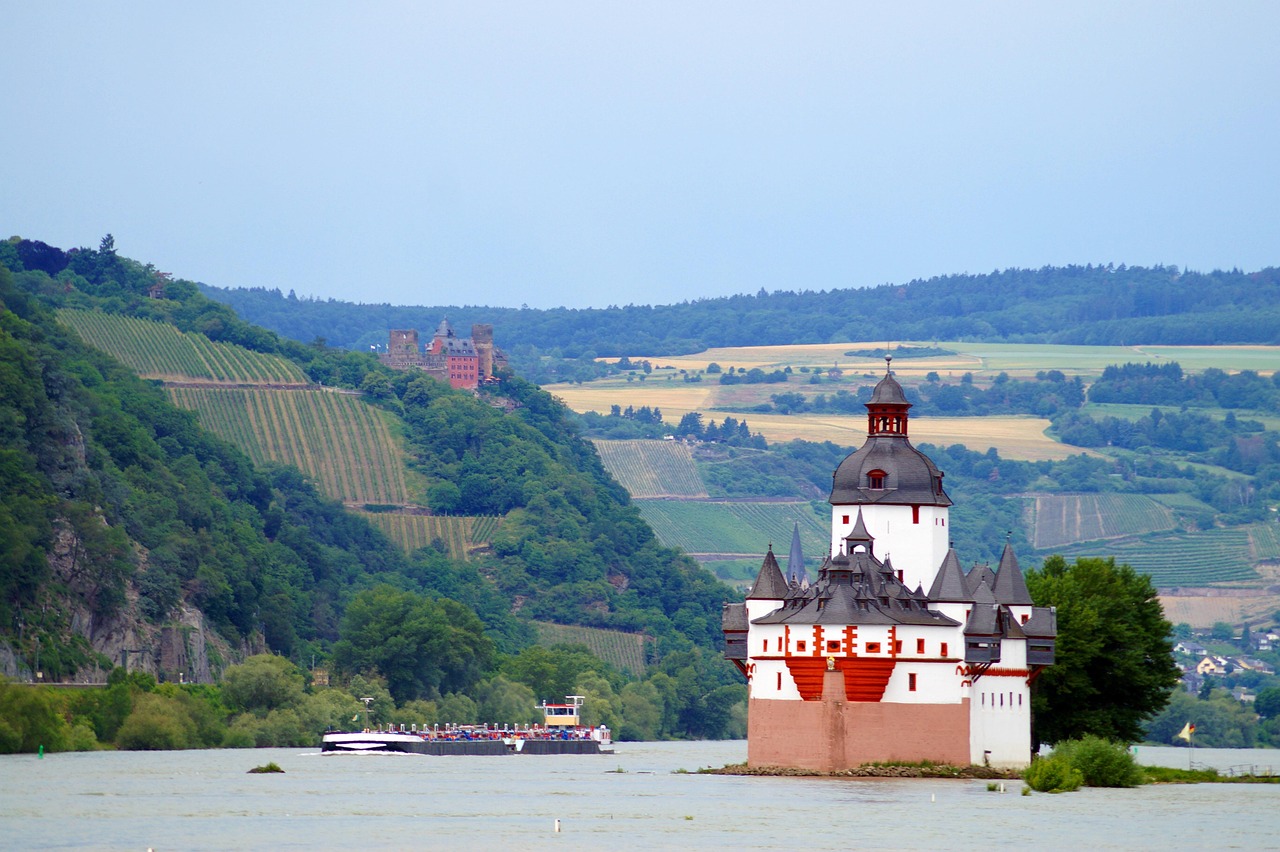
Why Visit Pfalzgrafenstein Castle? What Makes This Tiny Island Fortress So Special
Pfalzgrafenstein Castle is one of those places that defies your expectations of what a castle should look like. Instead of looming on a hilltop, it rises straight out of the Rhine on a rock island, like a stone ship permanently at anchor. I’ve been coming here since my student days in Mainz, but it’s the last few years—2023 through early 2026—when I’ve really gotten to know it intimately: dawn crossings when the mist still clings to the river, windy winter afternoons when you have the whole island to yourself, and golden summer evenings when the walls glow honey-colored in the low light.
Officially, Pfalzgrafenstein is a former toll castle, built in the 14th century to extract customs duties from passing ships. Unofficially, it’s one of the most atmospheric and photogenic corners of the entire Upper Middle Rhine Valley, a UNESCO World Heritage site. What sets it apart:
- Its unique location: perched on the tiny island of Falkenau, directly in the Rhine near the village of Kaub.
- Its distinctive silhouette: whitewashed walls, black roof and a distinctive baroque tower—simple, compact, and utterly iconic.
- 360° river views: unlike hilltop castles, here you’re at water level, eye-to-eye with passing barges and cruise ships.
- A human scale: you can explore the whole site in 60–90 minutes, but there’s enough texture and history to reward lingering.
- Zero over-tourism (for now): even in high season, it never feels as overwhelmed as the big-name castles like Marksburg or Rheinstein.
For travelers looking for a 1 day itinerary for Pfalzgrafenstein Castle or building a 2 day itinerary or 3 day itinerary for Pfalzgrafenstein Castle into a wider Rhine trip, this fortress is ideal: compact, easy to access, and surrounded by vineyards, hiking trails, and characterful towns.
Overview: How to Visit Pfalzgrafenstein Castle in 2026
Pfalzgrafenstein sits opposite the village of Kaub, roughly midway between Rüdesheim and Koblenz on the Middle Rhine. Unlike many castles you can drive right up to, this one demands a short ferry ride—part of the charm, and part of why it still feels a little removed from the tourist treadmill.
How it works in 2026:
- Access: A small shuttle boat runs from Kaub’s riverside to the island. It’s a quick crossing—barely five minutes—but it instantly shifts the mood from busy riverbank to medieval outpost.
- Tickets: You buy your ticket on the Kaub side (or occasionally on board). Standard tickets include the shuttle and castle entry. Combination tickets with other state-run castles are sometimes offered; I’ll dive into details in the logistics section.
- Opening hours: Typically from spring to late autumn (roughly April–October). In 2026, there are extended hours on some summer weekends, plus special evening programs. Always double-check dates, especially in shoulder season.
- Time needed: The core site can be seen in an hour, but if you’re like me and linger over river views and architectural details, give it at least 90 minutes on the island, plus time for the Kaub ferry and town wander.
If you’re planning things to do in Pfalzgrafenstein Castle and nearby, think of it as a hub in a compact area: from here you can explore Kaub, climb to the Prinz Friedrich tower above the town, wander vineyard trails, and hop by train or boat to neighboring castles. For families, couples, or solo travelers, it’s an easy and rewarding stop.
Suggested Itineraries: 1–3 Days in and Around Pfalzgrafenstein Castle
Over the last three years I’ve tested and tweaked various ways of fitting Pfalzgrafenstein into a Rhine journey. Below are my favorite 1, 2, and 3 day itineraries, blending must-see attractions, quieter corners, and local flavors.
2.1 1 Day Itinerary for Pfalzgrafenstein Castle
If you have just one day, your mission is simple: experience Pfalzgrafenstein itself, soak up the Rhine scenery from both river level and a viewpoint above Kaub, and enjoy at least one unhurried meal with a local Riesling. This 1 day itinerary for Pfalzgrafenstein Castle works well whether you’re coming by train, car, or boat.
Morning: Arrive in Kaub & First Glimpse of the Island Fortress
On my last winter visit, I arrived on the 09:13 regional train from Rüdesheim, stepping out into a Kaub still waking up, church bells echoing off the steep slopes. If you’re coming by train, try to arrive by 10:00 at the latest; by car, aim for similar timing and park either along the riverfront or in one of the small lots just back from the water.
Walk straight to the riverside promenade. This is your first postcard moment: the white-and-black Pfalzgrafenstein sitting right in the current, barges sliding past it like a moving backdrop, and behind it the terraced vineyards and houses of Kaub climbing the hillside.
Tip: Before you cross, duck into the nearest bakery or café for provisions. I often pick up a Laugenbrötchen (pretzel roll) and a slice of seasonal cake. There’s no café on the island, so what you bring is what you’ll have. In 2025 and 2026, a small food truck occasionally appears near the ferry in high season, selling coffee and simple snacks, but don’t rely on it.
Late Morning: Crossing the Rhine & Exploring the Castle
The shuttle boat is tiny—more like a sturdy river taxi than a ferry. You’ll pay your combined shuttle + castle fee on shore or as you board. The short crossing might be one of my favorite five-minute journeys in Germany: as Kaub recedes, the rocky island and its compact fortress fill your view, and the sense of entering a self-contained world kicks in.
Once you step onto Falkenau island, the sound changes immediately: the muted thrum of the river, the creak of the boat, gulls—no cars, no trains. The guide (if one is present) will give a quick orientation in German; in high season there are often English summaries, otherwise you’ll find information panels inside.
What to See Inside (1–1.5 hours)
- The Courtyard: A small, roughly pentagonal space that feels more like the deck of a ship than a typical castle courtyard. Walk it slowly—you’ll see gun slits, drainage details, and the way the architects fought the river’s constant pressure.
- Toll Collectors’ Rooms: Simple, no-nonsense spaces where clerks once tallied the value of passing cargo. Standing at the narrow windows, watching container ships glide by, it’s easy to imagine centuries of river trade flowing past.
- The Chapel: A small, atmospheric room that still catches the softest light. I like to sit here for a minute; it’s one of the few quiet indoor spaces when groups are about.
- The Tower & Upper Levels: Stairs are steep and uneven, but the views from the higher windows are worth the climb if you’re mobile. You get a sense of just how narrow and elongated the castle is.
Photography note: Tripods are generally not allowed inside (they get in the way in tight spaces) and flash is discouraged. Handheld shots at higher ISO work fine; the whitewashed walls bounce light beautifully.
Give yourself time to simply stand at the outer walls, watching the Rhine currents curl around the island. On my autumn 2024 visit I lost track of time here, just following the wake trails from passing boats and feeling the whole structure subtly vibrate with the river’s energy.
Lunch: Back in Kaub – Simple, Honest Rhine Cuisine
Return to Kaub by shuttle—there’s no need to rush; they run regularly during open hours. Once back on the village side, follow your nose up one of the narrow lanes to find lunch.
I like to avoid the places directly across from the ferry when they’re crammed with day-trippers. Walk two or three streets back from the Rhine, where you’ll find family-run spots with solid daily specials. More detail on specific restaurants is in the food section, but for your single day, look out for:
- Rheinischer Sauerbraten (marinated beef) with red cabbage in cooler months.
- Spundekäs (spiced cheese dip) with pretzels—perfect with a glass of Riesling.
- Flammkuchen (thin, crispy flatbread) with onions and bacon or seasonal toppings.
Afternoon: Climb for the View – Kaub’s Hillside & Prinz Friedrich Tower
No 1 day itinerary for Pfalzgrafenstein Castle is complete without a high vantage point. The best is the path above Kaub leading toward the Prinz Friedrich tower and nearby vineyard trails.
From the village center, follow signs uphill toward the lookout. The climb is steep but short—about 20–30 minutes depending on your fitness. As you go, the view unfolds: first the church roofs, then the Rhine valley, and finally that iconic sight of Pfalzgrafenstein perfectly aligned in the river channel below.
This is a wonderful spot for couples (I’ve seen a few proposals up here), and also for families—kids love spotting passing trains on both banks and counting boats. Bring a water bottle; there’s no kiosk on the trail.
Late Afternoon: Coffee, Wine, or Riverfront Wandering
Back down in Kaub, the late afternoon is perfect for a slow drink by the river. In summer I often grab a glass of off-dry Riesling and sit on a bench along the promenade, watching the light shift on the castle’s white walls. In winter, a hot chocolate or Glühwein (if you’re close to Christmas) hits the spot.
If you’re catching a train or boat onward, schedule your departure for just after this quiet hour; it’s when the day’s images settle into memory.
Family-friendly angle: Kids usually love the boat ride and the compactness of the castle. Bring snacks, since there’s nowhere to buy food on the island. The uphill walk can be managed by older children; for strollers it’s tricky.
Romantic angle: Time your visit so you’re coming back from the hillside viewpoint around golden hour (about an hour before sunset in summer). The light on the castle and river is magical.
2.2 2 Days in Pfalzgrafenstein Castle and the Middle Rhine
With two days, you can turn a simple visit into a more rounded experience of the Middle Rhine: overnight in Kaub or a neighboring village, add a second castle, and taste more of the region’s wines and walking paths.
Day 1: Deep Dive into Pfalzgrafenstein & Kaub
Use the 1 day itinerary for Pfalzgrafenstein Castle as your base, but slow it down. On one of my favorite 2-day stays (spring 2025), I did the castle in the morning, a lingering lunch, the hillside view in the afternoon, and then a long, meandering evening in Kaub with a wine tasting and riverside stroll after dark.
Staying overnight transforms the village. Once the day visitors leave, Kaub settles into a softer rhythm. Church bells, the occasional train, the soft rush of the river—very different from the midday bustle.
Day 2 Morning: Rhine Cruise or Train Hop to a Second Castle
For your second day, add another must-see attraction near Pfalzgrafenstein Castle. My top picks:
- Burg Rheinfels (near St. Goar): Vast ruins, tunnels kids can explore, and sweeping valley views.
- Marksburg (near Braubach): One of the best-preserved hilltop castles on the Rhine, with guided tours that bring medieval life vividly to life.
You can reach both by regional train from Kaub (with a change in either St. Goarshausen or Koblenz) or by joining a KD river cruise in season. I’m partial to the boat: drifting past Pfalzgrafenstein, Katz, Maus, and other castles gives you a strong sense of the river as a defensive and economic artery.
Day 2 Afternoon: Vineyard Walk & Wine Tasting
Back in Kaub by mid-afternoon, lace up your walking shoes for a gentle vineyard stroll. Above the village, the paths weave between terraced vines, with occasional benches overlooking the river. In late summer and early autumn, the vines are heavy with grapes; you’ll sometimes spot harvest crews in September.
Round off the day with a wine tasting at a local Weingut. Many producers are small and family-run; tastings often feel more like being welcomed into someone’s living room than a formal event. Ask to try a range from dry to off-dry and sweet to understand the local Riesling spectrum.
My 2-day verdict: This is the sweet spot if you want both Pfalzgrafenstein and a broader taste of the region without rushing. It works well for couples and small groups, mixing romance, gentle adventure, and cultural experiences in Pfalzgrafenstein Castle’s orbit.
2.3 3 Days in Pfalzgrafenstein Castle and the Upper Middle Rhine
A 3 day itinerary for Pfalzgrafenstein Castle lets you slow down to local speed: linger at viewpoints, follow side paths, and discover the small moments that don’t appear on any official list of things to do in Pfalzgrafenstein Castle.
Day 1: Classic Pfalzgrafenstein & Kaub
Use the 1 day itinerary as your template. Don’t overload it; you have time. Maybe you spend extra minutes in a quiet room in the castle, sketching or writing; maybe you watch the river from the Kaub promenade for longer than seems “efficient.” That’s the point.
Day 2: Castles & Loreley Rock
Dedicate your second day to a loop including another one or two castles and the Loreley viewpoint. My go-to is:
- Morning: Train or boat to St. Goar / St. Goarshausen.
- Midday: Visit Rheinfels or Katz/Maus castle, depending on your interest.
- Afternoon: Bus or hike up to the Loreley Rock viewpoint for broad river panoramas.
On a clear day, the view from Loreley is a superb complement to the eye-level river views at Pfalzgrafenstein. You see the river’s curves, the steepness of the valley, and the density of castles in this UNESCO corridor.
Day 3: Slow Trails, Seasonal Festivals, and Secret Corners
Here’s where you make the trip your own. On my most recent 3-day stay, day three looked like this:
- A lazy breakfast at my guesthouse overlooking the Rhine.
- Late-morning stroll along the river path downstream from Kaub, away from the main promenade.
- An unplanned stop at a tiny chapel I’d always walked past before (the door was open; inside, candlelight and a guestbook full of messages from hikers).
- Afternoon coffee and cake in Oberwesel, a couple of stops away by train, followed by a walk along its medieval walls.
- Back to Kaub for an early dinner and one last sunset watching Pfalzgrafenstein glow against the darkening water.
Depending on your timing, day three is also perfect for catching a local festival (wine festivals are plentiful from late summer through autumn) or joining a guided walk focusing on local history, viticulture, or geology.
Who is the 3-day plan for? Travelers who like to balance sightseeing with unscheduled time: writers, photographers, couples on a slow romantic break, and families who prefer fewer transfers and more playground-and-ice-cream moments.
Inside Pfalzgrafenstein: Rooms, Views, and What to Look For
Compared to the grand halls of Neuschwanstein or Heidelberg Castle, Pfalzgrafenstein is humble. But its compactness is deceptive; the more time I spend here, the more details I notice.
1. The Approach & Courtyard: Understanding the “Stone Ship”
When you step from the boat onto the island, pause a moment before passing through the gate. Look at the base of the walls: the lower stones are blunt, armored against centuries of ice and flood. This castle didn’t just overlook the river—it fought against it daily.
Inside the small courtyard, walk a full circuit. Notice how the angles are designed to deflect both water and projectiles. Most visitors take a quick photo and hurry up the steps; I like to stand in the middle and imagine the courtyard packed with supplies: firewood, barrels, tools, everything needed to sustain a small garrison isolated in midstream.
2. Toll Collectors’ Rooms & Windows on Trade
The heart of Pfalzgrafenstein wasn’t noble life; it was paperwork. In these plain rooms, clerks recorded cargoes and calculated dues. Today they’re mostly bare, but the low ceilings, thick walls, and slit windows speak of a life half-office, half-stronghold.
Press your forehead lightly to the cooler stone near a window and look out along the river. The currents that shaped medieval trade still run the same paths, now tracked by radar and GPS rather than flags and bells.
3. The Chapel: Quiet Faith Amid the Currents
The chapel is modest but surprisingly moving. On a rainy October day in 2024, I sat alone here listening to the muffled patter of drops on the roof and the faint echo of voices from outside. Even the most practical fortresses made space for ritual; on an island outpost like this, faith must have been a powerful anchor.
4. Tower & Upper Levels: The Best Island Views
The stairs up are steep and a little uneven; if you have knee or mobility issues, take care and use the handrails. From the upper levels you can peer down at the courtyard below and out along the Rhine in both directions. On clear days you see how strategically the castle sits in the navigable channel.
Time to allow: 15–20 minutes for the upper levels, more if you like taking photos. Morning light from the east illuminates the castle interior; late afternoon light makes for better shots out the river-facing windows.
5. Exterior Walkway & River-Level Vantage Points
Along parts of the outer wall you can walk close to the river, protected by a low parapet. This is the best place to feel the scale of the Rhine: barges pass so close you can read the names on their hulls; cruise passengers wave from sun decks; in quieter moments you hear only the slap of water against stone.
I like to time a 5–10 minute pause here just before I leave. It becomes a mental “bookmark” for the visit: the color of the water, the temperature of the air, the specific play of light that day.
6. Secondary Sites & Combination Tickets
Because Pfalzgrafenstein is managed within the network of Rhineland-Palatinate monuments, there are often combination tickets or discounted entry options if you’re also visiting nearby state-run sites like Burg Sooneck or Stolzenfels. In 2026, a new “Rhine Fortresses” combo is rolling out, bundling Pfalzgrafenstein with at least one hill castle; check the latest details at the Kaub ticket kiosk or online.
Kaub & Surroundings: More Than Just a Landing Point
Many visitors treat Kaub as a transit point: step off train, cross to castle, return, leave. That’s a shame. This little town has layers: Napoleonic history, winemaking traditions, and quiet lanes that reward slower wandering.
1. Old Town Kaub: Alleys, Churches, and Riverfront Life
Start at the river and wander inward. The streets climb quickly, some barely wide enough for two people to pass. Half-timbered houses lean over cobbles, their upper floors almost touching. Look for tiny shrines tucked into corners and painted dates above doorways—some houses predate the discovery of America.
The main church, with its slender spire, anchors the skyline. Inside, stained glass filters light into jewel tones; outside, the churchyard offers a quiet pause and unexpected views back toward Pfalzgrafenstein framed between rooftops.
2. Prinz Friedrich Tower & Hilltop Viewpoint
The climb to the Prinz Friedrich tower remains one of my favorite short hikes on the Middle Rhine. It’s steep but mercifully brief, and at the top you’re rewarded with a layered panorama: river, island castle, Kaub’s rooftops, and the unfolding valley.
On a misty January afternoon in 2026, I stood here almost alone, the castle half-veiled below, the sound of a distant train echoing off the slopes. In summer, the viewpoint is livelier, with hikers and the occasional impromptu picnic, but it rarely feels crowded.
3. Vineyard Trails: Walking the Slopes Above the Rhine
Kaub’s vineyards are part of the larger Mittelrhein wine region, known especially for Riesling. From late spring to autumn, the slopes buzz with activity: pruning, tying, leaf-thinning, and finally harvest. Trails crisscross the terraces, some signposted as part of longer-distance routes like the Rheinsteig.
Even a short 30–60 minute wander gets you away from the main traffic and into a world of stone walls, wildflowers, and constantly shifting views of Pfalzgrafenstein below. I often follow a loop: up via one lane, across a mid-slope path, and down another, ending at a café for a glass of the very wine grown above.
Eating & Drinking Around Pfalzgrafenstein Castle
There’s no restaurant on the island itself, which is actually a blessing: the castle remains quiet and uncluttered. For food and drink, Kaub and its neighbors have enough variety for a couple of days’ worth of meals, especially if you like hearty German fare and white wine.
1. Where Locals Actually Eat Near Pfalzgrafenstein Castle
Skip the most obvious riverfront spots with laminated, picture-heavy menus and “tourist menu” signs. Instead, look for:
- Gasthäuser one or two streets back: These tend to be family-run, with blackboard specials and a mix of locals and savvy travelers.
- Weinstuben (wine taverns): Focused on local wines with simple, often cold, dishes—cheese boards, sausage plates, and seasonal salads.
In cooler months, I gravitate toward dishes like Schnitzel mit Jägersoße (schnitzel with mushroom sauce) or a rich goulash with Spätzle. In summer, a mixed salad with grilled fish from the Rhine and a crisp dry Riesling is perfect.
2. Wine Culture: Riesling Country
This stretch of the Rhine lives and breathes Riesling. If you drink alcohol, make time for at least one tasting. Typical options:
- Estate tastings (Weingut): More in-depth, often by appointment or set hours. You’ll taste multiple wines and learn about soil types and slope exposures.
- By-the-glass at restaurants: Ask for recommendations; staff are often proud to showcase local producers.
Try at least one bone-dry (trocken) and one off-dry (feinherb or just labeled without a sweetness level). The latter can be wonderfully food-friendly, especially with spicy or salty dishes.
3. What to Bring Onto the Site Itself
For Pfalzgrafenstein itself:
- Water: Especially in summer; the stone heats up and there’s nowhere to buy drinks on the island.
- Light snacks: A sandwich, fruit, or pastries; fine to eat in the courtyard or at the river-facing walls, as long as you pack out your trash.
- Layers: The wind can be surprisingly sharp on the river, even on warm days.
Alcohol is technically not forbidden in small amounts, but I’d avoid opening wine on the island; it changes the tone of the place and can be frowned on if it starts to feel like a picnic party. Save the proper tasting for Kaub’s riverfront or a terrace.
4. Where to Stay Near Pfalzgrafenstein Castle
For overnights, you have three main options:
- Kaub itself: Small guesthouses and a few hotels, some with Rhine views. Best for maximizing time at Pfalzgrafenstein and enjoying quiet evenings.
- Nearby towns like Oberwesel or Bacharach: More dining options and slightly livelier atmospheres, still an easy train ride away.
- Rüdesheim or Boppard: Larger hubs with more tourist infrastructure; good if you’re using Pfalzgrafenstein as a day trip.
I prefer Kaub or Oberwesel: you’re close enough that sunrise and sunset at Pfalzgrafenstein become natural parts of your day, not rushed targets.
Pfalzgrafenstein After Dark & Off-Hours Magic
The castle itself keeps daylight hours, but that doesn’t mean you should ignore it once the gates close. Some of my most memorable moments with Pfalzgrafenstein have been when I couldn’t actually go inside.
1. Golden Hour from the Kaub Promenade
On clear evenings, the sun drops behind the hills on the opposite bank, bathing the castle in warm side-light. Arrive about an hour before official sunset; sit on one of the benches or low walls along the river. Watch how the colors shift: the white walls first glow, then soften, then slowly fade into silhouette.
2. Blue Hour & Night Illumination
In 2026, Pfalzgrafenstein continues to be gently illuminated at night during the main season, especially on weekends, as part of broader efforts to highlight the UNESCO landscape. As the sky deepens to blue, the castle becomes a floating lantern in the river.
Stand slightly downstream on the Kaub promenade for the best pictures: you’ll get the curve of the river, the castle, and the reflections without too many lampposts intruding.
3. Seasonal Evening Programs & Sound-and-Light
While Pfalzgrafenstein doesn’t have a nightly sound-and-light spectacle like some larger sites, there are occasional special evenings:
- Summer 2026: Selected “Late Openings” with guided tours that focus on legends and river lore, sometimes accompanied by live music on the island.
- Rhine in Flames events: Though the main fireworks nights are focused around other towns, special boat cruises often pass Pfalzgrafenstein dramatically lit.
Check local listings; these events tend to sell out quickly, and tickets often combine boat transfer, guided tour, and a small reception.
4. Dawn: The Quietest Hour
My personal favorite time is early morning, before the first shuttle runs. On a still September dawn in 2025, I walked the empty Kaub promenade as the first light crept down the slopes. Pfalzgrafenstein hovered in mist, its reflection a ghost in the water. Barges moved like shadows, their engines a low murmur. No crowds, no schedules; just river, stone, and sky.
If you’re staying in Kaub, set an alarm at least once and go out before breakfast. It’s a very different castle from the one you meet at 11:00 with tour groups.
Day Trips & Nearby Must-See Attractions from Pfalzgrafenstein Castle
Pfalzgrafenstein is small, but it sits in one of Europe’s densest clusters of castles and historic river towns. Even if your trip is anchored here, you can easily branch out.
1. Burg Rheinfels (St. Goar)
A sprawling ruin with tunnels, towers, and vast courtyards. Families love it for the sense of adventure; history buffs appreciate its role in regional power struggles. From Kaub, take a regional train to St. Goar (using the opposite bank with a short ferry if needed, depending on your route).
2. Marksburg (Braubach)
Marksburg is often cited as the best-preserved castle on the Rhine. Guided tours (mandatory) take you through armories, kitchens, and living quarters. It’s a strong contrast to Pfalzgrafenstein: hilltop vs. midstream, residential vs. toll-focused.
3. Bacharach & Oberwesel
Both towns are classic Rhine stops, each with half-timbered houses, churches, and access to vineyard trails. They’re easy hops by train from Kaub and offer a slightly more polished tourist infrastructure while retaining character.
4. Loreley Rock
The legendary cliff associated with river myths and dangerous currents. The modern visitor center and viewpoints provide sweeping panoramas and interpretive displays about navigation and folklore. It pairs particularly well with a Pfalzgrafenstein visit: one shows the micro-level of river control; the other, the macro level of geography and myth.
Cultural Etiquette & Local Customs in and Around Pfalzgrafenstein Castle
The Middle Rhine is used to visitors, but it still operates on distinctly German rhythms and expectations. A few notes will help your visit feel smoother and more respectful.
1. At Pfalzgrafenstein Castle
- Quiet in enclosed spaces: Rooms are small; loud voices echo. Keep phones on silent and avoid speakerphone calls.
- No climbing on walls: Tempting as it may be to scramble up for a better photo, it’s dangerous and damages the stone.
- Photography: Allowed for personal use; avoid flash and respect any “no photo” signs if present in specific rooms.
2. Everyday German Norms
- Greetings: A simple “Guten Tag” or “Hallo” when entering shops, cafés, or small museums is appreciated.
- Cash is still useful: Card acceptance is better than a decade ago, but some smaller places, especially in villages, prefer cash.
- Sunday quiet: Many shops close or have shorter hours; strolls, café visits, and hikes are the norm.
3. Tipping & Service
In restaurants and cafés, a 5–10% tip is customary if service was decent. You typically tell the server the total you want to pay, including tip, when they bring the bill and card machine or cash tray (for example, if the bill is €18, you might say “Zwanzig, bitte” to round to €20).
Practical Travel Advice & Logistics for Pfalzgrafenstein Castle (2026)
1. Getting There Without Wasting Time
By train: Kaub has a small station on the regional line running along the Rhine. Trains connect from Mainz, Koblenz, and beyond. From the station, it’s a short walk downhill to the river.
By car: Follow the B42 (right bank) or B9 (left bank) along the Rhine. Parking in Kaub is limited but feasible; allow a few extra minutes to find a spot, especially on sunny weekends.
By boat: Seasonal KD and other cruise services stop in Kaub or nearby towns. This can be the most scenic way to arrive, especially if you’re stringing multiple castles together.
2. Pfalzgrafenstein Castle Tickets, Opening Hours & Timed Entry
Opening hours (typical, subject to change):
- Main season (roughly April–October): Daily opening, with hours usually late morning to late afternoon/early evening.
Reduced days and shorter hours; some years the castle opens only from Easter through late October.
Ticket types (2026):
- Standard admission: Includes shuttle boat and castle entry.
- Reduced tickets: For children, students, and seniors (with ID).
- Combination tickets: Occasionally offered with nearby state-run castles.
Timed entry & reservations: As of early 2026, Pfalzgrafenstein does not generally require timed entry or advance reservations for regular visits. Special evening tours or events may require pre-booking. Peak hours (roughly 11:00–14:30 on sunny weekends) can see short waits for the shuttle, but queues are usually manageable.
Best time of day to visit: For softer light and fewer crowds, aim for the first crossing of the day or the last 90 minutes before closing. Midday is better for fully lit interiors but busier.
3. Accessibility, Dress Code & Site Rules
Accessibility: Unfortunately, the castle’s historic structure makes it challenging. The shuttle boat can be difficult for wheelchair users, and interior stairs are steep and uneven. If mobility is limited, enjoy the excellent views from Kaub’s riverfront instead; they’re accessible and rewarding.
Dress code: No formal dress code, but:
- Wear sturdy shoes; surfaces can be slippery when wet.
- Bring a light jacket even in summer; wind over the river can be cooler than inland.
Behavior rules: No smoking inside; pets generally not allowed on the island (check current rules if traveling with a service animal). Drones are prohibited in and around the castle without explicit permission.
4. How to Save Money Around Pfalzgrafenstein Castle
- Regional day passes: Use Länder-tickets (like Rheinland-Pfalz Ticket) for unlimited regional train travel in a day; great value if you’re castle-hopping.
- Picnics: Picking up bakery items and simple groceries for lunch saves money and can be more pleasant than a rushed restaurant stop.
- Shoulder seasons: Prices in neighboring towns can be lower in April/May and late September/October, with fewer crowds but still good weather.
5. SIM Cards, Connectivity & Local Transport
SIM cards: For non-EU visitors, prepaid SIMs from major providers (Telekom, Vodafone, O2) are widely available in larger towns and cities (e.g., Mainz, Koblenz, Frankfurt). Data coverage along the Rhine is generally good, though there are patchy spots in deep valley sections.
Public transport: Regional trains are reliable and frequent on main routes; buses supplement in some areas. Use apps like DB Navigator for schedules and tickets.
Car rental & foreign licenses: Most major international licenses are accepted. If your license is not in Latin script, an International Driving Permit is advisable. Roads along the Rhine are scenic but can be busy; watch for speed limits and tight village streets.
6. Visa Requirements & Best Seasons for Different Activities
Visa: Germany is in the Schengen Area. Visitors from many countries can enter visa-free for short stays; others need a Schengen visa. Check official government sources based on your nationality.
Best time to visit Pfalzgrafenstein Castle:
- April–June: Fresh greenery, moderate temperatures, fewer crowds. Great for hiking and photography.
- July–August: Warmest, busiest months; vibrant river life, longer opening hours. Ideal for families and boat trips.
- September–October: Harvest season, golden vineyards, wine festivals. My personal favorite for a 2 or 3 day itinerary.
- Winter: The castle may be closed or on very limited hours, but views from Kaub can be hauntingly beautiful. Combine with Christmas markets in larger towns.
Events & What’s New Around Pfalzgrafenstein Castle in 2026–2027
While Pfalzgrafenstein itself is a historical constant, the way it’s presented and the events around it continue to evolve.
- 2026 “Rhine Fortresses” Initiative: A coordinated program linking several castles (including Pfalzgrafenstein) with shared interpretive themes on river trade, fortification, and daily life. Expect improved signage and occasional joint ticket offers.
- Selected Late Openings (Summer 2026 & 2027): On certain weekends, Pfalzgrafenstein will host evening tours with a focus on legends and river lore, sometimes including live music. These must be pre-booked and are capped at small groups.
- Wine & Culture Festivals in Nearby Towns: Oberwesel, Bacharach, and others will host their traditional wine festivals through 2026–2027; these are excellent occasions to combine Pfalzgrafenstein visits with broader cultural experiences.
Summary & Final Recommendations: Making the Most of Pfalzgrafenstein Castle
Pfalzgrafenstein Castle is small, but it leaves a deep impression. It’s not a place of gilded halls and royal dramas; it’s a working fortress that sat in the very flow of history, counting cargo and controlling trade in the heart of the Rhine.
If you’re planning 1 day in Pfalzgrafenstein Castle, focus on the essentials: the shuttle crossing, a thoughtful walk through the rooms and ramparts, a hillside viewpoint above Kaub, and a relaxed meal with a glass of local wine.
For 2 days in Pfalzgrafenstein Castle and its surroundings, add a second castle and a vineyard walk; stay overnight in Kaub or a nearby town to experience the river’s changing moods.
With 3 days in Pfalzgrafenstein Castle region, slow down even further: weave in Loreley Rock, Oberwesel or Bacharach, and simply sit by the water, letting barges and stories drift past.
In terms of the best time to visit Pfalzgrafenstein Castle, I’d choose late spring or early autumn: long enough days, comfortable temperatures, and a balance between lively river life and manageable crowds. But whenever you come, give the place the gift of unhurried attention. Stand by the river-facing wall, feel the castle vibrate with the current, and remember that for centuries, this little “stone ship” watched the world go by—just as you are doing now.