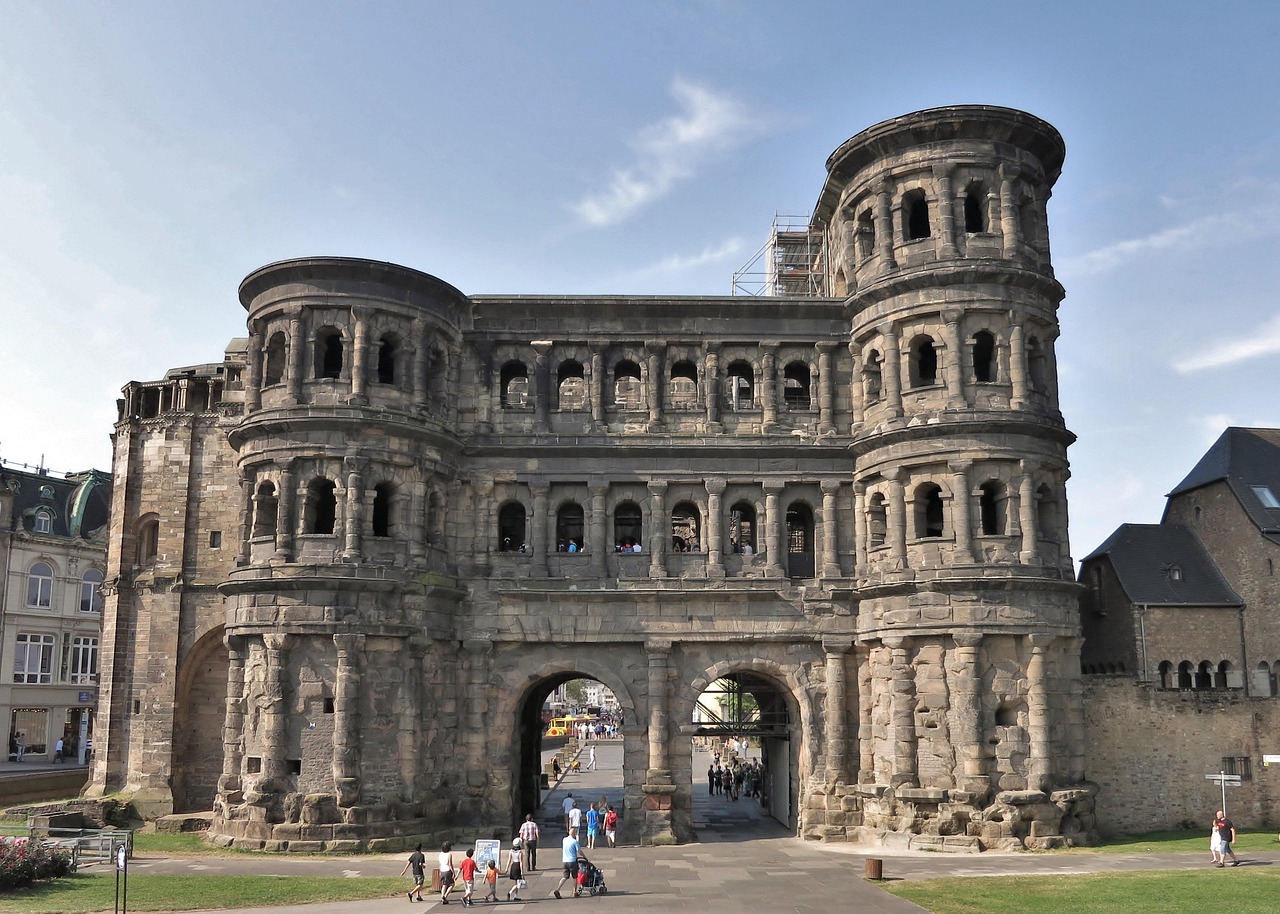
Why Visit Porta Nigra & Trier in 2026
Technically, Porta Nigra is a single monument. In reality, it’s a whole world. Around it unfurls Trier—the oldest city in Germany—where Roman baths and basilicas sit beside wine taverns, university cafés, and a riverfront that glows soft gold at sunset. In 2026, the city is leaning hard into its heritage with new exhibitions, upgraded lighting at the main monuments, and a livelier-than-usual festival calendar.
Reasons to put Porta Nigra and Trier on your 2026 travel list:
- A uniquely intact Roman cityscape: Porta Nigra, the Imperial Baths, the Amphitheatre, the Roman Bridge, the Basilica of Constantine—all within walking distance.
- Atmosphere at all hours: Dawn mist around the gate, midday café chatter in the Hauptmarkt, blue-hour light on sandstone towers, and floodlit ruins at night.
- Family-friendly but sophisticated: Kids can climb towers and tunnels; adults can dig into Riesling, Roman history, and seriously good regional food.
- Gateway to the Moselle: Vineyards, river cruises, and easy day trips to Luxembourg and smaller wine towns.
- Manageable scale: A compact historic center makes 2 days in Porta Nigra’s orbit feel full but not frantic; 3–4 days let you slow down and go deeper.
If you’re plotting a 2 day itinerary for Porta Nigra and Trier, or stretching to a 3 day itinerary for Porta Nigra and its Roman siblings, this 2026 travel guide for Porta Nigra will help you weave the must-see sites with quieter, more local experiences.
Table of Contents
- 1. Understanding Porta Nigra & Trier’s Historic Layout
- 2. Itineraries: 2–4 Days Around Porta Nigra
- 3. Main Quarters, Monuments & Key Sites (12 Deep Dives)
- 3.1 Porta Nigra
- 3.2 Hauptmarkt & Medieval Old Town
- 3.3 Trier Cathedral & Church of Our Lady
- 3.4 Basilica of Constantine
- 3.5 Imperial Baths (Kaiserthermen)
- 3.6 Barbara Baths
- 3.7 Roman Amphitheatre
- 3.8 Roman Bridge & Moselle Riverside
- 3.9 Electoral Palace & Palace Garden
- 3.10 The Viertel: Streets Around Porta Nigra
- 3.11 Simeonstraße & Hidden Alleys
- 3.12 Olewig Wine Quarter
- 4. Local Food in Porta Nigra’s Orbit: Where & What to Eat
- 5. Evenings Around Porta Nigra: Night Atmosphere & Events
- 6. Events & Festivals 2026–2027
- 7. Day Trips & Nearby Attractions
- 8. Cultural Etiquette & Local Customs
- 9. Practical Travel Advice for Porta Nigra & Trier
- 10. Summary & Best Seasons to Visit
1. Understanding Porta Nigra & Trier’s Historic Layout
When you plan things to do in Porta Nigra’s neighborhood, it helps to imagine Trier as a Roman grid that has slowly melted into a medieval maze, then been overlaid with tramlines, buses, and bike paths. The Porta Nigra once stood at the northern gate of a walled Roman city. Today, it feels like the front door of the Altstadt.
Stand with your back to Porta Nigra and look south: Simeonstraße runs straight into the heart of the old town, ending in the Hauptmarkt. From there, a short hop takes you west to the Dom and Liebfrauenkirche, or east to the Basilica of Constantine and the Electoral Palace. Continue south and you reach the Imperial Baths and the Amphitheatre. Tilt southwest and you’ll eventually descend to the Roman Bridge and the Moselle.
Over the centuries, the city walls crumbled, the Roman street grid warped into twisting alleys, and the gate that once defended the city turned into a church, then a symbol, and now the anchor of every 2 day itinerary for Porta Nigra and Trier. I like to think of the area in chronological layers:
- Roman layer: Porta Nigra, baths, amphitheatre, bridge, basilica foundations.
- Medieval layer: Cathedral quarter, Hauptmarkt, guild houses, crooked lanes.
- Baroque & classical layer: Electoral Palace, palace gardens, facades along the Moselle.
- Modern layer: Trams, university energy, street art, wine bars, and cafés flowing around the old stones.
To feel this layering, I always start at Porta Nigra at sunrise when the stone is still cool and quiet, then walk south through the old town, looping in the Roman sites in roughly chronological order, ending by the river at sunset. The itineraries below follow this organic flow.
2. Itineraries: 2–4 Days Around Porta Nigra
Whether you have 2 days in Porta Nigra’s shadow or 4 days in Trier, the trick is to mix the must-see attractions with slower, more lived-in moments: a coffee where shopkeepers greet each other by name, a glass of Riesling in a courtyard no group tour will ever find, a late-night walk under floodlit arches.
2.1 A 2 Day Itinerary for Porta Nigra & Trier
My recommended 2 days in Porta Nigra and Trier assume you’re staying within walking distance of the gate. If you arrive by train, it’s about a 15–20-minute stroll or a short bus ride to the Altstadt.
Day 1: Porta Nigra, Old Town & Roman Highlights
I like to start my first day in Trier by circling the Porta Nigra before the tour buses arrive. Around 8:00–9:00, the air still smells faintly of bakery bread, and delivery vans rattle over cobbles behind you.
- 08:30 – Inside Porta Nigra
Buy the combined Roman monuments ticket at the small booth and head inside. Climb to the upper levels, pausing to imagine the original city wall stretching away on either side. On a clear morning, the view from the top—rooftops slipping away towards the river, the cathedral towers poking up—is the best possible orientation to the city.
My first time inside, I joined a costumed guide playing a Roman soldier. It was kitschy and unexpectedly moving: he tapped the stone, explaining how each block was hauled into place, how the blackening came from centuries of weather and hearth smoke. If you’re traveling with kids, these theatrical tours are gold—engaging, noisy, and surprisingly informative.
- 10:00 – Simeonstraße to Hauptmarkt
Step back out, turn your face south, and stroll down Simeonstraße. Yes, it’s busy and lined with shops, but watch the details: half-timbered facades above modern storefronts, signs for bakeries selling Schneeballen and seasonal pastries. Pop into a café for a second breakfast—my go-to is a strong coffee and a still-warm pretzel, eaten at a high table where you can people-watch.
- 10:30 – Hauptmarkt & Market Life
Arriving in the Hauptmarkt feels like walking into a painting: the Steipe with its arcades, the colorful facades, the fountain at the center. If you’re here on a market day (usually Tuesday and Friday mornings, with seasonal variations), stroll the stalls: seasonal fruit, local cheeses, wildflower bouquets. It’s easy to see why this square is one of the best places to visit in Porta Nigra’s orbit.
I like to grab a piece of fruit or a simple snack here, not because I’m hungry but because it anchors me in local rhythms. You’ll hear the sing-song cadence of the regional dialect; vendors tease each other about football scores and weather forecasts. It’s one of those subtle cultural experiences in Porta Nigra territory that doesn’t feel like a “sight” but stays with you longer than a museum label.
- 11:30 – Trier Cathedral & Church of Our Lady
From Hauptmarkt, it’s a few minutes’ walk west to the Domfreihof, an open square where the monumental Trier Cathedral (Dom) and the delicate Liebfrauenkirche sit cheek by jowl.
Step into the Dom first. It’s massive, layered, solemn. I always pause in the cool hush just after the entrance to let my eyes adjust and my ears reset from city noise. If you’re visiting in the shoulder seasons, you might catch an organ rehearsal—the sound filling the stone vaults is spine-tingling.
Next door, the Liebfrauenkirche feels like stepping into lace turned to stone. It’s one of Europe’s earliest Gothic churches, and the play of light through the windows is beautiful, especially on a sunny day. Dress modestly (covered shoulders, respectful clothing) and keep voices low; even outside formal services, this is an active place of worship.
- 13:00 – Lunch in a Side Alley
Instead of eating on the main square, duck into one of the side alleys between Domfreihof and Hauptmarkt. This is where some of my favorite spots for local food in Porta Nigra’s neighborhood hide—family-run restaurants where you can order hearty regional dishes: Saumagen (stuffed pork stomach), Döppekooche (potato cake), or a lighter salad with local goat cheese.
I usually ask for a small glass of Riesling and something seasonal—white asparagus in spring, game in autumn. The staff will almost always help you navigate the menu if you say you’re curious about traditional dishes; this curiosity is appreciated here.
- 14:30 – Basilica of Constantine & Electoral Palace
Walk east from the Dom towards the massive brick hall of the Basilica of Constantine. Once the audience hall of the Roman emperor, it’s now a Protestant church. Inside, the scale alone is humbling: a single vast, unbroken space that feels both austere and immense.
Behind the basilica, the pink façade of the Electoral Palace peeks out, framed by manicured gardens. Even if you’re not a palace person, the Palastgarten is a perfect spot to sit on a bench, digest lunch, and watch local life—students lounging on the grass, kids rolling down small hills, couples sharing ice cream on the steps.
- 16:00 – Imperial Baths (Kaiserthermen)
Continue south to the Imperial Baths, the skeletal remains of an enormous Roman bath complex. This is where the city’s Roman engineering prowess comes into sharp focus: underground passages, thick walls, and a sense of what daily luxury might have meant 1,700 years ago.
I always bring a light jacket here; even on hot days, the partially subterranean areas can feel surprisingly cool. If you’re traveling with kids, let them explore the tunnels (staying within marked paths, of course). It’s one of the more adventurous-feeling things to do in Porta Nigra’s wider complex.
- 18:30 – Dinner & Evening Stroll Around Porta Nigra
Head back towards Porta Nigra through the old streets. As the day-trippers thin out, the gate takes on a different character. Have dinner at a wine tavern within sight of the monument, then circle it once more under the evening lights.
I like to sit on the low wall opposite the gate around 21:00 in summer, when the sky is a deep indigo and the stone glows amber. It’s quietly romantic without being saccharine—perfect for couples, but also contemplative if you’re traveling solo.
Day 2: Amphitheatre, Barbara Baths & Moselle Riverfront
For your second day, you’ll branch out from the core and explore the southern Roman sites and the river. This is also a good day to weave in some hidden gems and leisurely café time.
- 09:00 – Roman Amphitheatre
Start early at the amphitheatre on the eastern edge of the old town. It’s a gentle uphill walk from the center, or a short bus ride if you’re tired from day one.
The amphitheatre feels oddly peaceful in the morning. I like to sit on the stone steps, close my eyes, and imagine the roar of 20,000 spectators. The underground chambers—once holding cages, machinery, and animals—are atmospheric but not too intense for kids, especially if you frame it as a place of engineering rather than just spectacle.
- 11:00 – Barbara Baths
Head northwest towards the Barbara Baths, a more ruined, less-visited bath complex than the Imperial Baths. This is one of my favorite hidden gems in Porta Nigra’s Roman network: quieter, more contemplative, with excellent interpretive signs.
On my last visit, I lingered here longer than planned, watching a school group sketching the ruins with charcoal. The teacher pointed out small details I’d never noticed—drainage channels, brick layering. If you enjoy archaeology, this site rewards slow looking.
- 13:00 – Lunch in the Viertel or Along the Moselle
Make your way back towards the center, then drift down to the river. Depending on your energy, either grab a riverside lunch—simple grilled fish, salads, and wine—or head into the Viertel, the quarter just around Porta Nigra, for a more urban feel.
For families, a picnic by the river is ideal: let kids run in the grassy areas while adults relax. For couples, pick a restaurant with outdoor seating and linger; the pace by the water is slower than in the old town.
- 15:00 – Roman Bridge & Riverside Walk
Walk to the Roman Bridge, one of the oldest functioning bridges north of the Alps. The core piers date back to the 2nd century. Cars still cross, but there are pedestrian paths and viewpoints along the bank.
I like to cross halfway, lean on the railing, and look back at Trier’s skyline. It’s an understated but memorable vista: no single skyscraper, just towers, roofs, and the faint outline of the hills.
- 16:30 – Café & Shopping in the Old Town
Return to the Altstadt for café time and a bit of shopping. Seek out local products: Moselle wines, honey, artisan ceramics. Avoid the more obvious souvenir shops on Simeonstraße and instead duck into side streets off Hauptmarkt. - 19:00 – Farewell Dinner with a View of Porta Nigra
For your final evening, book a table at a restaurant with either a rooftop or upper-floor window overlooking the gate. As you eat, you’ll watch the crowds thin, the buses disappear, and the old stones reclaim the night.
With this 2 day itinerary for Porta Nigra and Trier, you’ll have covered the must-see attractions while leaving enough breathing space to simply be in the city. If you can stretch to a third day, things get even more interesting.
2.2 A 3 Day Itinerary for Porta Nigra & Trier
With 3 days in Porta Nigra’s orbit, you can go deeper into local neighborhoods, wine culture, and slower moments. Days 1 and 2 follow the outline above; day 3 is about texture and personal favorites.
Day 3: Olewig Wine Quarter & Neighborhood Wandering
- 09:30 – Slow Start & Local Bakery
Sleep in a bit, then head to a bakery favored by locals just off the main drag. You’ll recognize it by the queue of people holding reusable bags. Grab a Brötchen (bread roll) or a slice of Streuselkuchen and eat it on a bench in a small square—ideal for travelers who want to feel less like tourists and more like temporary residents.
- 11:00 – Olewig Wine Quarter
Catch a bus or take a gentle uphill walk to Olewig, Trier’s wine-growing suburb tucked into the vineyards. This is one of the best hidden gems in Porta Nigra’s extended neighborhood: half-timbered houses, small wineries, and taverns where German blends with Luxembourgish and French at neighboring tables.
I like to arrive just before lunch, when the light is high and the vines glow. Book a tasting at a small family-run Weingut; they’ll usually happily walk you through a flight of Rieslings, Pinot Blancs, and perhaps a rosé, explaining the slopes and soils. Ask about the difference between dry (trocken) and off-dry (feinherb)—it’s key to enjoying Moselle wines.
- 13:30 – Wine Tavern Lunch
Have lunch in a traditional Weinstube in Olewig. Dishes tend to be hearty and comforting: schnitzel with potato salad, Flammkuchen (thin, crisp flatbread) topped with bacon and onions, or cheese plates featuring local specialties. It’s cozy and ideal for couples or groups of friends; families are welcome, too, especially at lunchtime.
On my last trip, I shared a communal table with an older couple from Koblenz who’ve been coming to the same tavern for 30 years. They told me stories of how Porta Nigra looked before some of the more recent restorations—a reminder that even “timeless” monuments are constantly changing.
- 15:30 – Vineyard Walk & Panoramic Views
After lunch, walk a signed vineyard trail above Olewig. The paths are generally well-marked and of moderate difficulty. From the slopes, you can look back towards the city, spotting the cathedral towers and the umbrella of trees around the Imperial Baths.
This is my favorite romantic activity in Trier: walking side by side through rows of vines, pausing on a bench with a shared bottle (or just water if you’ve had enough wine), and letting conversation wander.
- 18:00 – Return to Porta Nigra & Evening Tour
Head back into town and, if available during your visit, join an evening or torchlit tour of Porta Nigra. In 2026, the city has expanded these to include more storytelling about the gate’s medieval life as a church and its role in modern identity.
Walking the upper levels in dusk light, with fewer people around, is an entirely different experience from daytime—silent, almost cinematic. For photography, this is prime time; check rules about tripods, but a small, discreet camera is fine.
- 20:00 – Casual Dinner & Nightcap
Finish day three with a casual dinner in the Viertel, then a nightcap at a wine bar or craft beer spot. Watch how the city shifts into a softer tempo; even in high season, late evenings never feel out of control here.
With a 3 day itinerary for Porta Nigra and Trier, you’ve now blended must-see attractions, local wine culture, and neighborhood wandering—a deeply satisfying balance.
2.3 A 4 Day Itinerary for Porta Nigra & Trier
If you have 4 days in Porta Nigra’s orbit, you can add a day trip or dive deeper into museums and contemporary culture. Days 1–3 as above; for day 4, choose between:
Option A: Luxembourg City Day Trip
- Morning – Train to Luxembourg City
Regular trains connect Trier and Luxembourg City in about 50–55 minutes. It’s an easy cross-border hop: bring your passport, but Schengen rules mean no formal border checks for most nationalities. - Day – Explore Luxembourg’s Old & New
Walk the casemates, the cliffside paths, and the compact old town. The contrast with Trier is striking: more glass towers, more international institutions, but still a historic core. - Evening – Return to Porta Nigra’s Glow
Back in Trier by evening, take a slow lap around the old town and Porta Nigra to re-center yourself in the Roman rhythm.
Option B: Deep Dive into Museums & Quiet Corners
- Rheinisches Landesmuseum Trier – One of Germany’s best archaeological museums; give it at least 2–3 hours if you care about Roman history.
- Stadtmuseum Simeonstift – Local history and art in a building just steps from Porta Nigra; ideal to pair with reflective time at the gate itself.
- Repeat Visit to a Favorite Monument – With a 4 day itinerary for Porta Nigra and Trier, you can revisit the site that spoke to you most—perhaps the amphitheatre at dawn or the Basilica of Constantine in a quiet midday lull.
I often use day four for slow pleasures: a long lunch, reading in the palace garden, a final evening photography walk around the gate and neighboring streets. It’s on that fourth day that you stop feeling like a visitor and start feeling like you’ve briefly lived here.
3. Main Quarters, Monuments & Key Sites Around Porta Nigra (12 Deep Dives)
These are the beating hearts of any serious travel guide for Porta Nigra and Trier: the places I return to trip after trip, each time noticing something new. Think of this section as a menu of must-see attractions in Porta Nigra’s orbit, with enough depth to reward repeat visits.
3.1 Porta Nigra
Built around 170 CE, Porta Nigra’s massive sandstone blocks were originally pale; centuries of soot and weather darkened them, gifting the gate its name: “Black Gate.” It’s the largest preserved Roman city gate north of the Alps, and in 1986 it became part of Trier’s UNESCO World Heritage listing.
I’ve climbed Porta Nigra in every season. In winter, I remember icy wind funneling through the arches, my breath clouding as I pressed gloved hands against the stone. In summer, the interior coolness is a welcome break from heat shimmering off the cobbles outside.
Highlights and tips:
- Upper Gallery: Offers the best close-up view of the stonework and a sweeping outlook over the old town. Ideal for orientation photos and quiet contemplation.
- Medieval Church Traces: Look for remnants of the St. Simeon church that once transformed the gate; a reminder that this was a living building, not just a fossil.
- Roman Soldier Tours: Available seasonally; highly recommended, especially for families. Ask at the ticket booth for schedules.
- Accessibility: The interior involves stairs and uneven surfaces; not suitable for all mobility levels, but the exterior can be appreciated from the square.
- Best Times: Early morning and late evening for atmosphere; midday for clearer photos but heaviest crowds.
If there’s one place in Trier where I always put my phone away for a few minutes, it’s here. Lean against the railing on the top level, feel the vibration of the city below, and imagine carts, not cars, streaming through the arch.
3.2 Hauptmarkt & Medieval Old Town
The Hauptmarkt is Trier’s medieval heart: a stage where centuries of civic life have played out. Colorful townhouses with steep gables crowd around a central fountain, with the tall Market Cross reminding you this was once a place of announcements, punishments, and celebrations.
On my first visit, I made the rookie mistake of assuming every café on the square was a tourist trap. Not so. While some lean touristy, others are genuinely local hangouts; watch where people in work clothes, not hiking sandals, sit down for their morning coffee.
What to look for:
- Steipe: The Gothic building with arcades; once a banquet hall, it's a camera magnet and an anchor landmark.
- Market Cross: A replica, but symbolically potent; try to picture medieval crowds listening to proclamations here.
- House Signs: Look up to spot sculpted signs—lions, grapes, tools—once essential for illiterate passersby.
- Seasonal Markets: In Advent, the Christmas market spills from here towards the cathedral; in summer, occasional festivals animate the square.
For me, the Hauptmarkt is less a “site” than a recurring scene. Morning coffee, midday snack, late-afternoon people-watching: it’s the square that threads your days together.
3.3 Trier Cathedral & Church of Our Lady
The Dom and Liebfrauenkirche share the Domfreihof square, embodying two eras of sacred architecture almost literally wall to wall. The cathedral’s roots reach back to the 4th century, making it the oldest bishop’s church in Germany. Liebfrauenkirche is among the earliest pure Gothic churches in the country.
I’ve sat through both a Sunday mass and a quiet weekday organ rehearsal here. Even if you’re not religious, the music spills out of centuries of stone in a way that’s hard not to feel. Respectful behavior—muted voices, modest dress—isn’t just expected, it feels instinctive.
Don’t miss:
- Cathedral Interior: Massive pillars, chapels, and relics; look for the mix of Roman, Romanesque, and Gothic elements.
- Cloisters: A quieter, more intimate space where the play of light and shadow is mesmerizing.
- Liebfrauenkirche Interior: Stand in the center and look up; the delicate vaulting feels almost weightless.
Photography is generally allowed, but avoid flash and never shoot during services without explicit permission. This is true across all sacred sites in Trier: when in doubt, ask or simply refrain.
3.4 Basilica of Constantine (Konstantin-Basilika)
The Basilica of Constantine is a lesson in Roman power through emptiness. Unlike ornate medieval churches, its interior is an unbroken hall of brick and light. It was originally the throne room of Emperor Constantine; now it’s a Protestant church and concert venue.
I first visited on a hot August day. Stepping inside felt like entering a refrigerator of calm: cool shadows, a faint echo of footsteps, the occasional creak of wood. I sat at the back for a full half-hour without moving, just letting the scale register.
What makes it special:
- Scale & Proportion: The hall is 67 meters long; stand at one end and let your eye travel uninterrupted to the other.
- Acoustics: If you can catch a concert here, do. The sound is extraordinary, especially for choral or organ music.
- Windows & Light: Simple, modern glazing allows soft daylight to wash the brick walls—a photographer’s quiet delight.
This is one of those cultural experiences in Porta Nigra’s constellation that feels almost secular in its solemnity: not about worship, but about the architecture of authority.
3.5 Imperial Baths (Kaiserthermen)
The Imperial Baths are the Roman equivalent of a half-finished palace: grand ambitions, never fully realized, but still awe-inspiring. Built in the 4th century, they were part of Trier’s brief stint as an imperial residence.
The first time I ducked into the underground corridors, my phone’s signal disappeared and the external world went with it. It’s not claustrophobic—spaces are wide—but it’s disorienting in a pleasant way, like stepping into Roman backstage.
Highlights:
- Underground Heating System: Remains of hypocaust pillars and channels; imagine hot air circulating under the floors.
- Massive Walls: Stand close and look up to appreciate the scale; these were meant to impress.
- Above-Ground Ruins: From certain angles, you get postcard-worthy shots of arches framed against the sky.
Wear sturdy shoes; the ground is uneven in places. For families, this is a top pick for slightly adventurous exploration without real danger, as long as kids stay near you.
3.6 Barbara Baths
Less famous than the Imperial Baths, the Barbara Baths reward patient visitors. Built in the 2nd century, they were once among the largest baths in the Roman Empire. Today, they’re more ruin than structure, but the foundations and layout are still legible.
I like this site for its quiet. On a weekday afternoon, you might share it with only a handful of other visitors and the occasional archaeologist. Information panels help reconstruct the complex in your mind: hot and cold rooms, exercise areas, social spaces.
If you’re building a 3 day itinerary for Porta Nigra and Trier that leans into archaeology, this is a must. For casual visitors on a tighter schedule, it’s optional but recommended if you enjoy less crowded, contemplative ruins.
3.7 Roman Amphitheatre
The amphitheatre, carved into a natural hillside, is both brutal and beautiful. Built in the 2nd century, it hosted gladiatorial contests and spectacles. Today, grass softens the stone, and wildflowers sprout from cracks.
I’ve attended a summer performance here—a concert, not a reenactment—and the setting was electric. As the sun dipped behind the rim, bats swooped overhead, and the stage lights cast long shadows where once the crowd roared.
Key aspects:
- Underground Chambers: Atmospheric, with interpretive panels; supervise young kids but don’t shy away.
- Upper Seating: Climb to the highest tiers for a view back over the city and surrounding hills.
- Events: Check the 2026 calendar for concerts or special events; they add a layer of living culture to the stone shell.
3.8 Roman Bridge (Römerbrücke) & Moselle Riverside
The Roman Bridge is subtle compared to Porta Nigra but no less impressive: its core piers have carried traffic across the Moselle since the 2nd century. Today, cars, bikes, and pedestrians share it, often oblivious to the age of what’s under their tires.
I like to approach it from the riverbank path, where you can see the arches mirrored in the water. Early morning mist or late-afternoon golden light are best; in summer, you may pass joggers, anglers, and picnicking families.
The riverside itself is a lovely place for unstructured time: rent a bike, take a short cruise, or simply walk until the urban noise fades. It’s a gentle counterpart to the intensity of Porta Nigra and the baths.
3.9 Electoral Palace & Palace Garden (Kurfürstliches Palais & Palastgarten)
The pink-and-white confection of the Electoral Palace, grafted onto the stern brick of the Basilica of Constantine, is one of Trier’s most Instagrammed sights. But I love it less for the façade and more for the life in the gardens.
On sunny days, the lawns are scattered with students reading, office workers eating lunch, and children chasing each other between statues. I often bring a takeaway coffee here and sit on the low wall to write notes; the murmur of conversations in German, French, and English creates a soft, cosmopolitan soundtrack.
For families, this is one of the most relaxed things to do in Porta Nigra’s neighborhood: kids can run freely, and there’s always a patch of shade in summer. For couples, find a bench overlooking the fountains for a quietly romantic pause.
3.10 The Viertel: Streets Around Porta Nigra
Locals sometimes refer simply to “das Viertel” when they talk about the cluster of streets and lanes immediately around Porta Nigra. This is where tourist flows and everyday life intersect: souvenir shops and serious wine merchants, chain stores and tiny galleries, street musicians and schoolkids.
I’ve stayed in small guesthouses here, the kind with crooked floors and windows framing Porta Nigra at odd angles. Waking up, pulling back the curtain, and seeing the gate bathed in dawn light is a powerful way to start a day.
What to seek out:
- Side Alleys: Step off Simeonstraße into narrower lanes that run parallel; here you’ll find less polished but more authentic shops.
- Wine Shops: Ask for recommendations on small producers; staff love guiding curious visitors.
- Street Art & Details: Look for murals, creative shop signs, and tiny shrines tucked into corners.
If you’re deciding where to stay—inside the old quarter vs. modern town—the Viertel is my usual recommendation if you don’t mind some evening noise. You’re a minute’s walk from everything, and night strolls around the gate become an easy habit.
3.11 Simeonstraße & Hidden Alleys
Simeonstraße is the spine connecting Porta Nigra to the Hauptmarkt. It can feel crowded and commercial, but it’s also a useful axis: landmarks, cafés, and side alleys all radiate from it.
On my first trip, I made the mistake of sticking to Simeonstraße and assuming that was “the old town.” Only later did I start ducking into every inviting gap: narrow lanes that suddenly opened into hidden courtyards, quiet churches, or tiny wine bars with three tables and a chalkboard menu.
My tip: use Simeonstraße for orientation, but set yourself the challenge of turning off it every second block. That’s where the real magic starts.
3.12 Olewig Wine Quarter
Olewig feels like a village that never quite got absorbed into the city, even though it technically has. Vineyards climb the slopes above clusterings of houses, and in the evenings, light spills from tavern windows as locals and visitors share plates and bottles.
I’ve celebrated birthdays here with friends, lingering over long meals as the wine list worked its way around the local hillsides. I’ve also come alone, notebook in hand, finding a corner table where the staff let me stay for hours with a single glass and a bowl of soup.
For any 4 day itinerary for Porta Nigra and Trier, Olewig is non-negotiable in my book. It’s where you taste the landscape you’ve spent days walking through: the slatey elegance of Riesling, the easy hospitality of the region.
4. Local Food in Porta Nigra’s Orbit: Where & What to Eat
Trier’s food scene is rooted in hearty Rhineland-Palatinate traditions, with a strong Moselle wine influence and an increasing flair for lighter, seasonal cooking. The best meals I’ve had here haven’t been in white-tablecloth venues but in family-run restaurants and wine taverns where the menu is handwritten and seasonal.
Signature dishes and drinks to look for:
- Flammkuchen: Thin, crisp dough topped with crème fraîche, onions, and bacon. Perfect with a glass of Riesling; shareable and kid-friendly.
- Döppekooche: Baked grated potato cake, often with sausage or bacon; rustic and filling, ideal on cool days.
- Saumagen: Stuffed pork stomach, more delicate than it sounds, sliced like a loaf and served with sauerkraut.
- Federweißer (seasonal): Partially fermented new wine, cloudy and lightly fizzy; available in early autumn.
- Riesling: The queen of Moselle wines; explore dry, off-dry, and sweeter styles with staff guidance.
For atmospheric evenings, look for narrow alleys between Porta Nigra and the Dom: lantern-lit passages where small restaurants tuck into old stone buildings. One of my favorite dinners was in a low-vaulted cellar room where candlelight made the plaster walls glow; the menu was short but honest, and the owner chatted about the changing face of tourism in 2026 as we worked through a flight of wines.
If you want to avoid tourist-centric spots, watch where groups with lanyards go—and then walk two streets away. Restaurants that open primarily for dinner and have German-only chalkboard menus are often your best bets for authenticity.
5. Evenings Around Porta Nigra: Night Atmosphere & Events
Evenings are when Porta Nigra and its surroundings really breathe. The floodlights flicker on, washing the stone in warm tones, and the daytime busyness gives way to a slower, more intimate city.
Evening highlights and ideas:
- Lit-Up Monuments: Porta Nigra, the Dom, and parts of the Imperial Baths are beautifully illuminated. A self-guided “light walk” linking them is an easy, atmospheric night outing.
- Sound-and-Light Shows: In 2026, Trier is expanding occasional projection shows on the Basilica of Constantine and special events around Porta Nigra; check the city tourism site for dates.
- Guided Night Tours: Torchlight tours of Porta Nigra or ghost-story walks through the old town are family-friendly and fun without being cheesy.
- Wine Bars & Live Music: Smaller bars often host acoustic sets; ask locals or check flyers near the university for current listings.
The difference between busy tourist hours and a late-night walk is striking. I’ve walked through Simeonstraße at midnight in summer and heard only the echo of my own footsteps, the occasional clink of glasses from a late terrace, and the low murmur of conversation under the Porta Nigra. It’s a side of the city many day-trippers never see.
6. Events & Festivals 2026–2027
As of 2026, Trier is leaning into its dual identity: ancient Roman capital and modern university town. While exact dates can shift, here are the kinds of events to watch for in 2026–2027 that particularly enrich a visit focused on Porta Nigra:
- Römerfest (Roman Festival): Usually held in late spring or early summer, with reenactments, markets, and special programming at Porta Nigra, the Amphitheatre, and baths.
- Moselwein-Festivals: Wine festivals in Trier and nearby villages (especially late summer–early autumn), featuring regional producers, food stalls, and live music.
- Porta Nigra Light Nights: Periodic evenings when the gate receives special artistic lighting or projections, often paired with extended opening hours.
- Advent & Christmas Markets: From late November through December, markets spread between Porta Nigra, Hauptmarkt, and the Dom area—a particularly atmospheric time to visit.
- Classical Concerts & Organ Festivals: Held in the Dom, Basilica of Constantine, and select churches; for music lovers, these are essential cultural experiences.
When planning a 2 day itinerary for Porta Nigra in festival season, book accommodation early and allow extra time for crowds—but also embrace the energy. If you prefer quieter streets, aim for shoulder seasons outside school holidays.
7. Day Trips & Nearby Attractions
Once you’ve walked through Porta Nigra’s arch a dozen times, you may feel the pull of the surrounding countryside. The Moselle valley is dotted with small towns, castles, and vineyards, all within easy reach of Trier.
Recommended day trips:
- Luxembourg City: As mentioned, under an hour by train. Combine with a 3–4 day stay in Trier for a cross-border mini-break.
- Bernkastel-Kues: A postcard-perfect wine town upstream on the Moselle; reachable by train–bus combo or car. Half-timbered houses, cobbled squares, and boat tours.
- Saarburg: A small town with a waterfall tumbling through its center, reachable by regional train. Charming, walkable, and photogenic.
- Nearby Vineyards & Hiking Trails: Ask at the tourist office for current maps of Moselsteig hiking segments; some start or end near Trier and offer superb views.
For each day trip, start early and plan to be back by evening to savor another walk under Porta Nigra’s stones. Public transport is generally reliable; renting a car gives more flexibility but is not essential.
8. Cultural Etiquette & Local Customs
Trier is relaxed and welcoming, but a bit of cultural awareness goes a long way toward smoother interactions and more genuine connections.
- Greetings: A simple “Guten Tag” or “Hallo” when entering shops and cafés is appreciated. In smaller places, say goodbye (“Tschüss” or “Auf Wiedersehen”) when you leave.
- Restaurant Etiquette: Seat yourself if not greeted at the door; it’s normal to share large tables in traditional taverns. Service can feel slower than in Anglo cultures—this is by design, not neglect. Ask for the bill (“Zahlen, bitte”) when ready; it won’t be dropped automatically.
- Tipping: Rounding up or adding 5–10% is standard in restaurants, bars, and taxis. Hand the total amount to the server when paying.
- Quiet in Sacred Spaces: In the Dom, Liebfrauenkirche, and other churches, keep voices low and dress modestly. Avoid phone calls and loud conversations inside.
- Punctuality: Trains, tours, and reservations value punctuality. Arrive a few minutes early where possible.
- Recycling & Cleanliness: Germany takes waste separation seriously; use the right bins and don’t litter. Public spaces are generally clean; contribute to keeping them that way.
Showing curiosity about local wine, food, and history is welcomed. I’ve had many conversations start when I asked a server about a specific regional dish or a shopkeeper about a wine’s origin.
9. Practical Travel Advice for Porta Nigra & Trier
9.1 Getting Around
Trier’s historic center is compact; most things to do in Porta Nigra’s surroundings are easily walkable. For farther sites (Olewig, outskirts), buses and taxis fill the gap.
- On Foot: The old town is best explored walking. Wear comfortable shoes; cobbles can be hard on feet and ankles.
- Public Transport: Buses connect the station, Porta Nigra, and outlying districts. Tickets can be bought at machines, in some cases via apps; validate if required.
- Car Rental: Useful for exploring the wider Moselle, but not necessary within Trier itself. Parking near the old town is possible in garages; follow signs.
- Cycling: The Moselle river path is ideal for cycling; rentals are available near the riverfront and station.
9.2 Tickets & Money-Saving Strategies
For the Roman monuments, consider combined tickets or city passes, which often include Porta Nigra, the baths, amphitheatre, and sometimes museum discounts. This is particularly good value for 3 day itineraries for Porta Nigra and Trier.
- Combined Tickets: Ask at Porta Nigra or the tourist office; options change over time, but bundles are almost always offered.
- Off-Peak Visits: Visit major sites early or late to avoid cruise-ship and coach tour crowds, which tend to peak mid-morning to mid-afternoon.
- Free Sights: Palace gardens, old town squares, churches (usually), and riverside walks are all free; build them into your days to balance paid attractions.
9.3 SIM Cards & Connectivity
For international visitors, prepaid SIM cards from major German providers are widely available at electronics shops, supermarkets, and some kiosks in or near the station.
- Providers: Telekom, Vodafone, and O2 all have decent coverage in Trier and along the main Moselle corridor.
- EU Roaming: For EU residents, roaming rules often mean you can use your home plan without extra charges; confirm with your provider.
- Wi-Fi: Many hotels, cafés, and some public spaces offer free Wi-Fi; performance varies but is usually good enough for messaging and maps.
9.4 Accessibility & Historic Streets
Cobblestones, steps, and uneven surfaces are part of Trier’s charm, but they can be challenging.
- Porta Nigra Interior: Multiple flights of stairs; not wheelchair accessible. Exterior views are fully accessible.
- Baths & Amphitheatre: Some areas are accessible, others not; check at ticket offices for current accessibility information.
- Old Town Streets: Generally accessible but bumpy; allow extra time for wheelchairs or strollers.
9.5 Dress Code & Photography Rules
There’s no strict dress code for most sites, but:
- Religious Sites: Cover shoulders; avoid beachwear, very short shorts, and loud clothing. Remove hats.
- Archaeological Etiquette: Stay on marked paths, don’t climb on fragile walls, and don’t remove stones or artifacts (yes, it still needs to be said).
- Photography: Non-flash photography is usually allowed in churches and museums, but check signs. Drones are tightly regulated; do not fly near Porta Nigra or other monuments without explicit permission.
9.6 Visa Requirements & Driving Licences
Germany is part of the Schengen Area. Visa requirements depend on your nationality:
- EU/EEA/Swiss Citizens: Can enter and stay with valid ID cards or passports.
- Many Non-EU Visitors: Short stays (typically up to 90 days in 180) may be visa-free; always confirm based on your passport.
- Driving: Foreign driving licences are generally accepted for tourists; some nationalities may need an International Driving Permit alongside their licence. Check before you travel.
9.7 Seasons & Weather: When to Visit
Porta Nigra and Trier are year-round destinations, but each season shapes the experience:
- Spring (April–June): Mild temperatures, blossoming trees, fewer crowds. Ideal for a relaxed 2 day itinerary for Porta Nigra or longer stays.
- Summer (July–August): Warm to hot; longest days, most festivals, and busiest crowds. Book ahead; start sightseeing early to avoid midday heat at exposed ruins.
- Autumn (September–October): My personal favorite: harvest season in the vineyards, golden light, cooler air. Perfect for wine-focused 3–4 day itineraries for Porta Nigra and Trier.
- Winter (November–March): Quiet, chilly, occasionally snowy. Christmas market season (late November–December) brings warmth and festivity to the old town; outside that window, expect a calmer, introspective city.
9.8 Money-Saving Tips
- Use combined tickets and city passes for Roman sites.
- Eat main meals at lunch, when some restaurants offer specials; keep dinners lighter and more casual.
- Buy snacks and picnic supplies at supermarkets and bakeries rather than always eating out.
- Use tap water; it’s safe and free in Germany, though not always offered automatically in restaurants—ask for “Leitungswasser.”
10. Summary & Final Recommendations
Porta Nigra is more than a blackened Roman gate: it’s the anchor around which an entire city’s history, culture, and daily life continues to swirl. Whether you’re crafting a brisk 2 day itinerary for Porta Nigra, a more immersive 3 day itinerary for Porta Nigra and Trier, or a leisurely 4 day itinerary for Porta Nigra that includes wine villages and day trips, you’ll find a satisfying mix of must-see attractions, hidden gems, and genuine cultural experiences.
My distilled advice after multiple visits:
- Start and end your days at Porta Nigra; watching it in different lights and moods is half the joy.
- Balance Roman sites with medieval squares, riverside walks, and vineyard time.
- Eat where menus are short, seasonal, and handwritten; drink local wine and ask questions.
- Walk as much as possible, especially at dawn and after dark, when the city is at its most atmospheric.
- Visit in spring or autumn if you can: you’ll get softer light, fewer crowds, and a city that feels spacious and generous with its time.
Above all, give yourself a little space in your schedule—whether you have 2 days in Porta Nigra’s shadow or 4—to sit on a bench, under the gaze of stones that have seen nearly two millennia of travelers come and go, and simply be part of the flow.