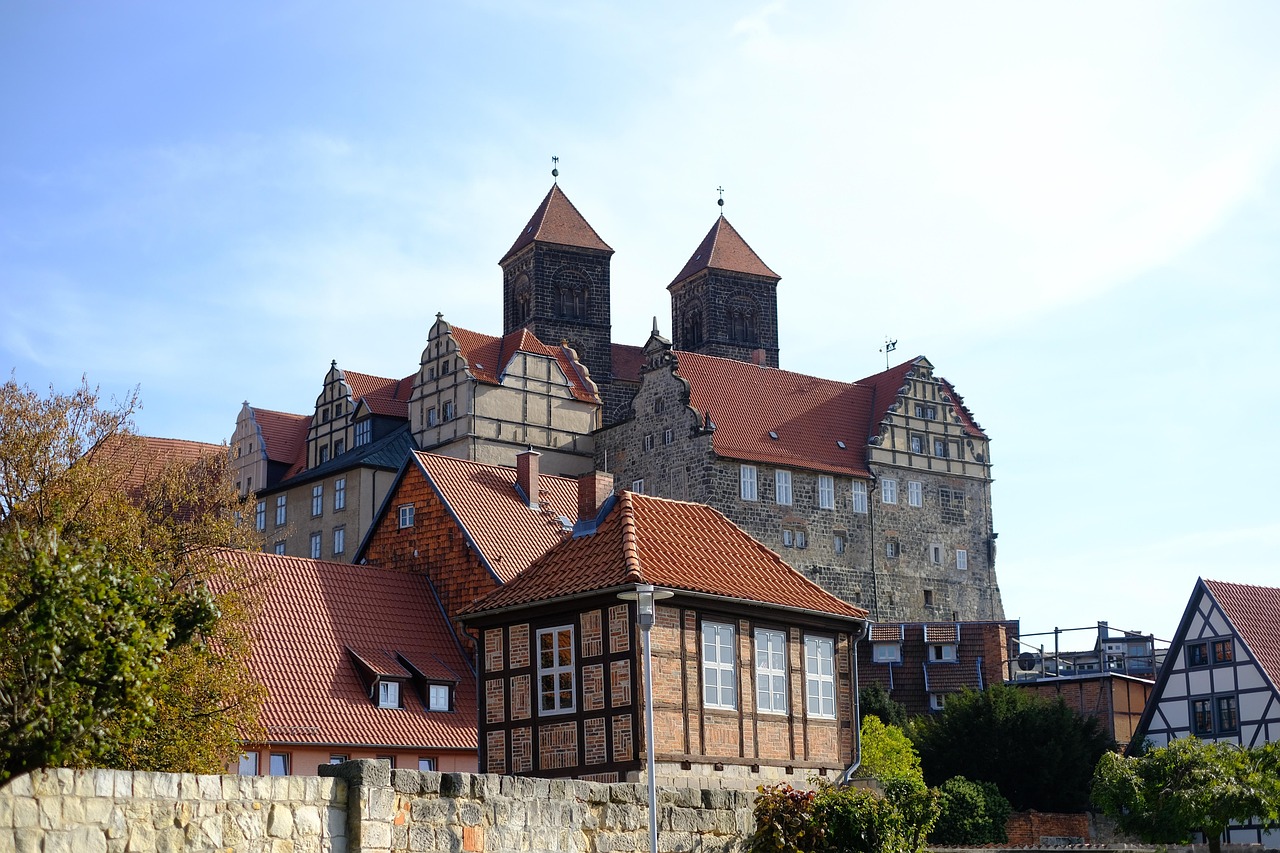
Why Visit Quedlinburg?
If you’re dreaming of medieval streets, half-timbered houses leaning into cobbled lanes, and evenings spent under castle lights instead of neon signs, Quedlinburg is your city. I’ve been coming here regularly for over a decade – in every season, with friends, solo, and once on a slightly chaotic family reunion. Every time I arrive at the Marktplatz and look up at the castle hill, I remember why this place keeps pulling me back.
Quedlinburg is a UNESCO World Heritage town in Saxony-Anhalt, about 2.5–3 hours from Berlin and just over an hour from Leipzig. It has one of the best-preserved medieval townscapes in Europe, with more than 2,000 half-timbered houses spanning eight centuries. The town sits at the northern edge of the Harz Mountains, so you get the charm of a storybook town plus easy access to forests, castles, and hiking trails.
What makes Quedlinburg special, though, is that it still feels lived in. You’ll see kids biking over cobblestones, locals chatting after work at the market, and grandmothers walking tiny dogs past thousand-year-old churches. It’s touristy in parts, yes, but it has not turned into an open-air museum. It feels like a place you could stay a while – and I often do.
This in-depth travel guide for Quedlinburg is written as if I’m walking you through the town myself. I’ll share the best places to visit in Quedlinburg, detailed 3 day, 4 day, and 5 day itineraries, my favorite cafés and local food, plus hidden gems and very practical travel tips for Quedlinburg – from saving money to SIM cards.
Table of Contents
- Why Visit Quedlinburg?
- Quedlinburg at a Glance (2026)
- Suggested 3–5 Day Itineraries
- Neighborhoods & Areas to Explore
- 20+ Must-See Attractions in Quedlinburg
- Local Food in Quedlinburg & Where to Eat
- Nightlife, Culture & Entertainment
- Best Day Trips from Quedlinburg
- Cultural Etiquette & Local Customs
- Practical Travel Advice for Quedlinburg (2026–2027)
- Summary & Best Time to Visit Quedlinburg
Quedlinburg at a Glance (2026)
Quedlinburg is compact, walkable, and dense with history. You can cross the historic center in about 20 minutes, but if you love architecture, churches, and cafés (I do), you’ll want days.
- Location: Saxony-Anhalt, northern edge of the Harz Mountains
- Population: ~24,000 (feels smaller in the old town)
- Vibe: Medieval, calm, slightly bohemian, strongly historic
- Best for: Couples, families, culture lovers, architecture fans, slow travelers
- Not ideal for: Hardcore clubbers, people seeking big-city shopping
What’s New in 2026–2027
- Harz Cultural Year 2026: A regional cultural initiative brings extra concerts, street performances, and special exhibitions to Quedlinburg, especially around the Marktplatz and Schlossberg.
- Quedlinburg Light Nights (pilot events 2026/27): Select weekends in late September and early October will feature illuminated facades of half-timbered houses and churches.
- Improved rail connections: Timetables for regional trains from Magdeburg and Halle have been optimized for weekend travelers, cutting some connections by 10–15 minutes.
- New cafés and wine bars: A handful of small, locally run spots have opened in side streets between the Marktplatz and Münzenberg, often blending traditional Harz flavors with modern menus.
Suggested 3–5 Day Itineraries for Quedlinburg
These itineraries are built from my own repeat visits, combining the classic must-see attractions in Quedlinburg with quieter corners and hidden gems. You can easily adapt them depending on whether you have 3 days in Quedlinburg, 4 days, or a full 5 days.
3 Day Itinerary for Quedlinburg
If you only have 3 days in Quedlinburg, focus on the old town, castle hill, and one relaxed half-day trip into the Harz region. Here’s how I usually plan a long weekend.
Day 1: First Impressions – Old Town, Marktplatz & Castle Views
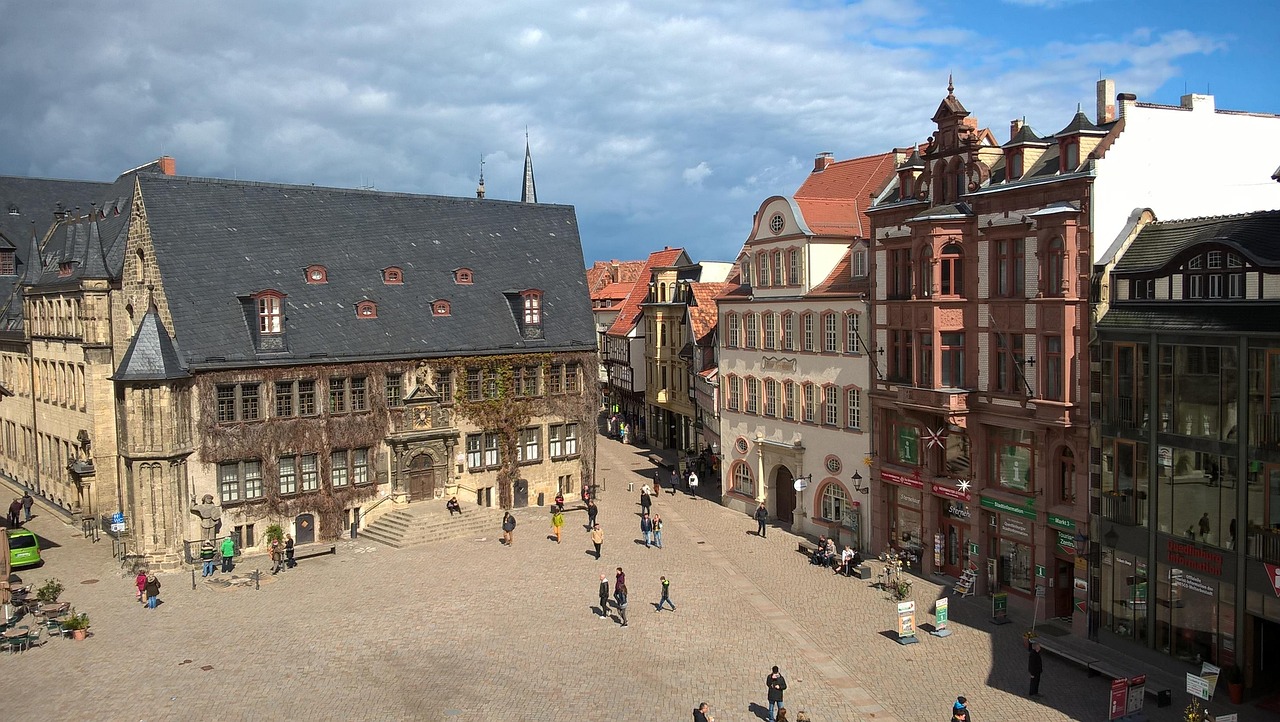
I like to arrive by late morning, drop my bag at my guesthouse, and head straight to the Marktplatz. The first time I stepped into the square, I remember stopping mid-stride – on one side the richly decorated Rathaus, on the others a ring of colorful half-timbered houses, many of them now restaurants and cafés.
- Late Morning: Wander the Marktplatz, pop into a café (I often start at a small bakery-café tucked under a timbered façade) and just soak up the atmosphere.
- Midday: Walk up towards the Schlossberg (castle hill), stopping at viewpoints over the rooftops. Visit the Collegiate Church of St. Servatius and the castle museum.
- Afternoon: Explore the old town lanes – Hoken, Word, and Schuhhof – admiring centuries-old houses and small artisan shops.
- Evening: Dinner in a traditional restaurant near the Marktplatz; try a local Harz dish and walk back through softly lit streets.
Day 2: Architecture, Hidden Corners & Münzenberg
On my second day, I usually slow down and dig into the quieter parts of town.
- Morning: Visit the Fachwerkmuseum im Ständerbau (half-timbered house museum) to understand how these houses were built and lived in.
- Midday: Walk across to the Münzenberg, a hilltop quarter of tiny lanes and cottages with sweeping views back to the castle.
- Afternoon: Café-hopping in side streets; explore the Klosterkirche St. Marien auf dem Münzenberg and nearby viewpoints.
- Evening: Wine bar or beer garden, depending on the season, and a slow stroll along the Bode River.
Day 3: Harz Flavors – Day Trip & Final Wander
Use your last day for a taste of the Harz surroundings.
- Option A (Easy): Short trip to Thale (Bode Gorge) for cable cars and views, returning to Quedlinburg by late afternoon.
- Option B (Very Relaxed): Stay in town, visiting any missed churches, markets, or museums, then linger over a long lunch on the Marktplatz.
This 3 day itinerary for Quedlinburg hits the main highlights while still leaving time to sit in squares and enjoy the rhythm of the town, not just run between checklists.
4 Day Itinerary for Quedlinburg
With 4 days in Quedlinburg, you can add more cultural experiences and explore another nearby town.
- Day 1: Marktplatz, old town stroll, castle hill at sunset.
- Day 2: Museums (castle museum, Fachwerkmuseum), Münzenberg, local food tasting.
- Day 3: Day trip to Wernigerode or Goslar – both equally atmospheric, with castles and colorful half-timbered streets.
- Day 4: Gardens, quieter neighborhoods, riverside walk, final shopping, and café stops.
I love using the extra day to slow my mornings down: lazy breakfasts, unhurried photography, and spontaneous stops when I see a church door open or hear an organ rehearsal drifting out.
5 Day Itinerary for Quedlinburg
If you have a full 5 days in Quedlinburg, you can treat the town as a base for a mini Harz vacation.
- Day 1: Marktplatz, first orientation, castle hill.
- Day 2: Deeper old town exploration, museums, hidden lanes.
- Day 3: Day trip by train or bus (Wernigerode, Goslar, or Thale).
- Day 4: Second day trip (Brocken region, steam railway, or Harz hiking), or a “slow day” if you prefer.
- Day 5: Shopping, cafés, riverside, revisiting favorite spots.
On my longest stays, my favorite memories are often from unscheduled hours: sketching houses from a bench, talking to local shop owners about how they renovated their timbered homes, or listening to church bells echo off the hills at dusk.
Neighborhoods & Areas to Explore in Quedlinburg
Quedlinburg doesn’t have “neighborhoods” in the big-city sense, but its districts each have their own personality. Here’s how I mentally map the town when I’m planning my days.
Altstadt (Old Town)
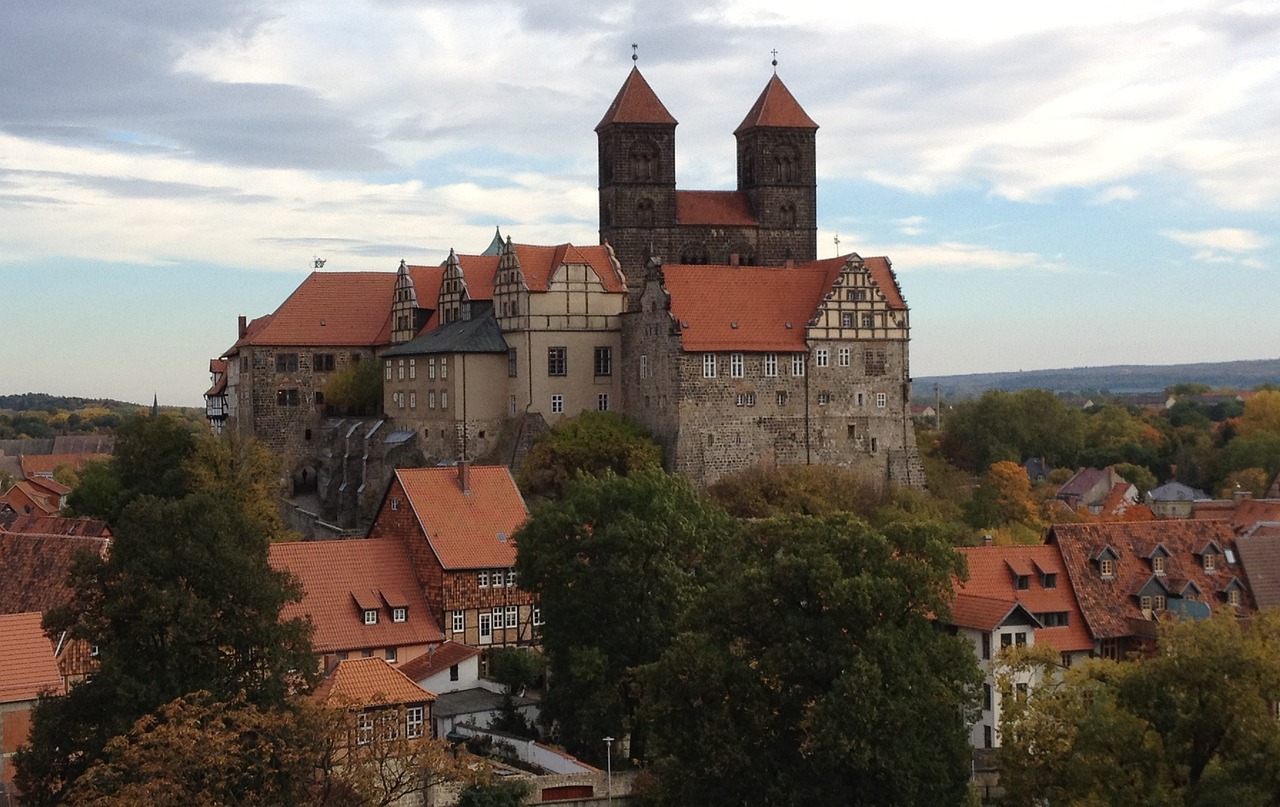
This is the heart of most things to do in Quedlinburg. Narrow streets, crooked half-timbered houses, and the Marktplatz form a compact area that’s easy to explore on foot. It’s romantic at night, family-friendly by day, and endlessly photogenic. You’ll find many guesthouses, cafés, and small boutiques here.
Schlossberg (Castle Hill)
Rising above the old town, the Schlossberg holds the castle and Collegiate Church of St. Servatius. The cobblestone path up can be a bit steep, but the views over the rooftops are worth every step. This area feels almost timeless, especially in early morning or evening when the day-trippers are gone.
Münzenberg
My personal favorite quarter. The Münzenberg is a hilltop settlement of tiny houses and narrow paths, built around the remains of an old monastery. It feels like a village within the city: quiet, informal, and incredibly atmospheric. You get postcard views back to the castle and the red-tiled roofs of the Altstadt.
Westendorf & Around the Bode River
West of the Schlossberg, the streets soften into a more residential feel. The Bode River flows gently through, with footbridges and leafy banks. I like walking here in the late afternoon, watching the light shift on the water and the towers rising above the trees.
Modern Quarters (Around the Station & Beyond)
Outside the historic core you’ll find postwar buildings, supermarkets, and practical services. It’s not glamorous, but if you’re self-catering or arriving by train, you’ll pass through and maybe appreciate how locals actually live beyond the medieval postcard.
20+ Must-See Attractions in Quedlinburg (With Personal Notes)
Below are over twenty of the best places to visit in Quedlinburg, each with some history, why they matter, and how I like to experience them. Many of these are family-friendly, several are wonderfully romantic at night, and a few will appeal to more adventurous or active travelers.
1. Marktplatz & Rathaus (Market Square & Town Hall)
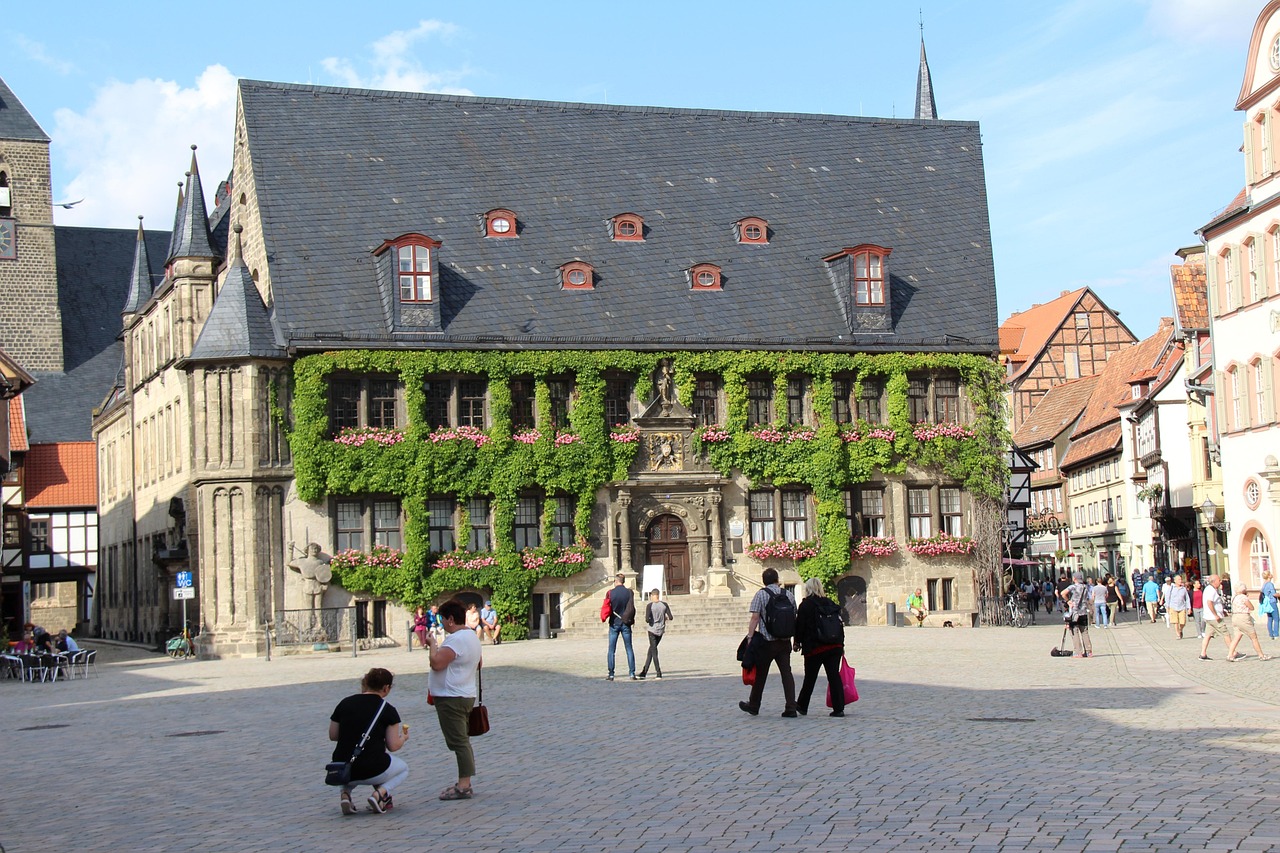
The Marktplatz is where I always start and end my trips. The Rathaus, with its ivy-draped façade and stone staircase, anchors the square, while a ring of half-timbered houses shelters cafés, restaurants, and small shops.
History & significance: Quedlinburg’s market privileges date back over a thousand years, and the current town hall has medieval foundations with later Renaissance touches. The square has seen coronations, markets, festivals, and, more recently, Christmas stalls and open-air concerts.
My experience: One autumn trip, I spent nearly an hour on the stone steps of the Rathaus, just people-watching: a group of cyclists clinking beer glasses after a ride, kids chasing pigeons between tables, and a wedding party spilling out from the town hall doors in a flurry of confetti. It’s the town’s living room.
Tips for visitors:
- Come early morning for quiet photos without crowds.
- In December, the Christmas market fills the square – arrive before dusk to see the transition as lights come on.
- Prices at terrace cafés are slightly higher, but the view is worth a coffee or a glass of wine at least once.
2. Schlossberg & Burgmuseum (Castle Hill & Castle Museum)
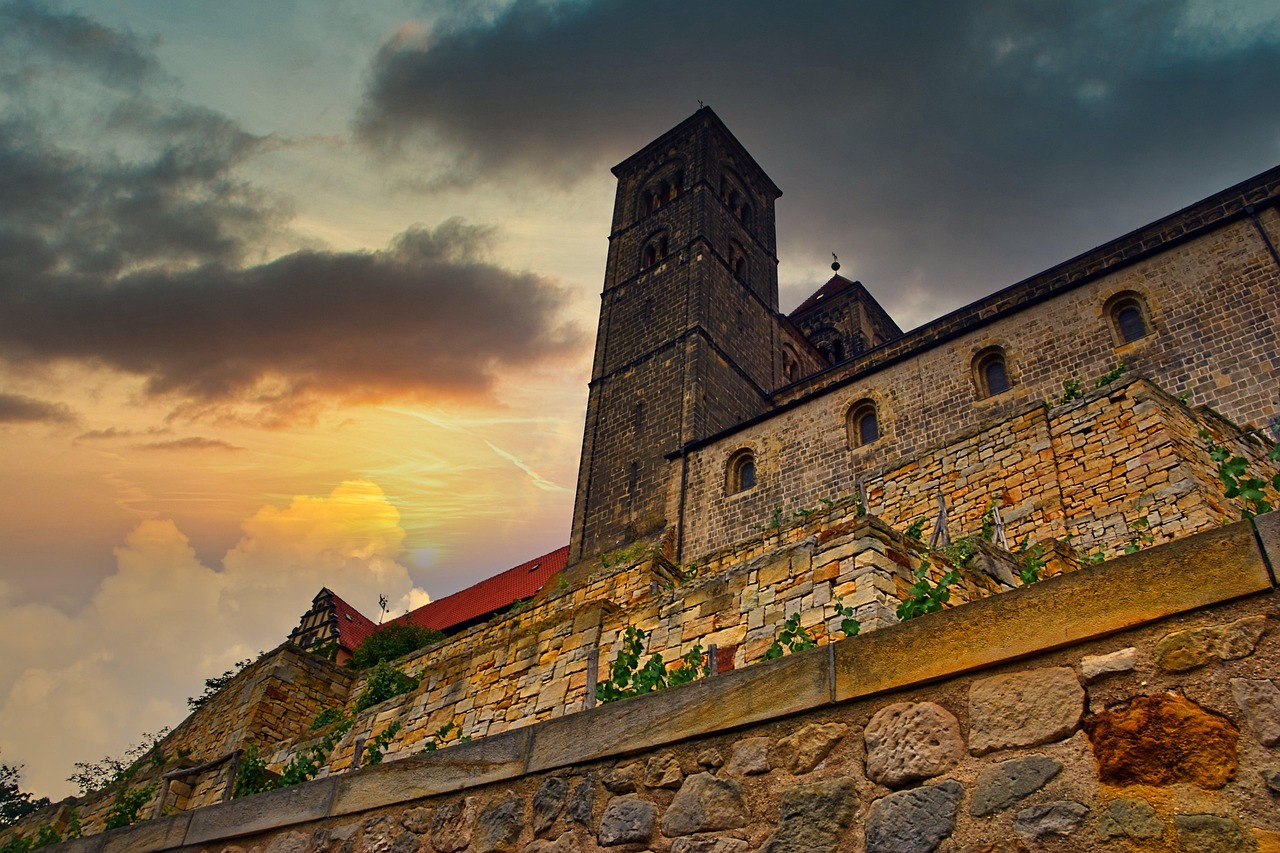
The SchlossbergCollegiate Church of St. Servatius. From below, especially from Münzenberg or the Bode River, it looks like something from a medieval illustration.
History & significance: This is where German King Henry I was said to have been offered the crown in 919, and where the influential Quedlinburg abbey shaped medieval politics and culture. The castle museum walks you through centuries of local history, from royal palaces to the town’s role in the Reformation and beyond.
My experience: I always plan at least half a day here. One spring afternoon, a light shower passed just as I reached the top; when it cleared, a faint rainbow arched over the town roofs. I stood by the wall with maybe three other people, and the scene felt impossibly cinematic.
What to do:
- Walk up via the old cobblestone path from the Marktplatz or from the Bode side.
- Visit the Burgmuseum for exhibits on local history and everyday life in the castle.
- Circle the outer walls for different panoramic views.
Tips: Wear decent shoes; the stones can be slick in rain. Combine the castle with the church visit so you don’t have to climb twice.
3. Stiftskirche St. Servatius (Collegiate Church of St. Servatius)
This Romanesque church is the spiritual and symbolic heart of Quedlinburg. It’s one of the most important early-Romanesque churches in Germany and part of the UNESCO listing.
History & significance: Founded in the 10th century as the church of a powerful women’s abbey, St. Servatius became a center of learning and art. The church houses the Quedlinburg Cathedral Treasury, which miraculously survived wars and theft (some pieces were infamously looted during World War II and later returned).
My experience: Inside, the cool stone and faint echo of footsteps always slow my thoughts. Once, I timed my visit to catch a short organ recital – sitting in the pews as music rolled through the nave was genuinely moving, even after many visits.
Visitor tips:
- Check for organ concerts or special services; they’re often free or by donation.
- Dress modestly (no need to overdo it, but avoid beachwear-style outfits).
- The treasury has a separate entrance/fee; give yourself time to appreciate the details.
4. Fachwerkmuseum im Ständerbau (Half-Timbered House Museum)
If you’re fascinated by the crooked, colorful houses of Quedlinburg, this museum is a must. It’s actually housed in one of the oldest half-timbered buildings in the town.
History & significance: The museum explains how half-timbered houses were built, expanded, and lived in over centuries. You see construction techniques, tools, and models that make you look at every street differently afterward.
My experience: The first time I visited, I went in out of the rain and ended up staying almost two hours. The creaky floors, low ceilings, and slightly slanted doorways made me feel like I’d slipped into another century. It’s surprisingly kid-friendly too; children seem to love the feeling of exploring an “old house.”
Tips: Go earlier in the day; it gets busier on rainy afternoons when everyone heads indoors. Combine this with a photography walk through nearby streets.
5. Münzenberg Quarter & Klosterkirche St. Marien
The Münzenberg is my favorite place to wander without a plan. Climb up via one of the steep streets from town, and you’ll emerge into a network of tiny lanes with little houses, gardens, and sweeping views.
History & significance: The area grew around a medieval monastery; after its decline, small houses were built among the ruins. Today, the Klosterkirche St. Marien (monastery church) stands partly in ruins but still hosts cultural events and exhibitions.
My experience: On one quiet summer morning, I sat on a bench with a coffee from a thermos, watching the town wake up below. Church bells floated up, swallows circled overhead, and for a moment, the 21st century felt very far away. I often bring friends up here on their first visit – it’s the “wow” moment I save for them.
Tips:
- Wear comfortable shoes; paths can be uneven.
- Check if the church is open for exhibitions or concerts during your stay.
- Come in late afternoon for soft light on the castle across the valley.
6. St. Nikolai Church
With its two tall towers, St. Nikolai is one of the most recognizable silhouettes in Quedlinburg. It sits slightly away from the busiest lanes, so it often feels calmer.
History & significance: This parish church dates back to the 13th century and has served generations of townspeople. Its Gothic architecture contrasts with the Romanesque St. Servatius on the castle hill.
My experience: I stumbled upon a choir rehearsal here once – the door was open, and the sound of voices filled the space. I stood quietly in the back, feeling ridiculously lucky to have walked by at exactly the right time.
Tip: Check the noticeboard for concerts and services; even if you’re not religious, attending a musical event here is a memorable cultural experience.
7. St. Aegidien Church & Surrounding Lanes
St. Aegidien is smaller and more modest than some of Quedlinburg’s big-name churches, but its surroundings are among my favorite streets to get pleasantly lost in.
My experience: One winter afternoon, I walked here in light snow, the flakes softening every edge. A local woman sweeping her doorstep gave me a friendly nod; her house, like so many here, leaned slightly into the street, beams painted in deep green and red.
Tip: This area is perfect for slow photography; look for details like carved door lintels and small inscriptions on the beams.
8. Bode River Walks & Bridges
The Bode River curls around the edge of the old town, offering leafy paths and charming bridges. It’s a quieter, more contemplative side of Quedlinburg, perfect for stretching your legs after a long lunch.
My experience: On a hot summer day, I bought an ice cream and followed the river, crossing back and forth on small bridges. Families sat on the banks, kids tossed pebbles in the water, and the castle’s towers peeked through the trees now and then.
Tips:
- Ideal for families – kids love the ducks and bridges.
- Come at sunset for golden reflections on the water.
- Combine with a climb up to Schlossberg from the river side for a nice loop.
9. Hoken & Word: Iconic Half-Timbered Streets
Hoken and Word are narrow old streets lined with some of the town’s most photogenic half-timbered houses. Many are now home to small boutiques, galleries, and specialty shops.
My experience: I like walking these streets just after most shops open, when deliveries are still being made and you catch a glimpse of everyday life behind the pretty façades. Once, a shopkeeper stepped out to water the flowers on her windowsill and ended up telling me the story of how her family restored their 16th-century house.
Tip: Look up as you walk – many houses have dates and old guild symbols carved or painted near the roofline.
10. Lyonel Feininger Spots & Viewpoints
The artist Lyonel Feininger painted Quedlinburg in the early 20th century, capturing its geometric roofs and towers. Today, there are marked spots around town where you can see the views he painted.
My experience: I once spent an afternoon “chasing Feininger,” following a small map that led me from viewpoint to viewpoint. Standing where he stood, seeing the same rooftops (with a few extra satellite dishes), gave me a new appreciation for how artists interpret the same skyline I love.
Tip: Pick up a local map or brochure that marks Feininger locations, or ask at the tourist information office on the Marktplatz.
11. Old Town Gates & City Walls
Fragments of the old city walls and gates still survive, hinting at the fortified town Quedlinburg once was.
My experience: I like weaving these remnants into my routes – suddenly, you’ll pass under a stone arch or see a stretch of old wall backing onto a garden. It’s like the town keeps casually reminding you how old it is.
Tip: Ask at the tourist office for a small walking route that connects these historic remains; it’s a fun mini-hike through less-trafficked streets.
12. Weekly Markets & Seasonal Fairs
On market days, the Marktplatz and nearby streets fill with stalls selling local produce, cheeses, sausages, honey, and seasonal specialties.
My experience: I love arriving on a market morning and making breakfast out of fresh bread, local cheese, and fruit. Once, a beekeeper insisted I taste three different honeys, explaining which hillside each came from.
Tip: Bring a small cloth bag to reduce plastic and stock up on picnic supplies for a riverside or hilltop lunch.
13. Quedlinburg Christmas Market & Advent in the Courtyards
From late November through December, Quedlinburg transforms into one of Germany’s most atmospheric small-town Christmas markets.
Advent in den Höfen (“Advent in the Courtyards”) is the real highlight: otherwise private inner courtyards open to the public on select Advent weekends, filled with craft stalls, mulled wine, and music.
My experience: The first time I experienced Advent in the Courtyards, I felt like I’d been invited into a hundred secret worlds. We wandered from courtyard to courtyard, each with its own theme – one had a small choir, another a local ceramicist, another a firepit and storytelling for kids.
Tips:
- Book accommodation months in advance for Advent weekends.
- Bring cash; some small stalls don’t accept cards.
- Dress warmly – many courtyards are outdoors or semi-covered.
14. Small Galleries & Artisan Workshops
Scattered through the old town are small galleries and workshops selling ceramics, textiles, woodwork, and art. Many are run by the artists themselves.
My experience: I once spent a rainy afternoon ducking in and out of these spaces, chatting with a potter about the glazes she uses to echo the town’s roof tiles, and with a woodworker whose family had lived in their house for generations.
Tip: If you’re looking for meaningful souvenirs, this is where to find them. Ask about the story behind each piece; most artists are happy to share.
15. Nordharzer Städtebundtheater (Local Theatre)
The regional theatre serves several nearby towns, including Quedlinburg, offering plays, concerts, and sometimes opera or operetta.
My experience: I once joined a friend for a German-language play here, understanding maybe half the dialogue but loving the atmosphere: locals greeting each other in the foyer, the buzz in the hall, the shared laugh at a particularly Harz-specific joke.
Tip: Even if your German is limited, consider a concert or dance performance; the cultural experience is worth it.
16. Stadtmuseum (City Museum)
The Stadtmuseum gives a broader overview of Quedlinburg’s development, from early settlement to its UNESCO recognition.
My experience: I visited on a chilly November day, and it helped me connect the dots between all the different periods I’d been seeing in the streets – Romanesque, Gothic, Renaissance, Baroque, and beyond.
Tip: Go early in your trip if you’re a history buff; it will enrich your walks afterwards.
17. Public Gardens & Green Corners
Between the houses, along the river, and at the edges of town, you’ll find small parks and gardens. They’re not grand, but they add a gentle, lived-in greenery to the city.
My experience: I often take my takeaway coffee to a bench in a small garden, watching locals walk dogs or read newspapers, feeling quietly part of everyday life here.
Tip: In spring and summer, these spots are great for budget-friendly picnics stocked from local bakeries and markets.
18. Festivals & Events (2026–2027 Highlights)
Quedlinburg’s calendar is dotted with small but charming events. For 2026–2027, keep an eye out for:
- Harz Cultural Year 2026: Extra concerts, open-air performances, and art installations in and around the old town.
- Quedlinburg Light Nights (late Sept–early Oct, pilot events): Selected buildings illuminated with artistic projections on a few weekends.
- Advent in den Höfen: The beloved Advent courtyard events in December.
- Local town festivals: Smaller fairs with music, food, and crafts, often in summer – check posters and the tourist office when you arrive.
19. Quedlinburg as a Base for Harz Day Trips
One of the underrated “attractions” of Quedlinburg is how well it works as a base for exploring the Harz Mountains region. From here, you can reach places like Wernigerode, Thale, and Goslar with ease.
My experience: I’ve done multiple stays where I booked a cozy apartment in Quedlinburg for a week and did different day trips every second day, returning each evening to familiar restaurants and my favorite bakery.
Tip: See the Day Trips section below for detailed suggestions.
Local Food in Quedlinburg & Where to Eat
Quedlinburg’s food scene blends traditional Harz mountain cuisine with cozy cafés and a growing number of modern restaurants and wine bars. It’s not Berlin-level experimental, but it’s honest, hearty, and increasingly creative.
What to Eat: Harz & Regional Specialties
- Harzer Käse: A strong, low-fat sour milk cheese from the region – often served marinated with onions and vinegar. I order it when I’m feeling brave and in the mood for a beer.
- Bratwurst & Grilled Meats: Popular at markets and festivals; try a local sausage from a street grill.
- Wild game dishes: In autumn and winter, look for venison or wild boar on menus, often with red cabbage and dumplings.
- Potato-based dishes: Expect potatoes in many forms – boiled, fried, mashed – as comforting sides.
- Cakes & Pastries: Quedlinburg has excellent bakeries. Dense cakes, fruit tarts, and seasonal specialties like Christmas stollen are everywhere.
Where to Eat: My Personal Favorites
Names can change, but you’ll find similar venues around the Marktplatz and in side streets:
- Traditional taverns near the Marktplatz: Dark wood interiors, hearty menus, and local beer on tap. I come here on cold evenings after long walks.
- Modern bistro-style spots in side streets: A bit lighter and more contemporary, often with vegetarian options and regional twists.
- Bakery-cafés: Perfect for breakfast or a cheap lunch – grab a sandwich, pastry, and coffee.
- Wine bars: In recent years, a couple of small wine bars have popped up, great for a glass of German Riesling or Spätburgunder with snacks.
Saving Money on Food
Eating well in Quedlinburg doesn’t have to be expensive:
- Breakfast: Many guesthouses include breakfast. If not, bakeries offer filling options for a few euros.
- Lunch deals: Look for “Mittagstisch” (lunch specials) in some restaurants.
- Self-catering: If you’re staying in an apartment, supermarkets just outside the old town and the weekly market are budget-friendly sources.
- Drinks: Tap water is safe to drink; carry a refillable bottle.
Nightlife, Culture & Evening Experiences
Quedlinburg is not a party city, but evenings here have a quiet charm that I find hard to resist.
Romantic Evenings
- Stroll the Marktplatz and old town lanes after dark; the lighting is soft and golden, and the castle glows on the hill.
- Have dinner in a candlelit, half-timbered restaurant, followed by a slow walk back to your guesthouse.
Low-Key Nightlife
- Wine bars & pubs: A few cozy spots offer regional wines and German beers.
- Seasonal beer gardens: In warmer months, outdoor seating spills into courtyards and sidewalks.
Cultural Experiences
- Church concerts & organ recitals: Often held at St. Servatius or St. Nikolai; check posters and church boards.
- Local theatre: Plays, concerts, and special events at the Nordharzer Städtebundtheater.
- Festivals: During major events (see earlier section), evenings can include outdoor music and light shows.
Day Trips from Quedlinburg
One of the best travel tips for Quedlinburg is to use it as your base and spend a day or two exploring nearby highlights of the Harz region.
Thale & the Bode Gorge
Distance: ~15 km; easy by train or bus.
Thale offers dramatic cliffs, cable cars, and hiking trails in the Bode Gorge. Families love the cable car rides and adventure parks; hikers and nature lovers enjoy the trails and viewpoints.
Tip: Bring good shoes and a light jacket; weather in the gorge can shift quickly.
Wernigerode
Distance: ~40 km; reachable by train.
Wernigerode is another fairy-tale town with a colorful Rathaus and a castle perched above. It’s a perfect complement to Quedlinburg for a 4 day itinerary for Quedlinburg that includes a side trip.
Goslar
Distance: ~60 km; a bit longer but still feasible as a day trip.
Goslar is another UNESCO-listed town with a rich mining history and an impressive old town.
Brocken & Harz Narrow Gauge Railway
For something more adventurous, take the Harz narrow gauge railway from Wernigerode or another station up towards the Brocken, the highest peak in the Harz. Steam trains, mountain views, and a bit of folklore (the Brocken is famous in German witch legends) make this a fun outing.
Cultural Etiquette & Local Customs in Quedlinburg
Quedlinburg is relaxed, but a few local customs will make your visit smoother and more respectful.
Greetings & Politeness
- Use a simple “Guten Tag” (good day) or “Hallo” when entering small shops and cafés.
- “Bitte” (please) and “Danke” (thank you) go a long way.
- Germans often value personal space and quiet, especially on public transport.
In Churches & Historic Sites
- Dress respectfully; shoulders and knees covered is a good guideline.
- Keep voices low; many people visit to pray or reflect.
- Follow photography rules – some areas do not allow flash or any photos.
Dining & Tipping
- It’s customary to tip about 5–10% in restaurants and cafés if service was good.
- Say “Zahlen, bitte” to ask for the bill; it usually won’t come automatically.
- Split bills are common; just tell the server what each person had.
Practical Travel Advice for Quedlinburg (2026–2027)
How to Get to Quedlinburg
- By train: Regional trains connect Quedlinburg with Magdeburg, Halle, and often with changes from Berlin or Leipzig. In 2026, improved timetables make weekend trips easier.
- By car: Good road connections from major cities; parking is available on the edge of the old town, sometimes limited inside historic areas.
- By bus: Regional buses serve nearby towns and Harz destinations.
Getting Around Quedlinburg
The best way to explore is on foot. The old town is compact, and many streets are pedestrian or traffic-calmed.
- Walking: Expect plenty of cobblestones; comfortable shoes are essential.
- Buses: Local buses are useful if you’re staying outside the center or heading to the station with luggage.
- Car: You won’t need a car inside the old town; park and walk.
- Cycling: Possible, but cobbles can be rough; better for routes beyond the historic core.
SIM Cards & Connectivity
- Germany has good mobile coverage; in Quedlinburg, 4G is common, 5G increasingly available.
- You can buy prepaid SIM cards from major providers (Telekom, Vodafone, O2) at supermarkets or electronics stores in larger towns before arriving, or in Quedlinburg’s modern districts.
- Many cafés and hotels offer free Wi-Fi, though speeds can vary in historic buildings.
Money & Costs
- Currency: Euro (€).
- Cards are widely accepted but carry some cash for small shops and markets.
- Quedlinburg is generally cheaper than major German cities, especially for accommodation and food.
Accommodation: Where to Stay
- Altstadt guesthouses: My favorite option – you step out directly into the storybook streets.
- Apartments: Great for longer stays and self-catering; often renovated half-timbered houses.
- Budget stays: A few simpler options on the outskirts; you’ll trade charm for price but can walk or bus in.
Visa Requirements & Driving
- Germany is in the Schengen Area. Many nationalities can enter visa-free for short stays; check current rules for your passport.
- Driving: Most foreign driver’s licenses are accepted for tourists; an International Driving Permit can be useful, especially if your license isn’t in Latin script.
- Inside Quedlinburg, be cautious: narrow streets, pedestrians, and limited access zones in the old town.
Safety
- Quedlinburg is generally very safe.
- Standard common sense applies: keep an eye on valuables, especially in markets and at festivals.
- Streets can be uneven; watch your step, particularly at night or in wet weather.
Best Seasons for Different Activities
- Spring (April–May): Mild weather, blooming gardens, fewer crowds – ideal for walking and photography.
- Summer (June–August): Warm, lively, with outdoor seating and festivals; can be busier but still less hectic than big cities.
- Autumn (September–October): My personal favorite: crisp air, golden light, colorful trees on Schlossberg and Münzenberg.
- Winter (November–February): Quiet except for Advent, when the Christmas market and Advent in the Courtyards make it magical. Snow, when it falls, transforms the town.
How to Save Money in Quedlinburg
- Travel with regional train tickets or special Harz transport passes where available.
- Eat main meals at lunch when some restaurants offer specials.
- Use bakeries and supermarkets for breakfasts and snacks.
- Focus on free attractions: walks, viewpoints, churches (many are free or donation-based), architecture, and river paths.
Summary: Key Takeaways & Best Time to Visit Quedlinburg
Quedlinburg is one of those places that rewards both quick visits and slow stays. In 3 days in Quedlinburg, you can see the major sights: Marktplatz, Schlossberg, St. Servatius, Münzenberg, and the essential lanes and viewpoints. With 4 or 5 days, you can add Harz day trips, more cultural experiences, and time to simply wander and linger.
Best seasons:
- For walking, photography & mild weather: April–June, September–October.
- For festivals & long evenings: Late spring through early autumn.
- For Christmas markets & Advent magic: Late November–December (book ahead).
What keeps me returning is the way Quedlinburg balances rich history with a very human scale: you can cover the town on foot, yet you never quite run out of new corners, hidden courtyards, and changing light on old stones. Whether you follow a structured 3–5 day itinerary for Quedlinburg or simply let the lanes guide you, this town has a way of getting under your skin – in the best possible way.