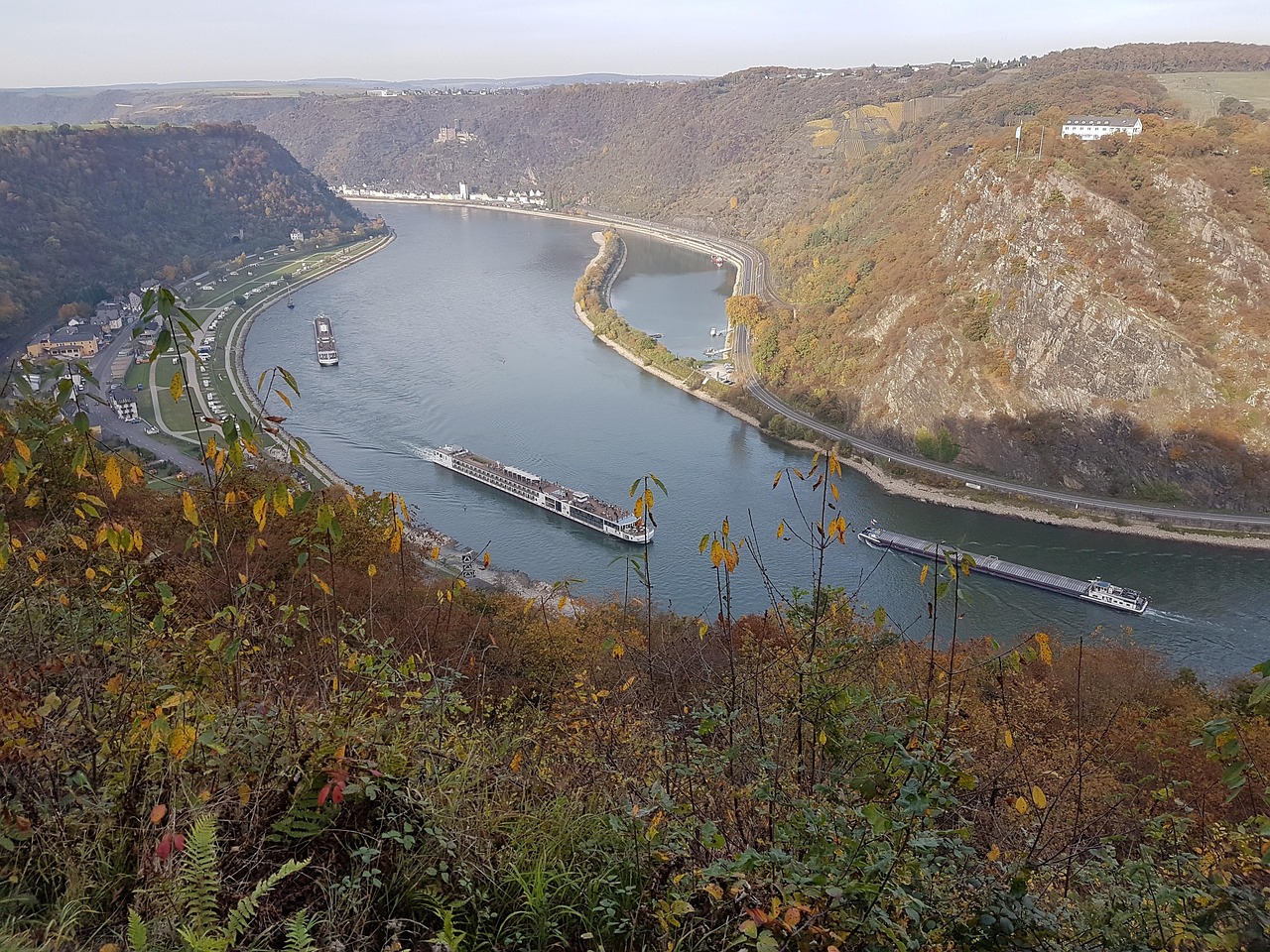
Why Travel the Rhine Romantic Route?
I’ve lived within day-trip distance of the Middle Rhine for years, and yet every season I still find an excuse to drive the Rhine Romantic Route again. There’s something almost unreal about this short but impossibly dense stretch of river between Bingen/Rüdesheim and Koblenz: castles stacked on cliffs, terraced vineyards that catch the last light of the day, church towers in every direction, and barges pushing slowly upstream like they have all the time in the world.
Unlike some famous routes, the Rhine Romantic Route is compact. You can technically drive it in a single day. But if you do, you’ll miss the quiet back lanes, the family-run wine taverns, the tiny ferries, and the way the river looks just after sunset when the lights in towns like Bacharach and St. Goarshausen begin to glow.
This guide is written as a road-trip story and a planning tool. I’ve broken the Rhine Romantic Route into 10 flexible legs (so you’ll find plenty of SEO-friendly detail whether you’re searching for a 7 leg itinerary for Rhine Romantic Route, 8 leg itinerary for Rhine Romantic Route, 9 leg itinerary, or up to a 14 leg itinerary). You can compress or stretch these legs to build your own perfect version: a 7–14 leg itinerary for the Rhine Romantic Route, by car, train, bike, or even partially by boat.
What makes this route special in 2026?
- UNESCO World Heritage landscape with more than 40 castles in about 65 km.
- Easy access from Frankfurt, Cologne, and Mainz – yet it still feels like old Europe.
- Family‑friendly castles, boat trips, and easy riverside cycling.
- Romantic hilltop viewpoints, wine terraces, and night walks through small towns.
- Adventurous via hiking trails, via ferrata-style ladders in vineyards, and kayak sections.
In 2026 you’ll also see a livelier cultural calendar, more EV charging points along the B9 and B42 highways, and a renewed focus on sustainable tourism in the Middle Rhine Valley.
Table of Contents
- Overview: How the Rhine Romantic Route Flows
- 10-Leg Rhine Romantic Route Road Trip Itinerary
- Leg 1 – Rüdesheim & Niederwald Viewpoints
- Leg 2 – Bingen, Mäuseturm & Bingen Forest
- Leg 3 – Bacharach: Half-Timbered Heart of the Rhine
- Leg 4 – Kaub, Pfalzgrafenstein & Steep Vineyards
- Leg 5 – Oberwesel & Schönburg Castle
- Leg 6 – Loreley Rock & St. Goar / St. Goarshausen
- Leg 7 – Boppard & the Great Rhine Bend
- Leg 8 – Marksburg, Braubach & East Bank Villages
- Leg 9 – Koblenz & Deutsches Eck
- Leg 10 – Side Valleys & Hidden Detours (Lahn, Mosel, Hunsrück)
- 18 Must-See Stops & Viewpoints (Deep Dive)
- Eating & Sleeping Along the Rhine Romantic Route
- Evenings on the Road
- Cultural Etiquette & Local Customs
- Events & Festivals 2026–2027
- Route Logistics & Driving Advice
- Practical Travel Tips (SIM, Money-Saving, Visas)
- Day Trips & Nearby Attractions
- Summary & Best Seasons
Overview: How the Rhine Romantic Route Flows
The Romantic Rhine (Mittelrhein) usually refers to the section between Bingen/Rüdesheim in the south and Koblenz in the north. The Rhine Romantic Route I describe follows the B9 road on the west bank and the B42 on the east bank, plus small detours up into side valleys and vineyards.
In simple terms, the route runs:
- Start: Rüdesheim am Rhein (east bank) or Bingen am Rhein (west bank).
- Middle highlights: Bacharach, Kaub, Oberwesel, Loreley, St. Goar, Boppard, Braubach, Marksburg.
- End: Koblenz at the Deutsches Eck, where the Mosel meets the Rhine.
You can drive it either way; I personally prefer to start south and drive north. The scenery builds gradually, and you finish at Koblenz with a final sweeping view over both rivers.
This guide assumes you’re driving (or riding a motorcycle or camper), but I’ll also note where train, ferry, and boat fit naturally into the picture. The beauty of the Rhine Romantic Route is that you can mix modes as you wish.
10-Leg Itinerary for the Rhine Romantic Route (Flexible to 7–14 Legs)
Below is my favorite way to break the route into 10 legs, which you can easily compress into a 7 leg itinerary for Rhine Romantic Route (by combining shorter legs) or stretch to a 14 leg itinerary (by adding more overnight stops and side valleys). Each leg represents roughly 1–2 days of slow travel.
On my most recent full run (spring 2025, updated again early 2026), I took 9 days door-to-door from Frankfurt, but I’ve done shorter 3-day and longer 2-week versions over the years.
Leg 1 – Rüdesheim am Rhein & Niederwald: The Classic Introduction
If you can arrive in Germany slightly jet-lagged and still feel enchanted, it will probably be in Rüdesheim am Rhein. Yes, it’s touristy. Yes, the Drosselgasse can get crowded. But for a first taste of the Rhine Romantic Route, the combination of vineyards, half-timbered facades, and river traffic is unbeatable.
I tend to arrive here by late morning, either driving from Frankfurt (about 1 hour) or taking the regional train to Rüdesheim via Wiesbaden. If I have my car, I park just outside the center where day rates are cheaper and walk in.
Things to Do in Rüdesheim
- Drosselgasse – a narrow lane lined with wine taverns. Over the years, I’ve learned to walk it once for the atmosphere and then retreat to side streets for quieter glasses of Riesling.
- Siegfried’s Mechanical Music Cabinet – a charmingly eccentric collection of self-playing instruments in a historic building. The guided tour is worth it, especially for kids who love seeing music come alive mechanically.
- Cable car to the Niederwald Monument – the real highlight. The cable car glides over vineyards to the massive Niederwalddenkmal with sweeping views over the Rhine and Bingen on the opposite bank.
From the top, the Rhine Romantic Route lies in front of you like a map: barges cutting the water, trains sliding along the banks, and the first hint of distant castles. On clear evenings I’ve often stayed up here until just after sunset, then taken one of the last cable cars down, the lights in Rüdesheim flickering on below.
Food & Wine in Rüdesheim
Rüdesheim is a good primer on local food in the Rhine Romantic Route region. Look for:
- Spundekäs – a spiced cheese spread with pretzels, perfect with a glass of dry Riesling.
- Flammkuchen – a thin, crispy flatbread with cream, onions, and bacon.
- Rüdesheimer Kaffee – coffee with local Asbach brandy, prepared at your table and set alight. Touristy, but I still order one when I’m feeling indulgent.
My tip: step one or two lanes away from the Drosselgasse and find a Weinstube with locals—if you hear more German than English, you’re in the right place.
Overnight & Who This Leg Suits
Rüdesheim is a natural first overnight stop. Families love the cable car and boat options, couples get the classic romantic Rhine feeling, and solo travelers find it easy to meet people in wine taverns.
If you’re doing a 7 leg itinerary, you might combine Rüdesheim with Bingen and Bacharach into a single, longer first leg. For a more detailed 10–14 leg itinerary, linger here:
- Day 1 afternoon: arrive Rüdesheim, explore town, one short boat ride.
- Day 2 morning: Niederwald hike or cable car, then cross by ferry to Bingen for Leg 2.
Leg 2 – Bingen, Mäuseturm & Into the Forested Hills
Crossing from Rüdesheim to Bingen am Rhein by ferry is one of those modest but memorable transitions that define the Rhine Romantic Route. The ferries are short, efficient, and very much part of daily life here. I usually stand outside by my car, watching the current swirl around the hull.
Bingen’s Riverfront & History
Bingen doesn’t shout for attention the way Rüdesheim does, but it’s quietly fascinating. Historically, this was a strategic choke point on the Rhine, controlled by tolls and fortified towers.
- Mäuseturm (Mouse Tower) – a small stone tower on an islet in the river. You can’t easily visit the interior, but it photographs beautifully from the shore and boat. Its name comes from a grim medieval legend involving a cruel bishop and a swarm of mice.
- Park am Mäuseturm – landscaped riverside park with walking paths and views across to the Niederwald Monument. I like to grab a takeaway coffee and sit here watching trains snake along the opposite bank.
- Klopp Castle – a hilltop castle above Bingen’s old town, now housing parts of the city administration. The tower offers rewarding views; I’ve sometimes come up here early in the morning when the valley is still filled with low fog.
Detour into the Bingen Forest
Most visitors speed past Bingen on their way north, but I like to drive (or sometimes bike) into the Binger Wald, the forested hills behind the town. There are quiet hiking trails, small viewpoints, and rustic restaurants serving hearty regional dishes. It’s a good way to balance all the wine and river views with green calm.
Driving Toward Bacharach
From Bingen, the B9 leads north along the west bank. This is where the Rhine Romantic Route really starts to show its character: cliffs tighten around the river, train tunnels punch through rock, and you begin to see castles in almost every direction.
I usually keep this driving stretch short—30 to 40 minutes with plenty of time for photo stops—because the next destination, Bacharach, deserves more than a quick look.
Leg 3 – Bacharach: Storybook Streets & Castle Above the River
Every route has a town that becomes your emotional anchor; for me, on the Rhine Romantic Route, it’s Bacharach. I’ve overnighted here in every season: early spring rain, high summer heat, golden October afternoons, and one memorable snowy weekend in January when the streets were almost empty.
First Impressions & Old Town
Bacharach’s old town is small, walkable, and intensely photogenic. You enter through preserved city walls, and streets of half-timbered houses unfold in layers.
- Postenturm Viewpoint – my favorite short climb. Follow the steps up from town to the old defensive tower; the view over Bacharach’s rooftops and the Rhine is one of the most iconic must-see attractions in the Rhine Romantic Route.
- Stahleck Castle (Burg Stahleck) – perched directly above Bacharach. It’s operated as a youth hostel, but even if you’re not staying there, the courtyard and terrace offer magnificent views.
- Wernerkapelle Ruins – the delicate remains of a Gothic chapel, glowing a soft pink in certain lights. It’s quietly atmospheric at dusk.
Local Food & Wine in Bacharach
Bacharach is one of my favorite places to introduce friends to Riesling culture. Tasting rooms are friendly, pours are generous, and staff are used to explaining differences between dry (trocken), off-dry (feinherb), and sweet styles.
Food-wise, look for:
- Rheinischer Sauerbraten – marinated beef with a slightly sweet gravy, often served with red cabbage and dumplings.
- Handkäs mit Musik – marinated sour milk cheese with onions and vinegar; more of an acquired taste, but thoroughly local.
- Simple, excellent Flammkuchen and seasonal asparagus dishes in spring.
Family-Friendly & Romantic Aspects
With kids, I often make a game out of climbing the city walls and spotting trains and boats below. For couples, the walk up through vineyards to Burg Stahleck at sunset feels like something out of a painting.
Overnight in Bacharach
I strongly recommend at least one night here. If you’re on a compact 7 leg itinerary, you might combine Rüdesheim/Bingen/Bacharach into two nights total. On a slower 10–14 legs of Rhine Romantic Route plan, give Bacharach a full day and night: arrive by midday, explore, hike in the late afternoon, wine tasting in the evening.
Leg 4 – Kaub & Pfalzgrafenstein: The Castle in the River
Leaving Bacharach, the road to Kaub is short but rich in views. Kaub itself is a modest town dwarfed by two unforgettable sights: a clifftop castle and a tiny fortress sitting stubbornly in mid-river.
Pfalzgrafenstein – The Toll Castle in the Rhine
Pfalzgrafenstein Castle is perhaps the most distinctive silhouette on the route: a white, boat-shaped toll castle built on a rock in the middle of the river, painted with red accents. For centuries, this was a key toll station; every ship passed under its watchful eyes.
I still remember my first visit here on a foggy autumn morning. The local boat that takes you out is small; you can hear the current slapping against its sides. Once you climb onto the island and explore the castle, the perspective is entirely different: you’re looking out from the middle of the Rhine, with Kaub on one side and steep vineyards on the other.
Gutenfels Castle & Town
Above Kaub sits Gutenfels Castle, privately operated but dominating the skyline. The town itself is surprisingly quiet, even in high season. I like to wander its back streets, where you can still find aging signs of old wine merchants.
Why This Leg Matters
Kaub is where you begin to feel the narrowness of the Rhine gorge. The river traffic is intense, the cliffs close in, and there’s a palpable sense of history. It’s an excellent stop for travelers interested in the economic and political history of the Rhine, not just its romantic image.
For families, the boat to Pfalzgrafenstein is a small adventure; for photographers, this is easily one of the best places to visit in Rhine Romantic Route.
Leg 5 – Oberwesel & Schönburg: Towers, Walls & Vines
From Kaub, continuing north, you reach Oberwesel, a town that somehow remains less crowded than its beauty warrants. If Bacharach is fairytale-charming, Oberwesel feels slightly more rugged, with impressive fortifications and a particularly fine castle.
Oberwesel’s Fortifications
- City Walls – among the best-preserved on the Rhine Romantic Route. You can walk long stretches of them, climbing up towers and looking out at the river. This is a fantastic family-friendly activity; kids love darting in and out of the stone stairways.
- Liebfrauenkirche – a large church with a distinctive red sandstone facade. Step inside for cool, quiet moments away from the road and river.
Schönburg Castle
Schönburg is one of my favorite castles to overnight in. Now a hotel and restaurant, it offers panoramic views from its terraces. The approach road winds up through vineyards, and each curve reveals another slice of the Rhine below.
On a late-summer trip in 2024, I arrived just before a thunderstorm. Watching the storm roll down the valley from the castle’s terrace, glass of Riesling in hand, was one of those travel moments that linger for years.
Food & Wine
Oberwesel leans heavily into traditional Rhenish cuisine. Look for hearty meat dishes, seasonal game, and of course more local wine. The town is a bit quieter at night than Bacharach, which can be either blissfully peaceful or a bit too sleepy depending on your preferences.
Overnight Strategy
If you’re designing an 8 leg itinerary for the Rhine Romantic Route, this is a natural place to pause. Many travelers will choose between Bacharach and Oberwesel as their primary mid-route base; I often alternate between them on different trips.
Leg 6 – Loreley Rock & St. Goar / St. Goarshausen: Heart of the Myth
No phrase appears more often in Romantic Rhine literature than Loreley. This steep slate cliff on the east bank, opposite the twin towns of St. Goar and St. Goarshausen, is where myth, navigation, and tourism collide.
Loreley Myth & Viewpoints
The legend speaks of a siren who sat atop the rock, combing her golden hair and singing sailors to their doom. In reality, the combination of a treacherous bend, shallow rocks, and strong currents caused many shipwrecks here before modern engineering tamed the channel.
There are several ways to experience Loreley:
- Boat Cruise – arguably the most atmospheric. When the captain announces “Loreley,” everyone rushes to the rails. I like to do this section by boat at least once per trip, even if I’m otherwise driving.
- Loreley Plateau – drive or bus up to the top on the east bank. In recent years, the plateau has been carefully redeveloped with viewing platforms, walking paths, and a modern visitor center. The views sweep along the gorge in both directions.
- Hiking Trails – segments of the premium hiking trail RheinSteig pass near here, offering more intimate perspectives.
St. Goar & Rheinfels Castle
On the west bank, St. Goar is dominated by the vast ruins of Burg Rheinfels. Once the mightiest fortress on the Rhine, it was partially destroyed by the French in the late 18th century. Today, its tunnels, ramparts, and courtyards are a joy to explore.
I’ve spent several long afternoons here with friends and kids, wandering through dark passageways with flashlights and emerging onto sunlit terraces. The views over the river and towards St. Goarshausen are magnificent.
St. Goarshausen & East Bank
Across the river, St. Goarshausen clings to the steep east bank. It’s smaller and a bit more workaday than St. Goar, but it has its own charm, particularly in the hilly streets climbing away from the waterfront.
Why This Leg Is Essential
This section is arguably the most famous part of the Rhine Romantic Route. It’s where the gorge is narrowest and most dramatic, and it’s usually the bit featured in brochures. Almost any version of a 7, 8, 9, 10, 11, 12, 13, or 14 legs of Rhine Romantic Route itinerary will include at least a half-day here.
If time allows, I recommend:
- Morning: Rheinfels Castle.
- Afternoon: boat cruise through the Loreley section.
- Evening: dinner in St. Goar with floodlit views of the river.
Leg 7 – Boppard & the Great Rhine Bend
North of St. Goar, the valley widens slightly, and the road unwinds towards Boppard, home to one of the most spectacular river bends on the entire Rhine.
Boppard Town & Riverside
Boppard’s riverside promenade is relaxed and elegant, with rows of trees, benches, and cafe terraces. It’s a good place to slow down: sip a coffee, watch ferries come and go, and let kids run along the walkway.
- Roman Ruins – parts of Boppard’s Roman fortifications still survive, a reminder that this route’s history stretches far beyond the medieval period.
- Old Town – modest but pleasant, with a cluster of half-timbered houses and a few excellent ice-cream spots.
Chairlift & Gedeonseck Viewpoint
The main attraction is the chairlift from Boppard up to Gedeonseck and Vierseenblick (Four Lakes View). It’s a gently thrilling ride: your feet dangle over vineyards, and the town shrinks below. At the top, hiking paths fan out, and the viewpoint reveals the famous bend where the Rhine seems to split into separate lakes.
I’ve been up here in bright sun and in low, brooding clouds. Both have their charms. For families and couples, this is a must-see attraction in Rhine Romantic Route terms—worth adjusting your schedule for.
Adventure & Cycling
Boppard is also a good base for more adventurous activities:
- Cycling along the Rhine cycle path, which is mostly flat and well-marked.
- Hiking sections of the RheinBurgenWeg (Rhine Castles Trail) on the west bank.
- Taking a day-trip up into the Hunsrück hills for forested trails and quieter villages.
Leg 8 – Braubach & Marksburg: The Intact Medieval Castle
Crossing to the east bank (if you haven’t already) brings you to Braubach, a smaller town overshadowed—literally and figuratively—by Marksburg Castle, one of the only hill castles on the Rhine never destroyed.
Marksburg Castle Tour
Unlike many romanticized ruins, Marksburg feels like a working medieval fortress. Guided tours (often in German, with English information sheets) lead you through kitchens, armories, dungeons, and battlements.
I’ve visited Marksburg three times now, always learning something new about castle life. The thick walls and cramped stairways make you appreciate the logistical genius of medieval builders—and the hardship of living in such a place in winter.
Braubach Town
Braubach itself is compact and pleasant, with half-timbered houses and a few good restaurants. It’s less touristy than Boppard or Bacharach, making it a good choice if you’re seeking quieter evenings.
Why This Leg Is Important
If you’re at all interested in cultural experiences in Rhine Romantic Route that go beyond pretty facades, Marksburg is essential. It provides a tangible, well-preserved insight into the defensive architecture that defined this valley for centuries.
Leg 9 – Koblenz & Deutsches Eck: Where the Rivers Meet
The northern anchor of the Rhine Romantic Route is Koblenz, a mid-sized city where the Mosel flows into the Rhine at the famous Deutsches Eck (German Corner). After days of small towns, Koblenz feels energizing: more shops, more nightlife, more choice.
Deutsches Eck & Riverfront
The vast equestrian statue of Emperor Wilhelm I dominates the tip of land at the confluence of the two rivers. I’ve stood here in blazing sun and in the drizzle of late autumn; in both cases, watching the two different-colored rivers merge is strangely compelling.
Cable Car to Ehrenbreitstein Fortress
One of the best modern additions to the Rhine Romantic Route experience is the cable car from Koblenz’s riverfront up to Ehrenbreitstein Fortress on the east bank. As you float above the Rhine, boats and barges pass beneath you, and the city fans out behind.
At the top, Ehrenbreitstein is vast, with museums, exhibitions, and frequent events. The views are broad and dramatic—on clear days you can see deep into the Mosel Valley.
Old Town & Evening Atmosphere
Koblenz’s Altstadt (old town) is dense with cafes, bars, and small squares. This is where I usually end a long Rhine Romantic Route trip: a final dinner, a last glass of wine, and a reflective walk along the river.
For a 9 leg itinerary for the Rhine Romantic Route, Koblenz is often the final leg. For those stretching to 10–14 legs, it becomes either a mid-point (if you continue along the Mosel) or a base for side trips.
Leg 10 – Side Valleys & Hidden Detours: Lahn, Mosel & Hunsrück
Strictly speaking, these aren’t part of the core Rhine Romantic Route, but they’re so close that it’s almost a shame not to dip into at least one:
- Mosel Valley – from Koblenz, follow the Mosel upstream. Towns like Cochem and Bernkastel-Kues offer even steeper vineyards and another layer of wine culture.
- Lahn Valley – a smaller, gentler river to the east, with pretty towns like Bad Ems and Limburg an der Lahn.
- Hunsrück Hills – to the west of the Rhine, a forested upland region with quiet villages, hiking and cycling trails, and fewer tourists.
On my most recent trip, I tacked on two nights on the Mosel, which turned my 9-leg Rhine itinerary into an 11 leg itinerary across both rivers. For serious slow-travelers, combining Rhine and Mosel into a 12–14 legs of Rhine Romantic Route & Mosel trip is ideal.
18 Must-See Stops & Viewpoints Along the Rhine Romantic Route
Many of these have already appeared in the itinerary, but here they are again with focused detail—history, significance, and personal tips. You can use this as a checklist of things to do in Rhine Romantic Route and must-see attractions.
1. Rüdesheim am Rhein
History & Significance: Rüdesheim has been a wine town for centuries, benefiting from a favorable microclimate and river trade. In the 19th century, it became a key stop for romantic Rhine tourism, and it’s still one of the busiest today.
Personal Tip: Visit in the late afternoon or early evening, when day-trippers thin out. Duck into a side-street wine tavern rather than staying on Drosselgasse all night. If you’re here in Advent season, the Christmas market is particularly atmospheric.
2. Niederwald Monument & Viewpoints
History: The Niederwalddenkmal was erected in the late 19th century to commemorate German unification. It’s a grand, somewhat bombastic monument, but the setting among woods and vineyards softens its edges.
Tip: Walk at least part of the Rheinsteig trail from the monument through the forest; it gives you a more subtle, nature-driven view of the Rhine than the main platform alone.
3. Bingen & Mäuseturm
History: Bingen has Roman roots and became a vital toll and trade point in the Middle Ages. Mäuseturm’s name derives from a legend in which a cruel bishop was eaten by mice as punishment.
Tip: Use Bingen as a grocery/fuel stop if you’re self-catering; its supermarkets are larger and cheaper than small-town shops further up the valley.
4. Bacharach Old Town & Burg Stahleck
History: Bacharach was a major wine trading center; its name might derive from Bacchus, Roman god of wine. Its medieval prosperity funded the walls and churches you see today.
Tip: Climb to Burg Stahleck in late afternoon, then descend via a different path through the vineyards. Bring a light jacket; even in summer, the river breeze can be cool at sunset.
5. Kaub & Pfalzgrafenstein
History: Kaub was another key toll and crossing point. During the Napoleonic Wars, Blücher crossed the Rhine here with his army, a pivotal moment in European history.
Tip: Time your Pfalzgrafenstein visit for early morning if possible; most buses and larger groups come later, and the atmosphere on the river is calmer earlier in the day.
6. Oberwesel & Schönburg
History: Known as the “Town of Towers,” Oberwesel’s wealth from wine and trade allowed it to build extensive fortifications. Schönburg has medieval origins and was carefully restored in the 20th century.
Tip: Walk the walls in the golden hour before sunset; the light on the vineyards is magical and you’ll have fewer people in your photos.
7. Loreley Rock
History & Myth: The Loreley legend was popularized by 19th-century Romantic poets like Heinrich Heine. The rock’s dangerous currents gave the story its kernel of truth.
Tip: Bring binoculars or a good zoom lens; from the plateau you can track boats as they navigate the bend and see details on distant castles.
8. St. Goar & Rheinfels Castle
History: Rheinfels was once the most formidable fortress on the Rhine, capable of withstanding large sieges. Its partial destruction left behind romantic ruins that fired the imagination of 19th-century travelers.
Tip: Bring a small flashlight or use your phone torch for the darker tunnels. Kids love it, and it helps adults avoid bumped heads on low stone arches.
9. St. Goarshausen
History: Historically a rival and complement to St. Goar across the river, St. Goarshausen also profited from tolls and river trade.
Tip: Use the ferry between St. Goar and St. Goarshausen as a quick and scenic way to change banks if your routing requires it.
10. Boppard & Rhine Bend
History: Boppard sits on the site of a Roman fort and later became a free imperial city. Its location on the bend has long made it an attractive stop for travelers.
Tip: Ride up on the chairlift and walk part-way down through the forest rather than taking the lift both ways; it’s a gentle, scenic descent with alternating river views and shady trees.
11. Braubach & Marksburg
History: Unlike many Rhine castles, Marksburg was never destroyed, giving historians a rare intact example of a medieval hilltop fortress.
Tip: Wear sturdy shoes; some steps are steep and uneven. Tours are structured, so check times beforehand to avoid a long wait, especially in high season.
12. Koblenz & Ehrenbreitstein
History: One of Germany’s oldest cities, Koblenz has been strategically important since Roman times. Ehrenbreitstein was part of a massive defensive system guarding the confluence of Rhine and Mosel.
Tip: Consider a combined ticket for the cable car and fortress museums, and aim to be up there for sunset if your schedule allows.
13. Bingen Forest (Binger Wald)
Significance: A green escape from the more heavily touristed riverbanks, with hiking and cycling trails and views back down into the gorge.
Tip: Pack a simple picnic from Bingen or Rüdesheim and find a bench with a view; it’s one of the cheapest and most peaceful meals you’ll have on the trip.
14. Rheinsteig & RheinBurgenWeg Viewpoints
Significance: These long-distance hiking trails follow the east and west banks, linking many castles and viewpoints. Even short sections provide a very different feel to experiencing the Rhine from the road or river.
Tip: Pick one short, well-marked stage—such as between Rüdesheim and Assmannshausen or between St. Goarshausen and Kaub—rather than trying to bite off too much.
15. Assmannshausen
History: Known especially for its red wine (Spätburgunder) in a region dominated by white. It’s smaller and quieter than Rüdesheim, just a short drive or boat ride away.
Tip: Come here for a relaxed dinner if Rüdesheim feels too busy; the riverside terraces are lovely on summer evenings.
16. Kestert & Small East Bank Villages
Significance: These quieter villages (Kestert, Osterspai, Filsen) show the everyday life of the Rhine, away from major tourist hubs. You see laundry on balconies, kids cycling home from school, and locals chatting on benches.
Tip: Stop for a simple coffee and cake in one of these villages; prices are often lower and conversations more spontaneous than in the big-name towns.
17. Lahn Valley (Bad Ems, Lahnstein)
Significance: The Lahn is a calmer, narrower river with spa towns (notably Bad Ems) and half-timbered centers. It offers a gentler version of the Rhine’s charms.
Tip: A half-day detour from Koblenz or Lahnstein is enough to get a feel; rent a canoe or simply stroll the riverside promenades.
18. Lower Mosel (Winningen, Kobern-Gondorf)
Significance: Where the Mosel approaches Koblenz, you’ll find steep vineyards and small wine villages that feel more intimate than the main Rhine towns.
Tip: If you’re a serious wine lover, spend at least one evening in a Mosel village to compare Riesling styles with those from the Rhine.
Eating & Sleeping Along the Rhine Romantic Route
The Rhine Romantic Route is a food and wine corridor as much as a scenic drive. Here’s how I tend to structure my days:
Where & What to Eat
- Breakfast: Usually at your guesthouse or hotel: bread rolls, cold cuts, cheese, jam, boiled eggs, and strong coffee. If self-catering, bakeries in larger towns like Rüdesheim, Bingen, and Koblenz open early.
- Lunch: I often keep it light—soup, salad, or a Bratwurst from a stand—so I’m not too sleepy for afternoon drives and hikes.
- Dinner: The main event: local food in Rhine Romantic Route towns often means pork or beef dishes, river fish (like Zander), and vegetarian options like cheese dumplings or seasonal vegetable plates.
Signature dishes & drinks to look for:
- Riesling (trocken) – dry Riesling is the backbone of local wine culture.
- Federweißer – partially fermented new wine in early autumn, often served with onion tart.
- Rheinischer Sauerbraten – marinated, slow-cooked beef.
- Flammkuchen – ideal for sharing, not too heavy.
- Rüdesheimer Kaffee – dessert in a cup.
Roadside Eateries & Fuel Stops
The B9 and B42 roads have:
- Regular petrol stations, often with simple snacks, coffee, and restrooms.
- OCassional Autohof-style stops near major junctions, with heartier food and better facilities.
- Plenty of small towns where you can leave the main road for a proper meal in a Gasthaus.
I usually refuel when I hit half a tank; this keeps options flexible, especially on Sundays or public holidays when some smaller stations may close or operate reduced hours (although many now accept card at automated pumps).
Where to Sleep: Inns, B&Bs, and Castle Hotels
You’ll find a mix of:
- Family-run guesthouses – often excellent value, with personal touches and hearty breakfasts.
- Castle hotels – Schönburg, Rheinfels (when open), and others; pricier but unforgettable for at least one night.
- Modern chain hotels – mostly in Koblenz and Rüdesheim, useful for points collectors or last-minute bookings.
- Campsites – several along the riverbanks, popular with campers and motorhomes.
My pacing rule of thumb:
- Short trip (3–4 nights): Base in Rüdesheim/Bingen and Boppard/Koblenz.
- Medium trip (5–7 nights): Add a night in Bacharach or Oberwesel, plus a castle night.
- Long trip (8–14 nights): Combine multiple small-town overnights with a few nights in Koblenz and a detour to the Mosel or Lahn.
Evenings on the Road in the Rhine Romantic Route
Nights along the Rhine Romantic Route are surprisingly varied:
Small-Town Main Streets After Dark
In places like Bacharach, Kaub, and Oberwesel, evenings are quiet but cozy. Streetlights warm half-timbered facades, and the sound of trains and river traffic becomes a constant backdrop.
Route-Side Bars & Live Music
Rüdesheim has live music in several taverns—sometimes delightfully kitsch, sometimes genuinely good. Koblenz offers a broader bar scene, from wine bars to craft beer spots.
Star-Camping & Riverside Walks
On clear nights, you can see a respectable number of stars despite the valley’s settlements. Campsites on the riverbank let you fall asleep to the low hum of barges passing by. In towns, a simple evening walk along the promenade is one of my favorite rituals.
When to Overnight vs. Push On
My general strategy:
- Overnight: Rüdesheim/Bingen, Bacharach or Oberwesel, St. Goar, Boppard or Braubach, Koblenz.
- Pass through: Smaller villages like Kestert, Kaub (unless you’re specifically visiting Pfalzgrafenstein), some east bank hamlets.
Trying to drive major stretches at night is possible, but you’ll miss the scenery that makes this route special. I prefer to be parked up by dusk, glass in hand, watching the river darken.
Cultural Etiquette & Local Customs
Germany is straightforward to navigate culturally, but a few Rhine-specific habits help:
In Wine Taverns & Restaurants
- Reservations: In smaller towns, it’s polite—and often necessary—to reserve for dinner, especially Friday/Saturday nights.
- Cash vs. Card: Cash is still common in traditional Weinstuben. Always carry some euros.
- Ordering Wine: Don’t be shy about admitting you’re unsure; staff are used to explaining styles. Asking for a “trockener Riesling aus der Region” (dry local Riesling) is a safe start.
Greetings & Behavior
- Greet shopkeepers with a simple “Guten Tag” when entering, and “Auf Wiedersehen” or “Tschüss” when leaving.
- On hiking trails, a friendly “Hallo” or “Moin” to passersby is common.
- Germans value quiet in residential areas at night; keep voices down after 10 pm in small towns.
Tips & Tipping
Service is usually not included in the bill. Round up or add about 5–10%, telling the server the total you wish to pay when they bring the card reader or cash tray.
Wine Festivals & Local Events
During wine festivals, streets can be crowded and cheerful. Expect live music, standing at communal tables, and reusable plastic or glass cups with a small deposit.
Events & Festivals on the Rhine Romantic Route (2026–2027)
Specific dates vary annually, but here are key recurring events you can expect in 2026–2027. Always confirm exact dates closer to travel:
- Rhein in Flammen (Rhine in Flames) – A series of spectacular fireworks and illuminated boat parades along different sections of the Rhine (often including Koblenz, Boppard, and St. Goar/Boppard area). Expect special cruises and crowded riverbanks.
- Middle Rhine Wine Festivals – Towns like Bacharach, Boppard, Oberwesel, and Bingen host wine festivals between late August and early October, with outdoor wine stands, music, and local food.
- Christmas Markets (Adventsmarkte) – Rüdesheim’s Christmas Market of Nations, Koblenz’s markets, and small-town Advent weekends provide cozy winter charm from late November through December.
- 2026 Cultural Programming – Expect continued emphasis on sustainable tourism and local crafts, with more small-scale concerts and exhibitions in castles like Ehrenbreitstein and Marksburg.
Route Logistics & Driving Advice for the Rhine Romantic Route
Which Direction to Drive?
I generally prefer south to north (Rüdesheim/Bingen to Koblenz) because:
- The scenery gradually intensifies, culminating in Loreley and Koblenz.
- It’s easier to connect onwards to the Mosel or back to Frankfurt/Cologne.
That said, the reverse direction works just as well, especially if you’re coming from Cologne or the north.
Realistic Daily Distances
The entire core stretch is only around 65 km, but traffic, villages, and photo stops slow you down. I rarely drive more than 50–80 km per day along the river itself; the point is to stop often.
Vehicle Suitability
- Regular car: Perfect; roads are well paved.
- Motorcycle: Excellent; lots of curves, great views.
- Camper/RV: Feasible; some towns have tight streets and limited parking, but riverside campsites cater well to campers.
- 4x4: Unnecessary; there’s no off-roading required.
Fuel & EV Charging
Fuel stations are frequent. For EV drivers, 2026 infrastructure is significantly improved:
- Fast chargers in or near Rüdesheim, Bingen, Koblenz, and some mid-route towns.
- Many hotels and guesthouses now offer overnight charging (check ahead).
Seasonal Considerations & Closures
- Spring (April–May): Blossoms, fresh greens, moderate crowds. Some seasonal attractions may open later in April.
- Summer (June–August): Warm to hot, busiest season. Expect more tour buses and higher prices.
- Autumn (September–October): My favorite time—vineyards turn golden, wine festivals abound, weather often still pleasant.
- Winter (November–March): Quieter, some smaller guesthouses and attractions close or reduce hours. Christmas markets brighten late November and December.
Snow is possible but usually light in the valley; main roads are kept clear. Some high forest roads and hiking trails may be muddy or icy in winter.
Breakdown & Emergency Options
- Germany’s breakdown services (e.g., ADAC) are efficient; consider temporary coverage if renting long-term.
- Emergency number: 112 for ambulance/fire, 110 for police.
Permits & Border Crossings
The Rhine Romantic Route lies entirely within Germany’s Schengen area—no internal borders or special road permits required.
Practical Travel Tips for the Rhine Romantic Route
Getting There & Around
- By Air: Frankfurt (FRA) and Cologne/Bonn (CGN) are main gateways.
- By Train: Direct regional trains connect Frankfurt–Rüdesheim/Bingen–Koblenz–Cologne along both banks.
- By Car Rental: Available at major airports and cities. For flexibility along the Rhine Romantic Route, a car is ideal but not essential.
- By Boat: KD and other companies run scheduled cruises; you can use them as “floating buses” between towns.
Public Transport vs. Driving
Public transport is excellent: trains run frequently along both banks, and ferries cross the river at several towns. You can easily build a car-free Rhine Romantic Route itinerary using trains + boats + walking.
Driving gives more control over timing, access to smaller viewpoints, and ease with luggage or family gear.
SIM Cards & Connectivity
For 2026:
- EU visitors can usually roam at domestic rates.
- Non-EU visitors can buy prepaid SIMs from providers like Telekom, Vodafone, or O2 at airports and major cities.
- Coverage along the valley is generally good, with occasional weak spots in deep gorges or tunnels.
Money-Saving Tips
- Use regional day passes on trains (e.g., Länder-Tickets) if traveling by public transport.
- Stay in guesthouses one or two streets back from the river for better rates.
- Have your main meal at lunchtime—many restaurants offer cheaper lunch menus.
- Buy wine directly from producers for better value than souvenir shops.
Visa Requirements & Driving Licenses
For 2026, Germany follows standard Schengen visa rules:
- EU/EEA/Swiss citizens: free movement.
- Many countries (e.g., US, Canada, UK, Australia, New Zealand, Japan) enjoy 90 days visa-free within Schengen; check current rules before travel.
- Others may require a Schengen visa in advance.
Driving Licenses: Many foreign licenses are accepted. An International Driving Permit (IDP) is recommended (and sometimes required by rental agencies) if your license isn’t in Roman script or from the EU/EEA.
Best Seasons for Specific Activities
- Hiking: April–June, September–October (cooler, clearer air).
- Cycling: Late April–October.
- Wine Festivals: Mostly late August–early October.
- Boat Cruises: April–October (reduced winter schedules).
- Christmas Markets: Late November–December.
Hidden Tips Only Regular Visitors Tend to Know
- Early Starts: Be on the move by 8–9 am. Castles and viewpoints are much calmer before the first buses arrive.
- Mix the Banks: Don’t stick to just one side. The character of the B42 (east) and B9 (west) is different; ferries make crossing easy.
- Rainy Day Backup: Have a list of indoor options—Siegfried’s Mechanical Museum, Marksburg, Ehrenbreitstein’s exhibitions, wine tastings.
- Sunday Closures: Many shops close or reduce hours. Plan groceries and fuel ahead, but restaurants and cafes still operate.
Day Trips & Nearby Attractions from the Rhine Romantic Route
- Burg Eltz: A fairytale castle in a forested side valley of the Mosel, reachable in about 1–1.5 hours from Koblenz by car. Guided tours, wooded hikes, and stunning architecture.
- Mainz: At the southern end of the Rhine Romantic Route corridor, Mainz offers a beautiful old town, cathedral, and the Gutenberg Museum (printing history).
- Cologne (Köln): North of Koblenz, easy day trip by train. Visit the famous cathedral, museums, and riverside promenade.
- Frankfurt: Often just transit for many, but its museums and rebuilt old town are worth at least a day.
- Hunsrück Suspension Bridge (Geierlay): A dramatic pedestrian suspension bridge over a forested valley, about an hour west by car.
Summary & Final Recommendations for the Rhine Romantic Route
After many trips, in all seasons and with different companions—family, friends, partners, and alone—the Rhine Romantic Route still feels like a living storybook to me. It compresses an extraordinary amount of history, legend, and natural beauty into a short stretch of river.
Key Takeaways
- Best bases: Rüdesheim/Bingen (south), Bacharach/Oberwesel (middle), Boppard/Braubach (north), and Koblenz (city anchor).
- Must-see highlights: Niederwald viewpoint, Bacharach, Pfalzgrafenstein, Oberwesel & Schönburg, Loreley, Rheinfels, Boppard chairlift, Marksburg, Ehrenbreitstein.
- Ideal trip length: 3–4 days for a quick introduction; 6–9 days for a thorough Rhine Romantic Route road trip itinerary; 10–14 days if combining Mosel/Lahn and multiple hikes.
- Best seasons overall: Late April–June and September–mid-October.
- Best for families: Castles (Rheinfels, Marksburg), chairlifts, short boat trips, flat riverside cycling.
- Best for couples: Castle hotels, sunset viewpoints, wine tastings, evening walks in small towns.
- Best for adventurers: Long-distance hiking (Rheinsteig, RheinBurgenWeg), side-valley bike rides, Mosel detours.
However you slice your 7, 8, 9, 10, 11, 12, 13, or 14 leg itinerary for the Rhine Romantic Route, the key is to slow down. Don’t try to see every castle interior. Choose a few to savor, linger on terraces with river views, and let the rhythm of barges and church bells set the pace of your days.
If you do, you’ll understand why so many travelers—from 19th-century poets to 21st-century road-trippers—keep coming back to this short, magical stretch of the Rhine.