Why Visit the Romantic Road in 2026
The Romantic Road (Romantische Straße) runs roughly 350 km from Würzburg in northern Bavaria to Füssen at the foot of the Alps. It’s not a highway; it’s a string of old trading routes, village streets, vineyard lanes, and alpine foothill roads threaded together. That patchwork is exactly what makes it special. One hour you’re tasting Silvaner in Franconian wine country, the next you’re standing on medieval ramparts in Rothenburg, and by the end of the week you’re watching the sun set behind Neuschwanstein’s turrets.
In 2026–2027, the Romantic Road is especially worth considering because:
- Better for slow travel: Post‑pandemic tourism patterns have stabilized; coach groups are back but in more predictable waves. It’s easier than in 2019 to carve out quiet pockets, even in headline towns like Rothenburg ob der Tauber.
- EV‑friendly road trip: New fast‑charging stations have opened in Würzburg, Dinkelsbühl, Donauwörth, Landsberg am Lech, and Füssen, making an electric Romantic Road road trip itinerary finally practical.
- Richer cultural calendar: Several towns are leaning into extended festivals for 2026–2027 – especially Rothenburg’s imperial city festival, Dinkelsbühl’s Kinderzeche, and Füssen’s classical music events.
- Family‑friendly and romantic at once: Few routes combine fairy‑tale castles, riverside bike paths, wine villages, and alpine lakes this seamlessly. It works just as well for a honeymoon as for a multi‑generational holiday.
What makes the Romantic Road different from other scenic roads is that it’s not primarily about viewpoints; it’s about small, lived‑in towns. This is a road trip where you’re as likely to remember a conversation with a bakery owner as you are the view from Neuschwanstein.
Overview: How the Romantic Road Works
The traditional Romantic Road route runs north–south:
- Start: Würzburg (Franconia, wine country)
- End: Füssen (Allgäu Alps, border with Austria)
In between, you pass through a string of must‑see attractions and smaller villages:
Würzburg – Tauberbischofsheim – Lauda‑Königshofen – Bad Mergentheim – Weikersheim – Röttingen – Creglingen – Rothenburg ob der Tauber – Schillingsfürst – Feuchtwangen – Dinkelsbühl – Wallerstein – Nördlingen – Harburg – Donauwörth – Rain – Augsburg – Königsbrunn – Landsberg am Lech – Hohenfurch – Schongau – Peiting – Rottenbuch – Wildsteig – Wieskirche – Steingaden – Halblech – Schwangau – Füssen.
You’ll see this route signposted with brown Romantische Straße signs bearing a little castle logo. You can drive it, bike it, hike parts of it, or even ride dedicated Romantic Road buses. This guide focuses on road‑tripping by car or motorbike, but I’ll flag spots where you can break off for walks or bike rides.
Most travelers ask the same questions first:
- How many legs? A classic 7 leg itinerary for Romantic Road gives you 1–2 nights in key places. If you prefer a more relaxed pace, consider an 8 leg itinerary for Romantic Road or even a 10 leg itinerary for Romantic Road or 12 leg itinerary. In this guide I’ll outline 10 legs and explain how to compress or expand them into 7–14 legs of Romantic Road.
- Which direction? I almost always recommend north to south: start with wine and gentle valleys, finish with the drama of the Alps. The scenery builds, which psychologically feels satisfying. If you’re coming from Italy or Austria, driving south to north works too; I’ll note a few differences in the logistics section.
- How long? Absolute minimum: 3 nights (you’ll feel rushed). Ideal: 7–10 nights. Luxurious: 12–14 nights with side trips and rest days baked in.
Suggested 7–14 Leg Itinerary for the Romantic Road
Below I’ll take you through a detailed 10 leg itinerary for Romantic Road. Each leg represents about 1–2 days of actual travel. If you want:
- 7 legs of Romantic Road: Combine some of the shorter legs – for example, merge Legs 1 & 2, 3 & 4, 7 & 8.
- 8 legs of Romantic Road: Merge some middle sections (say, 4 & 5, or 8 & 9).
- 9 legs of Romantic Road: Only combine one or two neighboring legs, often around the quieter middle section.
- 11–14 legs of Romantic Road: Break up long days (like 6 or 10) and insert rest days in Rothenburg, Dinkelsbühl, Augsburg, or Füssen.
I’ll describe the drive, towns, food, and overnights the way I’ve actually done them in recent years (2023–2025), with updates for 2026.
Leg 1 – Würzburg to Weikersheim: Vineyards, Baroque, and First Castles
Recommended: 1–2 days • Family‑friendly, cultural, foodie, gentle cycling
Würzburg: Where the Romantic Road Begins
If you arrive in Germany jet‑lagged, Würzburg is a forgiving first stop. It’s big enough to have everything (trains, supermarkets, EV chargers, cozy wine bars) but compact enough to cross on foot. I like to arrive the night before I “officially” start my Romantic Road road trip itinerary, just to have a full morning free.
On my last spring visit in 2025, a light drizzle made the cobbles shine and kept the day‑trip crowds away. I dropped my bag at a family‑run pension near the river and walked up to the Marienberg Fortress before dinner, watching the city’s lights flicker on along the Main.
Must‑See Attractions in Würzburg
- Würzburg Residence (Würzburger Residenz) – A UNESCO World Heritage Site and one of the must‑see attractions in Romantic Road country. The staircase and Tiepolo ceiling fresco still stop me in my tracks, even on the fifth or sixth visit. Go early (opening time) to have the grand staircase almost to yourself.
- Marienberg Fortress – The uphill walk looks worse than it is; take it slowly through the terraced vineyards. The reward is a full panorama of the city and the Main river curving below.
- Alte Mainbrücke – Würzburg’s old bridge has become a social ritual: you stand, you order a glass of local wine from a small stand, you lean on the parapet and watch the river traffic. It’s touristy but still genuinely pleasant, especially at golden hour.
Local Food in Würzburg
This is Franconian wine country, so your first proper meal should be with a glass of dry Silvaner or Riesling. Look for:
- Schäufele – Roast pork shoulder with crackling, for those who eat meat. Heavy but deeply local.
- Fränkische Bratwurst with sauerkraut and mustard in a bun – Good road‑trip fuel.
- Wine taverns (Weinstuben) – Try one with a courtyard; in 2024 I spent a rainy evening under a vine‑covered pergola, full of locals arguing good‑naturedly about football.
Practical Tips for Würzburg
- Parking: Park in a central underground garage and leave the car for 24 hours; it’s easier to explore on foot or tram.
- EV charging: Multiple fast chargers near the main station and on the city’s edges. Top up before you leave; the first leg is short, but you’ll appreciate a full battery later.
- Family friendly: The Residence gardens are perfect for letting kids run; there’s shade, fountains, and space to burn off energy after a flight.
Würzburg to Weikersheim: First Taste of the Road
Leaving Würzburg, you’ll see your first brown Romantische Straße sign – it feels ceremonial every time. The road follows the Tauber valley, dipping in and out of small towns like Tauberbischofsheim and Lauda‑Königshofen.
I like to keep this as a half‑day drive: depart around 10–11 am, stop for a coffee in Tauberbischofsheim, then arrive in Weikersheim mid‑afternoon.
Weikersheim: A Small‑Scale Gem
Weikersheim is the first place on many Romantic Road itineraries that feels truly “small‑town.” Half‑timbered houses lean into a cobbled market square, and the local castle sits almost casually at one end, as if it’s just another house with slightly better landscaping.
On my last autumn stay, I arrived under a sky full of migrating cranes – that eerie, metallic call overhead as we rolled into town. I checked into a guesthouse overlooking the square, and within twenty minutes the car was forgotten; the rest of the day was spent on foot.
Things to Do in Weikersheim
- Weikersheim Castle (Schloss Weikersheim) – A Renaissance palace with gorgeous formal gardens. The orange trees in tubs and the stone balustrades make it feel like a pocket Versailles. The guided tours are surprisingly intimate; in late season I once shared a tour with just one other couple.
- Tauber Valley Cycling – If you have bikes (or rent them locally), this is a gentle stretch for a late‑afternoon ride along the river. It’s flat, safe, and ideal for families.
- Evening in the Square – In good weather, outdoor tables appear and the whole village seems to drift into the square. It’s a slow, social kind of evening – exactly the kind that resets your internal tempo after city life.
Where to Eat in Weikersheim
Look for simple Franconian taverns serving:
- Flammkuchen – Thin, crispy flatbread with cream, onions, and bacon or vegetables. Easy to share.
- Local wines by the glass – You’re still firmly in wine country; take advantage.
- Seasonal specials – In spring, asparagus (Spargel) dominates; in autumn, expect pumpkin soups and game dishes.
Overnight Tip
For a 7 leg itinerary for Romantic Road, you could push on and overnight in Rothenburg. But for a 10 leg itinerary or anything slower, I strongly recommend sleeping in Weikersheim once in your life. The silence at night is profound, and you’ll wake up feeling like you’ve already slowed down to Romantic Road speed.
Leg 2 – Weikersheim to Rothenburg ob der Tauber: Sliding into the Storybook
Recommended: 1–2 days • Iconic sights, very family‑friendly, hugely popular
The Drive: Little Towns and a Famous Bend
From Weikersheim you follow the Tauber valley through Röttingen and Creglingen. Take your time here; the road tightens and relaxes like a cat stretching, and there are several spots where fields, river, and half‑timbered farmhouses align into that quintessential “Romantic Road” photo.
Somewhere between Creglingen and Rothenburg there’s a curve where the road rises up and you suddenly see the Tauber valley open ahead, the fields combed into strips of different greens and yellows. I’ve never seen it in a guidebook, but I always pull over at the same lay‑by if traffic allows.
Rothenburg ob der Tauber: The Icon
Rothenburg ob der Tauber is one of the best places to visit in Romantic Road country and possibly the most photographed medieval town in Germany. Its popularity is well‑earned, but it does mean you have to be strategic.
The first time I visited, over a decade ago, I made the rookie mistake of arriving at midday in August. The town walls felt like a theme park queue. Since then I’ve learned: Rothenburg belongs to those who wake up early and stay out late.
Must‑See Attractions in Rothenburg
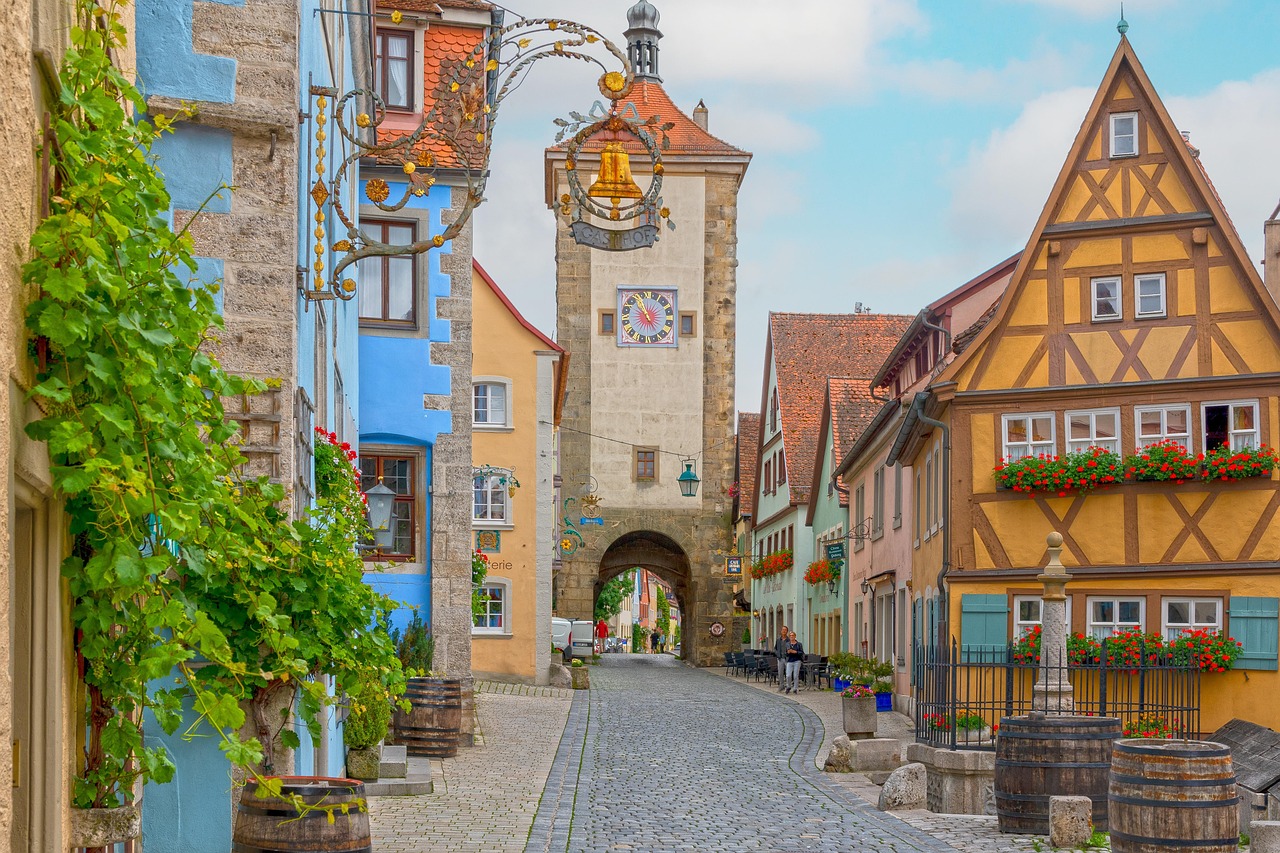
- Plönlein – That famous fork in the road with the leaning yellow house and two towers behind. It’s a must‑see attraction, but don’t expect solitude. If you want a quiet shot, come at sunrise in shoulder season; in March 2024 I had it almost to myself at 7:00 am.
- Town Walls – Walking the covered ramparts around town is still one of the best things to do in Romantic Road territory, especially with kids. There are stairs up at regular intervals; you can do it in short sections rather than as an all‑or‑nothing loop.
- Market Square & Town Hall Tower – Climb the narrow tower for a rooftop view of red‑tiled roofs and church spires. In high season, lines form; go early morning or late afternoon.
- Medieval Crime Museum – A hit with teenagers and anyone with a taste for the macabre. It’s educational in its own way, but some exhibits are graphic; maybe skip with younger kids.
- Night Watchman Tour – One of the best cultural experiences in Romantic Road lore. At dusk, a costumed guide leads you through cobbled streets, weaving history with humor. Cheesy? A bit. Still absolutely worth it.
Hidden Gems in Rothenburg
- Tauber Valley Detour – Walk down from the southern gate into the Tauber valley. Within ten minutes, the crowds vanish and you’re among gardens and vineyards. There’s a small footbridge and a quiet path along the river; I like to picnic here with bakery goods.
- Lesser‑Known Viewpoints – Instead of jostling for photos at Plönlein, walk the wall between the Klingentor and the Rödertor. Look for gaps in the parapet where the view opens over tiled roofs.
Local Food in Rothenburg
Rothenburg’s signature snack is the Schneeball – a ball of fried pastry strips dipped in sugar or chocolate. I’ll be honest: they look better than they taste. Try one, take your photo, but don’t make it your lunch.
For real sustenance, look for:
- Franconian Sauerbraten – Marinated beef in a slightly sour gravy, usually served with dumplings.
- Käsespätzle – Egg noodles with cheese and crispy onions; a good vegetarian option and popular with kids.
- Local beer – While wine rules further north, you’re now in a beer‑friendly corridor too.
Overnight Strategy
For any version of the 7 legs of Romantic Road or 8 legs of Romantic Road, Rothenburg deserves at least one night, ideally two. Stay inside the walls if possible. Once the day‑trippers leave, the town drops its performative sheen; you’ll see kids cycling home from music lessons, locals walking dogs, and shopkeepers chatting in doorways.
Leg 3 – Rothenburg ob der Tauber to Dinkelsbühl: Quiet Walls and Evening Lanterns
Recommended: 1–2 days • Romantic, atmospheric, good for walkers
The Drive: Gentle Countryside and Small Towns
Leaving Rothenburg, the Romantic Road threads past Schillingsfürst and Feuchtwangen. Both are pleasant, under‑the‑radar towns. I often stop in Feuchtwangen for a late morning coffee in the main square: a big, open plaza with arcades and a surprisingly grand atmosphere for such a small place.
The road here is easy driving – rolling farmland, forest patches, the occasional tractor. It’s a good stretch for first‑time European drivers to gain confidence.
Dinkelsbühl: Rothenburg’s Quieter Cousin
I have a soft spot for Dinkelsbühl. If Rothenburg is the prom queen, Dinkelsbühl is the friend who quietly becomes your favorite person. It’s fully walled, full of half‑timbered houses, and yet somehow calmer, more lived‑in.
In 2023, I arrived here with two kids and a friend after a long rainy drive. The moment we stepped into the old town, the rain stopped, and someone started playing accordion near the church. It felt scripted, but it wasn’t.
Things to Do in Dinkelsbühl
- Walk the Walls – Less crowded than Rothenburg’s, with grassy moats and towers. There’s a lovely section along the water on the east side where ducks patrol the moat.
- St. George’s Minster – A spacious Gothic church with beautiful light on a sunny afternoon. Even if you’re “churched out,” step inside for a few minutes of quiet.
- Evening Stroll – The town is at its loveliest at dusk, when street lamps ignite and reflections shimmer in the moat. I like to do a lazy loop before dinner, then another shorter one after.
Hidden Gems in Dinkelsbühl
- Back‑Street Courtyards – Wander behind the main street and look for narrow passages leading into courtyards. Many are residential but open during the day. They offer quiet vignettes: a bicycle under a vine, stacked firewood, a cat asleep in a window.
- Local Festivals (Kinderzeche) – In July, Dinkelsbühl’s Kinderzeche festival reenacts the town’s salvation by children pleading for mercy. For 2026, dates are expected mid‑July. It’s one of the standout cultural experiences on the Romantic Road; book accommodation months ahead.
Food & Evenings
Dinkelsbühl’s restaurants are hearty and unpretentious. I usually gravitate to places with dark wooden interiors where the menu is handwritten and the beer is local. Vegetarians will find Käsespätzle, salads, and seasonal vegetable dishes; carnivores can happily work through schnitzel variations.
After dinner, walk to one of the gates. Looking out from the gate portal into the dark countryside while the lights of town glow behind you is a quietly romantic moment – particularly in late autumn, when fog sometimes curls in the moat.
Leg 4 – Dinkelsbühl to Nördlingen: Into the Meteor Crater
Recommended: 1 day • Science‑minded, family‑friendly, unusual landscapes
The Drive: Sliding into Another World
Leaving Dinkelsbühl, you gradually enter the Ries – a massive, ancient meteorite crater. At first it just feels like more farmland. Then, almost imperceptibly, the horizon flattens and you realize you’re in a giant, shallow bowl.
There’s a subtle thrill to this: you’re driving across the scar of a cosmic impact, yet everything looks serene – cows grazing, church towers, yellow rapeseed fields in spring.
Nördlingen: The Round Town in the Crater
Nördlingen is perfectly round, fully walled, and built of stone that literally contains microscopic diamonds from the meteor impact. Kids love that detail; adults do too, if we’re honest.
Things to Do in Nördlingen
- Walk the Complete Town Wall – This is one of the only towns in Germany where you can walk a full, intact ring wall. It’s covered, with wooden railings, and takes about an hour at a relaxed pace. Every tower and gate frames a slightly different slice of the crater plain.
- Climb Daniel Tower (St. George’s Church) – The view from the church tower makes the crater topography suddenly obvious: the town is a coin at the center of an enormous shallow dish.
- Ries Crater Museum – A compact but fascinating museum explaining the impact, geology, and how the crater influenced settlement. Perfect if you’re traveling with curious teens or science geeks.
Hidden Gems & Detours
- Ries Countryside Drive – If you have time, do a short loop out of Nördlingen into the surrounding villages. The slight rise at the crater rim offers views back over the flat interior.
- Old Railway Lines – There are hobby railways and small museums clustered around the region. They’re not headline attractions, but on a rainy day they’re fun stops if you’re traveling with train‑obsessed kids.
Leg 5 – Nördlingen to Donauwörth & Harburg: Rivers, Castles, and Small Surprises
Recommended: 1–2 days • Castles, river views, quieter tourism
Harburg: Castle Above the River
Between Nördlingen and Donauwörth, the Romantic Road winds to Harburg, where a medieval castle perches on a hill above the Wörnitz river. I often time my day to have lunch here.
The approach is one of those must‑see attractions in Romantic Road driving: as you cross the bridge into town, the castle looms above, its walls a honeyed beige against green forest. There’s a small parking lot below the castle; from there it’s a short walk up.
Harburg Castle
The castle is less polished than Neuschwanstein or Hohenschwangau and feels more authentic for it – uneven stones, slightly musty interiors, and views that have probably changed very little in centuries. Guided tours are mostly in German, but you can explore some sections independently.
There’s a tiny café where I once spent an hour waiting out a thunderstorm, watching sheets of rain move across the valley. That forced pause ended up being one of my favorite hours of that trip.
Donauwörth: Where Rivers Meet
Donauwörth sits at the confluence of the Wörnitz and Danube rivers. It’s not as heavily touristed as Rothenburg or Dinkelsbühl, which gives it a pleasantly everyday feel.
Things to Do in Donauwörth
- Reichsstraße – A broad, colorful main street lined with gabled houses. It’s a good place to stretch your legs, grab a coffee, and do some people‑watching.
- Riverside Walks – Paths along the Danube and Wörnitz are ideal for evening walks. In summer, locals come out with ice creams and dogs; the atmosphere is low‑key and friendly.
- Small Museums & Churches – There are several modest but interesting churches and local museums; I tend to dip into whichever is open rather than target a specific one.
Overnight Choice
For a faster 9 leg itinerary for Romantic Road, you might treat Donauwörth as a lunch stop and push on to Augsburg for the night. For a slower pace or if you’re traveling with kids who need downtime, Donauwörth makes a sensible, less expensive overnight.
Leg 6 – Donauwörth to Augsburg: Baroque City Life on the Romantic Road
Recommended: 1–2 days • Culture, museums, urban comforts
The Drive: From Rivers to City
The drive from Donauwörth to Augsburg is straightforward, with sections of faster road. It’s less about scenery here and more about reaching the next hub. I usually plan a grocery stop at a supermarket on Augsburg’s edge to restock road‑trip basics (fruit, water, snacks).
Augsburg: One of Germany’s Oldest Cities
Augsburg is often underplayed in Romantic Road marketing, but it’s one of the most interesting stops if you care about history beyond castles and walls. Founded by the Romans, it later became a banking powerhouse under the Fugger family.
Must‑See Attractions in Augsburg
- Augsburg Town Hall (Rathaus) & Golden Hall – The town hall’s Golden Hall is a riot of gilding and paintings. On one visit I stepped in on a gray, drizzly day and it felt like walking into a jewelry box.
- Fuggerei – The world’s oldest social housing complex still in use. A walled mini‑neighborhood founded in the 16th century, where Catholic residents still pay a token annual rent. It’s a humbling, fascinating slice of social history.
- Cathedral & Churches – Augsburg has several significant churches; even a quick wander between them gives a sense of the city’s religious and political importance.
Food & Evenings in Augsburg
Augsburg’s dining scene is broader than most Romantic Road towns – you’ll find traditional Bavarian, Italian, Turkish, and more. In 2024 I had an excellent vegetarian dinner in a modern bistro converted from an old workshop, something that would be hard to find in smaller towns.
Evenings are lively around the central squares, especially in warm months, with outdoor seating and occasional live music. If you’ve been in small towns for a few nights, Augsburg feels like a cosmopolitan breather.
Family & Practical Tips
- Parking: Use a central parking garage and explore on foot or tram.
- EV Charging: Several fast chargers around the city; check apps like Plugsurfing or EnBW mobility+ for up‑to‑date locations.
- Rainy‑Day Stop: Augsburg is ideal if the weather turns; between museums, churches, and cafés, you can easily fill a day indoors.
Leg 7 – Augsburg to Landsberg am Lech: Rivers, Fields, and a Perfect Little Town
Recommended: 1 day • Scenic driving, riverside walks, romantic evenings
The Drive: Slowing Down Again
Leaving Augsburg, the Romantic Road shifts back into smaller‑scale scenery: fields, patches of forest, and gradual approaches to the Lech river. If you’ve been pushing the pace, this is where I suggest easing off again.
Landsberg am Lech: Postcard‑Perfect Riverside Town
Landsberg am Lech is one of my personal favorites along the whole route. It doesn’t have a single blockbuster attraction; instead, it has coherence – pastel houses, a stepped weir on the river, a beautifully proportioned main square, and just enough tourism to keep things lively without feeling overrun.
Things to Do in Landsberg
- Main Square (Hauptplatz) – A lovely, enclosed square where café and restaurant tables spill out in good weather. In the evenings, the light softens on the facades and you get that delicious “we’ve really arrived somewhere” feeling.
- Lech River & Weir – Walk down to the river and along the promenade. The stepped weir creates a broad sheet of white water; on sunny days it sparkles and sends up a fine mist.
- Back Streets & City Gate – Wander through the smaller streets, looking for old towers and gates. Landsberg rewards aimless exploring.
Food & Atmosphere
Landsberg is an excellent place to linger over a slow dinner. I’ve had both traditional Bavarian meals and lighter, modern interpretations here. In summer, outdoor seating along the riverbank is particularly romantic.
For a 10 legs of Romantic Road plan, Landsberg is a great overnight. For a compressed 7 leg itinerary, you might just stop for lunch and a stroll before pushing on to Schongau or Füssen.
Leg 8 – Landsberg am Lech to Schongau & Peiting: Pilgrims’ Roads and Quiet Towns
Recommended: 1 day • Transitional leg, small towns, pilgrimage history
The Drive: Toward the Foothills
This stretch is about the subtle shift from plains to foothills. The landscape begins to undulate more, forests thicken, and on a clear day you might catch your first far‑off glimpse of the Alps as a blue‑gray serration on the southern horizon.
Schongau & Peiting
Schongau is a small hilltop town with remnants of medieval walls and a pleasant old core. It doesn’t demand a huge amount of time, but a walk around the upper town and a coffee on a terrace make for a good midday break.
Peiting, just to the south, feels more like a practical base – handy if you’re traveling with a car and want easy parking for a night before diving into the more crowded Schwangau/Füssen area.
Pilgrimage and Churches
This corridor is dotted with small pilgrimage churches. Some are modest, others unexpectedly ornate. One of my favorite travel tips for Romantic Road travelers is to stop occasionally when you see a spire poking above trees; pull over, walk up, and peek inside. I’ve stumbled into quiet, gold‑lit spaces with frescoes no guidebook ever mentioned.
Leg 9 – Schongau & Peiting to Wieskirche: Meadows, Cows, and a Baroque Masterpiece
Recommended: Half‑day to full day • Iconic church, gentle countryside, great for picnics
The Drive: Meadows and Farmsteads
Between Peiting and Wieskirche, the Romantic Road becomes what many people imagine all of Bavaria to be: rolling green meadows, cows grazing with bells tinkling, wooden farmhouses with flower‑laden balconies. On a clear summer day, with the sky a saturated blue and the Alps sharpening on the horizon, it’s hard not to feel like you’ve driven into a painting.
Wieskirche (Pilgrimage Church of Wies)
The Pilgrimage Church of Wies is one of the absolute must‑see attractions in Romantic Road lore – a UNESCO‑listed Rococo masterpiece sitting almost absurdly in open fields. The exterior is simple; the interior, anything but.
Inside the Church
Step inside and you’re swallowed by white and gold: curling stucco, pastel frescoes, light bouncing off gilded details. I’ve been here on sunny days when the interior glows, and on foggy afternoons when the colors feel softer, more contemplative. Both moods are worth experiencing.
Practical Tips for Wieskirche
- Timing: Bus tours arrive in waves. If you can, come before 10:00 am or after 4:00 pm for a quieter visit.
- Dress & Behavior: This is an active pilgrimage site. Dress modestly (shoulders covered), speak softly, and avoid intrusive photography during services.
- Food: There are a couple of guesthouses and kiosks nearby serving simple Bavarian fare and cakes. I often buy something to go and picnic a little way off, facing the church with the Alps behind.
Family & Accessibility
The gentle paths around Wieskirche are stroller‑friendly. Kids can run a bit in the meadows (respect any fences and livestock), and the short visit inside the church is manageable even for those with short attention spans.
Leg 10 – Wieskirche to Füssen & Neuschwanstein: The Grand Finale
Recommended: 2–3 days • Castles, alpine lakes, hiking, extremely popular
The Drive: Into the Alps
From Wieskirche, the Romantic Road dips and rises through increasingly dramatic terrain. Forests thicken, meadows slope more steeply, and then – suddenly – the Alps are no longer a distant line but full‑fledged mountains rising ahead.
Schwangau & Neuschwanstein
As you approach Schwangau, you’ll catch your first glimpse of Neuschwanstein – that improbable castle perched on a hill, conjured by King Ludwig II and by Disney’s later imaginings. It’s the climactic image of many Romantic Road road trip itineraries.
Neuschwanstein Castle
Neuschwanstein is one of the busiest tourist sites in Germany. My relationship with it has evolved over the years: initial awe, later skepticism (“is this worth the crowds?”), and most recently a fond pragmatism. Yes, it’s crowded. Yes, it’s still worth seeing at least once if you’ve never been.
How to Visit Neuschwanstein in 2026
- Book Tickets in Advance: Online reservations open weeks ahead and often sell out in peak months. In 2026, expect digital ticketing to be the norm.
- Choose Your Time Slot Carefully: Early morning or late afternoon tours are slightly less chaotic. Midday is peak congestion.
- Getting Up the Hill: Options include walking (30–40 minutes, uphill but scenic), shuttle buses, or horse‑drawn carriages. I usually walk up and bus down if time is tight.
- Photography: The interior is beautiful but tightly controlled; no photos allowed. The best exterior views are from the Marienbrücke (Mary’s Bridge) and nearby trails.
Hohenschwangau Castle
Just across the valley, Hohenschwangau Castle is where Ludwig actually spent much of his youth. It’s less crowded, more grounded, and gives context to Neuschwanstein’s dreaminess. If you can, visit both; if time is short, visit Neuschwanstein for spectacle and Hohenschwangau for lived history.
Alpine Lakes and Hikes
- Alpsee – A gorgeous lake between the two castles. A lakeside path offers easy walking with classic mountain‑and‑water views. In summer, swimmers brave the cold water.
- Schwansee – Slightly quieter than Alpsee, with its own walking trails through meadows and forest.
- Higher Trails – From the vicinity of Marienbrücke, trails lead further up into the mountains. If you’re reasonably fit and have decent shoes, a short upward detour rewards you with fewer people and more expansive views.
Füssen: End of the Road
Füssen sits just beyond Schwangau and officially marks the end of the Romantic Road. Many travelers treat it as a mere hotel hub for castle visits, but it’s worth exploring in its own right.
Things to Do in Füssen
- Old Town – Colorful buildings, a small castle, and narrow streets that twist uphill. It’s compact and pleasant to wander in an hour or two.
- Lech River Gorge – Just outside town, the turquoise Lech cuts through a rocky gorge. In good weather, walk out to one of the bridges for a view down into the churning water.
- Evenings in Town – Füssen has a good mix of traditional Bavarian restaurants, pizzerias, and more modern spots. Live music is not uncommon in summer; I’ve stumbled into more than one impromptu evening of folk tunes here.
End‑of‑Trip Reflection
Standing by the Lech in Füssen at the end of a Romantic Road journey always feels bittersweet. You’ve traveled from vineyards to Alps, from city squares to quiet meadows. The temptation is to immediately plan what you “missed.” Instead, I suggest a slow dinner, a last evening walk, and a promise to yourself to return in a different season someday.
18+ Major Stops & Viewpoints Along the Romantic Road – A Closer Look
Below are at least 18 of the most prominent stops, with additional history, significance, and personal insights.
1. Würzburg
We’ve met Würzburg as a starting point, but it also stands alone as a worthwhile city break: a university town with energy, a major Baroque palace (the Residence), and a layered history from Roman outpost to WWII devastation and postwar rebuilding. Every time I stand on the Alte Mainbrücke at sunset with a glass of Silvaner, I’m reminded how well Franconians understand the art of simply enjoying where they live.
2. Tauberbischofsheim
A small town with a handsome market square and a history as a bishop’s seat. Not a must‑stop, but a pleasant coffee break and a good place to feel the transition from city to valley.
3. Bad Mergentheim
A spa town with a castle and large park, once a seat of the Teutonic Order. I tend to stop here when traveling with older relatives; the spa culture, flat promenades, and plentiful benches make it a gentle, restorative pause.
4. Weikersheim
Already described in Leg 1, but worth emphasizing: Weikersheim’s castle gardens are some of the loveliest formal gardens along the route, particularly in late spring when everything bursts into bloom.
5. Röttingen
A small town with remnants of fortifications and towers. Often overlooked; I usually just roll through, but one October I stumbled on a local harvest festival here and ended up eating grilled sausages shoulder‑to‑shoulder with locals under the tent.
6. Creglingen
Known for the Herrgottskirche (Lord’s Church) with a stunning late‑Gothic woodcarving by Tilman Riemenschneider. It’s a quiet, contemplative stop, especially meaningful if you’re interested in religious art.
7. Rothenburg ob der Tauber
The headline town of the Romantic Road, combining intact medieval walls, postcard scenes like Plönlein, and a dense layer of tourism infrastructure. Yes, you’ll hear more English and Japanese than German in some streets, but step just one or two blocks away from the main routes and Rothenburg still feels like a real town where washing hangs from windows and locals chat in front of bakeries.
8. Schillingsfürst
Perched on a hill with a baroque castle; I’ve mostly experienced it as a quick visual note on the skyline rather than a major stop, but it’s another option for travelers who like small, less‑visited places.
9. Feuchtwangen
With its arcaded square and monastery cloister, Feuchtwangen makes a dignified, unhurried coffee stop. If your itinerary is drifting toward the longer side (say, an 11 leg itinerary for Romantic Road), spending a night here can be a way to insert a “day of nothing special,” which is often exactly what makes a trip memorable.
10. Dinkelsbühl
Fully walled, atmospheric, slightly under the radar compared to Rothenburg. Its Kinderzeche festival in July 2026 will be one of the route’s liveliest traditional events, with parades, historical costumes, and lots of local pride on display.
11. Nördlingen
The meteor crater town; walking its complete ring wall is one of the most satisfying single activities on the Romantic Road, especially on a sunny, breezy afternoon when the fields beyond shimmer in different shades of green.
12. Harburg
A textbook medieval castle above a river bend. For photographers, the best shots are often from below, near the river bridge, rather than from within the castle itself.
13. Donauwörth
A river town with a broad main street and a sense of everyday life. It’s not trying to be a fairy‑tale; its charm lies in that ordinariness.
14. Augsburg
The largest city along the route after Würzburg, with Roman origins, Renaissance wealth, and modern diversity. If your interest in the Romantic Road includes broader Central European history, Augsburg is indispensable.
15. Landsberg am Lech
A beautifully situated town on the Lech river. The stepped weir and pastel facades make it particularly photogenic at dusk. I often recommend Landsberg as a romantic overnight to couples doing a 9 legs of Romantic Road itinerary.
16. Schongau
A modest hilltop town, useful as a rest stop or overnight if you want to break the drive before the Füssen area. Its upper town has enough atmosphere to be pleasant without demanding a big sightseeing effort.
17. Wieskirche
The Rococo pilgrimage church in a meadow that somehow manages to feel both exuberant and deeply peaceful. It’s a high point for lovers of art and architecture, and a lovely place for quiet reflection even if you’re not religious.
18. Schwangau & Neuschwanstein
The iconic castles, the alpine lakes, the hub of souvenir stands and buses – and yet, look up and beyond and you’re in real mountain country. For 2026–2027, expect continued efforts to manage visitor flow more sustainably, possibly including more shuttle bus requirements and refined time‑slot systems.
19. Füssen
More than just a castle base, Füssen marks both an end and a beginning: the end of the Romantic Road and the beginning of deeper Alpine adventures if you choose to continue south into Austria. Its compact old town and riverside walks provide a gentler final note after the intensity of Neuschwanstein.
Eating & Sleeping Along the Romantic Road
Where to Sleep: Inns, B&Bs, and Hotels
One of the best cultural experiences in Romantic Road travel is staying in small, family‑run guesthouses (Gasthof, Pension, Gästehaus). Over a decade of trips, I’ve learned:
- Book Ahead in Peak Season: From late May to early October, especially in Rothenburg, Dinkelsbühl, Landsberg, and Schwangau/Füssen, rooms sell out quickly. For 2026, castle‑adjacent dates will be particularly competitive.
- Inside vs Outside Old Town: Staying inside walled towns (Rothenburg, Dinkelsbühl, Nördlingen) is magical but may involve tighter streets and limited parking. Staying just outside walls is cheaper and easier for drivers.
- Family Rooms: Many guesthouses have “family apartments” with small kitchens – incredibly handy for longer Romantic Road road trip itineraries and picky eaters.
What to Eat: Local Food Along the Way
Regional differences along the Romantic Road are subtle but present:
- Franconian North (Würzburg to Rothenburg): More wine, dishes like Schäufele, Franconian sausages, and carp in season.
- Middle Section (Dinkelsbühl to Augsburg): Classic southern German fare – schnitzel, roasts, dumplings, hearty soups.
- Alpine South (Landsberg to Füssen): More cheese dishes (Käsespätzle), game meats, and alpine specialties. Dairy and cakes are particularly good.
For budget travelers, bakeries (Bäckerei) are your secret weapon: fresh sandwiches, pastries, and coffee at reasonable prices. Supermarkets along the route also make it easy to assemble simple road or picnic meals.
Planning Fuel & Food Stops
My usual rhythm on a driving day:
- Light breakfast at accommodation
- Drive 1–2 hours
- Coffee and bakery stop mid‑morning in a small town square
- Lunch in a town where I’d like to walk for an hour (e.g., Dinkelsbühl, Donauwörth)
- Afternoon drive of 1–2 hours to overnight base
- Early evening stroll and dinner
Gas stations are frequent enough that you don’t need to obsess; I usually refuel when I’m at 1/3 tank, especially on a Sunday when some rural stations may have limited service (pay‑at‑pump usually still works).
Evenings on the Road: Where to Linger and Where to Push On
Best Towns for a Proper Night
- Würzburg: Good for your first or last night, with riverfront bars and wine taverns.
- Rothenburg ob der Tauber: Magical after dark once the crowds disperse; the Night Watchman tour is a highlight.
- Dinkelsbühl: Lantern‑lit walks by the moat and quiet taverns make for deeply relaxing evenings.
- Landsberg am Lech: Lovely riverside ambiance and a main square ideal for lingering over dessert and a digestif.
- Füssen: Plenty of restaurants and occasional live music; a celebratory end‑of‑trip spot.
Star‑Camping & Quiet Nights
Official campgrounds and campervan spots dot the route, particularly near rivers and lakes. If you’re in a camper, look for Stellplätze (simple motorhome parking). On a clear night near Wieskirche or in the foothills around Schwangau, you can see a surprising number of stars given how close you are to major tourist routes.
When to Push On
Towns like Tauberbischofsheim, Lauda‑Königshofen, Röttingen, and Peiting are perfectly fine for functional overnights if you’re tired, but I wouldn’t plan extended stays there unless you have a specific reason (family visit, festival, or simply wanting to be far from crowds).
Extra Day Trips & Nearby Attractions
From Würzburg
- Franconian Wine Villages: Detours to places like Volkach or Sommerhausen give a deeper taste of wine country. Easy by car or train/bus.
- Bamberg: About 1.5 hours by car or train; a UNESCO‑listed town with smoky beer and a gorgeous old town hall on a river island.
From Augsburg
- Munich: Just under an hour by fast train; possible as a long day trip if you want a big‑city hit.
- Allgäu Region: Rolling hills and farming villages southwest of Augsburg are lovely for cycling.
From Füssen
- Austria (Reutte, Ehrwald): Cross the border for more castles and alpine scenery; no border checks in normal Schengen times, but carry ID.
- Garmisch‑Partenkirchen: About 1.5 hours by car; access to Germany’s highest mountain, Zugspitze.
Cultural Etiquette & Local Customs on the Romantic Road
Everyday Courtesies
- Greetings: A simple “Guten Tag” or “Grüß Gott” (common in Bavaria) when entering shops, cafés, or elevators is appreciated.
- Quiet in Churches: Even heavily visited churches like Wieskirche and Augsburg Cathedral are active places of worship. Speak softly, dress modestly, avoid flash photography, and be sensitive during services.
- Cash vs Card: Cards are widely accepted, but small bakeries, cafés, and guesthouses may prefer cash, especially under €10–15 transactions.
Dining Customs
- Seating: In traditional beer gardens, it’s often acceptable to share tables; ask “Ist hier frei?” (Is this free?) before sitting.
- Tipping: 5–10% is standard in restaurants if service was decent. Tell the server the total including tip when you pay; don’t leave cash on the table.
- Water: Tap water is safe, but ordering “water” usually gets you bottled mineral water you pay for. If you want tap water, ask for “Leitungswasser” politely; some places may still say no.
Driving & Noise
- Respect Quiet Hours: Residential areas generally expect quiet after 10 pm.
- Driving Style: Germans take road rules seriously: obey speed limits, don’t park where forbidden, and don’t use hazard lights as casual “double parking” excuses in narrow old‑town streets.
Practical Travel Advice & Road Logistics (2026–2027)
How to Get Around: Car, Bus, Train, Bike
- Car Rental: Easiest for flexibility. Pick up in Frankfurt, Munich, or directly in Würzburg or Augsburg. For the Romantic Road, a regular car is sufficient; no 4x4 needed.
- Public Transport: Trains connect the bigger towns (Würzburg, Augsburg, Füssen), and buses serve smaller ones. The dedicated Romantic Road coach still operates seasonally, useful if you don’t want to drive.
- Cycling: There is a signposted Romantic Road bike route; sections between Tauber valley towns and around the Lech are particularly pleasant.
Visas, Licenses, and Insurance
- Visas: Germany is in the Schengen Area. Many nationalities (e.g., EU/EEA, UK, US, Canada, Australia, New Zealand, Japan, South Korea) can visit visa‑free for up to 90 days in any 180‑day period. Check current rules before travel.
- Driver’s License: EU/EEA licenses are fully valid. Many non‑EU visitors can drive with their home license plus an International Driving Permit (IDP). Rental agencies may insist on an IDP even if police rarely do; get one before you travel.
- Insurance: Opt for full coverage including glass and tire damage; narrow old‑town streets and cobbles can be unforgiving.
SIM Cards & Connectivity
- eSIMs: In 2026, eSIMs are the easiest option – buy a Europe data eSIM online before arrival.
- Physical SIMs: Available from major providers (Telekom, Vodafone, O2) in cities like Würzburg and Augsburg, as well as electronics stores.
- Coverage: Generally excellent, with occasional slower spots in deeper valleys or rural patches.
Fuel & EV Charging
Gasoline (Benzin) and diesel are widely available; fuel prices are higher than in North America but comparable to much of Western Europe. For EVs, the Romantic Road in 2026 is comfortably doable:
- Fast Chargers: Clustered around larger towns (Würzburg, Rothenburg area, Dinkelsbühl/Nördlingen vicinity, Donauwörth, Augsburg, Landsberg, Füssen).
- Destination Chargers: Increasingly found at hotels and guesthouses; ask when booking.
- Apps: Use multi‑network apps like EnBW mobility+, Plugsurfing, or ChargePoint to access most stations.
Seasonal Considerations & Closures
- Spring (April–June): Flowering trees, fewer crowds, occasional rain. Ideal for a balanced trip.
- Summer (July–August): Warm, long days, festivals – but also peak crowds and higher prices, especially around Rothenburg and Neuschwanstein.
- Autumn (September–October): My personal favorite: harvest colors, wine festivals, cooler air, and generally smaller crowds.
- Winter (November–March): Short days, some seasonal closures (smaller attractions, reduced bus schedules), but magical Christmas markets in towns like Rothenburg and Augsburg. Roads can be snowy or icy; winter tires are mandatory in wintry conditions.
Vehicle Suitability & Breakdowns
- Type of Vehicle: Any standard car is fine. Campervans and small RVs also work; just be cautious in tight old towns.
- Breakdowns: Rental cars include roadside assistance. If driving your own vehicle, consider ADAC (German auto club) coverage; they’re extremely efficient.
Direction: North–South vs South–North
I generally prefer north–south, ending dramatically in the Alps. That said:
- South–North: Makes sense if you’re starting in Munich or coming from Austria/Italy. Ending in Würzburg or even extending to Bamberg/Frankfurt is a nice arc.
- Weather: In early spring or late autumn, starting in the south may mean dealing with alpine weather first and gentler conditions later.
Budgeting for a Romantic Road Trip
Costs vary by travel style, but as a rough 2026 estimate for two people:
- Budget: €120–€180/day (guesthouse, simple meals, limited paid attractions)
- Mid‑Range: €180–€280/day (comfortable hotels, restaurant dinners, all major sights)
- Higher‑End: €280+/day (boutique stays, more elaborate dining, guided tours)
To save money:
- Use bakeries and supermarkets for some meals.
- Stay just outside headline towns like Rothenburg and Schwangau.
- Travel in shoulder season (April–June, September–early October).
Summary & Final Recommendations
Key Takeaways
- The Romantic Road is less a single spectacular road and more a sequence of must‑see attractions, cultural experiences, and everyday scenes linked together.
- Design your itinerary in 7–14 legs of Romantic Road depending on pace, with my personal sweet spot being a 10 leg itinerary that allows for both headline sights and meandering.
- Anchor your nights in a mix of icons (Rothenburg, Dinkelsbühl, Augsburg, Landsberg, Füssen) and quieter towns (Weikersheim, Donauwörth, Schongau) for balance.
- Embrace small rituals: morning walks before crowds, bakery stops in village squares, riverside strolls at dusk.
Best Seasons to Visit the Romantic Road
- Best Overall: Late April–June and September–early October – comfortable weather, full services, manageable crowds.
- Best for Castles & Alpine Lakes: June–September, with longer days and open mountain trails.
- Best for Christmas Markets: Late November–December, when Rothenburg, Augsburg, and others illuminate their squares.
However you slice your Romantic Road road trip itinerary – 7 legs, 9 legs, 12 legs, or a full 14 legs – the magic lies in letting the route slow you down. Drive the smaller road instead of the bypass, pause when a village looks inviting, follow your curiosity into an unplanned church or café. Those are the moments that will stay with you long after 2026 has turned into just another date on your photos.