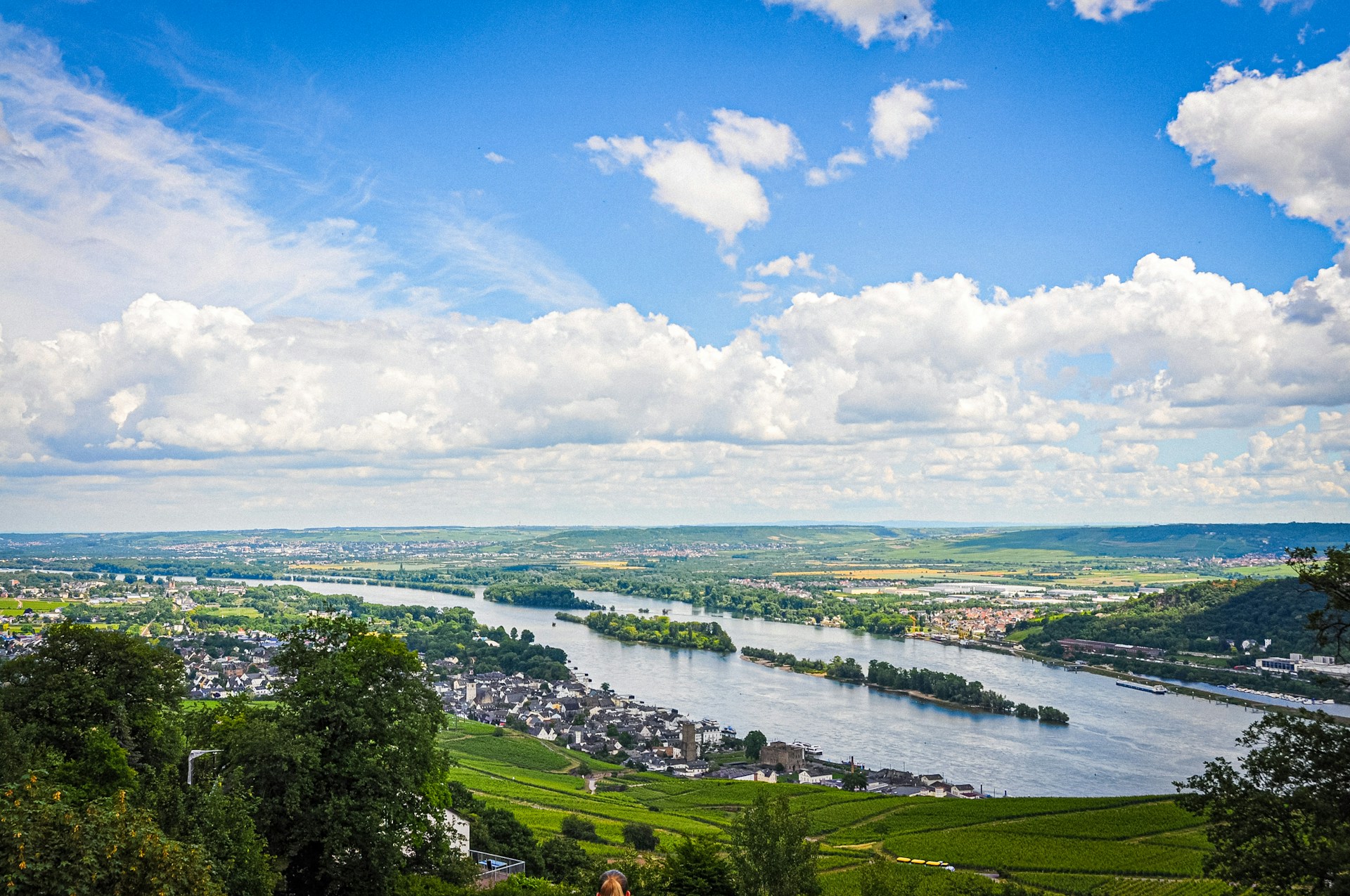
Why Visit Rüdesheim am Rhein?
If you’ve ever imagined Germany as a patchwork of vine‑covered hills, medieval castles, half‑timbered houses, and riverboats gliding past storybook villages, Rüdesheim am Rhein is that fantasy in concentrated form. I’ve been coming here since my student days, and even now, as a travel writer who’s “seen it all,” Rüdesheim still gets me every single time.
Perched on a particularly scenic bend of the UNESCO‑listed Upper Middle Rhine Valley, Rüdesheim is small enough to feel intimate but busy enough to keep you entertained for days. It’s famous for its Riesling wines, the lively Drosselgasse lane, and the monumental Niederwalddenkmal overlooking the vineyards. But the real magic hides in quiet vineyard paths at sunset, in tiny wine taverns where the owner pours from his own barrels, and in misty morning ferry rides across the Rhine.
Whether you’re planning a 3 day itinerary for Rüdesheim am Rhein, stretching it into 4 days in Rüdesheim am Rhein, or going all in with a 5 day itinerary for Rüdesheim am Rhein, this guide will help you design the perfect stay, weaving together must‑see attractions, hidden gems, local food, and cultural experiences.
In this travel guide for Rüdesheim am Rhein, I’ll share not just the best places to visit in Rüdesheim am Rhein, but also what it feels like to actually be there: where I go for my first coffee, the best vineyard bench for a romantic sunset, the most kid‑friendly spots, and how to avoid the tour‑bus crush.
Table of Contents
- Why Visit Rüdesheim am Rhein?
- Rüdesheim am Rhein Overview (2026)
- Neighborhoods & Areas to Explore
- Top 20+ Attractions & Experiences
- 3, 4 & 5 Day Itineraries for Rüdesheim am Rhein
- Local Food & Wine in Rüdesheim am Rhein
- Nightlife, Entertainment & Cultural Experiences
- Events & Festivals 2026–2027
- Day Trips from Rüdesheim
- Practical Travel Tips & Local Customs
- Summary & Best Time to Visit
Rüdesheim am Rhein Overview (2026)
Rüdesheim am Rhein is a historic wine town in the German state of Hesse, at the southern entrance to the UNESCO Upper Middle Rhine Valley. With around 10,000 residents, it’s essentially a village… that happens to host over a million visitors a year.
In 2026, Rüdesheim feels more balanced than it did a decade ago: tourism is still the lifeblood, but more wineries are focusing on sustainability, there’s a growing food scene beyond schnitzel and sausages, and local initiatives are trying to spread visitors out beyond the Drosselgasse. As someone who’s watched the town evolve over the years, I’m pleased to see more attention on authentic, small‑scale experiences.
Neighborhoods & Areas to Explore in Rüdesheim
Altstadt (Old Town & Riverside)
This is likely where you’ll spend most of your time, especially if it’s your first visit. Cobblestone lanes, half‑timbered houses, wine taverns with creaky staircases—it’s almost impossibly picturesque.
- Best for: First‑time visitors, short stays, nightlife, river views
- Highlights: Drosselgasse, river promenade, boat piers, Brömserburg, Asbach visitor center
Vineyard Slopes & Niederwald
Climbing (or floating via cable car) into the vineyards is where Rüdesheim really opens up. The views over the Rhine and the town are spectacular.
- Best for: Hikes, picnics, romantic sunsets, photography
- Highlights: Niederwalddenkmal, chairlift to Assmannshausen, circular hiking trails
Assmannshausen (Red Wine Village)
A few kilometers upriver, Assmannshausen is technically part of Rüdesheim, but with its own character: quieter, more local, and famous for its Spätburgunder (Pinot Noir).
- Best for: Wine enthusiasts, relaxed evenings, fewer crowds
- Highlights: Red wine taverns, riverside promenade, chairlift, hiking routes
Eibingen & Surrounding Hills
Eibingen is an uphill district known above all for its Benedictine Abbey. It feels more residential and less touristy, with wonderful vineyard access.
- Best for: Spiritual retreats, quiet walks, staying away from crowds
- Highlights: St. Hildegard Abbey, farm stands, viewpoints
Top Attractions & Experiences in Rüdesheim am Rhein
Below are more than twenty of the must‑see attractions in Rüdesheim am Rhein, combining classic sights with the places I’ve grown to love over repeated visits. For each, I’ll weave in practical tips and the kind of details that only emerge when you’ve lingered a little longer.
1. Niederwalddenkmal & Vineyards Above Rüdesheim
The Niederwalddenkmal is the defining icon of Rüdesheim: a colossal, winged Germania statue, sword and crown in hand, gazing down over the Rhine. I still remember my first ascent, years ago on a chilly April morning, when low fog hung over the river and the vineyards glistened from overnight rain. By the time I reached the monument, the sun had broken through and the whole valley looked like an oil painting.
Built in the late 19th century to commemorate the unification of Germany, the monument is powerful not just for its history but for its setting. You’re standing on the edge of the Niederwald forest; below you, the neat lines of vines tumble toward Rüdesheim; across the water, barges slide along the Rhine.
What to do: Stroll the terrace around the monument, then follow one of the marked walking paths that dip in and out of the forest and the vineyards. I like the loop that connects the Niederwalddenkmal with the chairlift to Assmannshausen and the Jagdschloss Niederwald (a former hunting lodge turned hotel).
How to get there: The most atmospheric way is via the cable car from Rüdesheim (see next section). You can also hike up from the town in about 45–60 minutes or drive to a parking lot near the monument.
Tips: Go early or late in the day to avoid bus groups. In summer, late evening light can be spectacular for photography. On windy days, bring a light jacket even when the town feels warm.
2. Rüdesheim Cable Car (Seilbahn) Over the Vineyards
Suspended over the vines in a small open gondola, feet dangling, camera out—that’s often the first “wow” moment for visitors, and it never gets old for me either. The cable car glides from the edge of the Old Town straight up to the Niederwalddenkmal, giving you that postcard view of the Rhine framed by rows of grapes.
I like taking the cable car up in the morning when the air is cool and then walking down through the vineyards in the late afternoon, when the light is soft and the town below slowly lights up.
Practical info: The valley station is right behind the Old Town near the Drosselgasse. In 2026, expect it to run roughly from March to early November (closed in deep winter, with occasional special openings). Round‑trip and one‑way tickets are available, and combo tickets with the chairlift to Assmannshausen are a good deal.
Family tip: Kids usually love the thrill of the small gondolas. If anyone in your group is afraid of heights, reassure them that the ride is short and very stable; I’ve taken nervous friends up with no issues.
3. Drosselgasse: The Lively Heart of Rüdesheim
Drosselgasse is Rüdesheim’s most famous—and most crowded—street: a narrow cobblestone lane lined with wine taverns, live music venues, souvenir shops, and carved wooden balconies. On a peak summer evening, it can feel like all of Europe has squeezed into this 144‑meter alley to clink glasses of Riesling.
I have a love–hate relationship with Drosselgasse. At midday in August, when tour groups surge through and the music blares from every doorway, I tend to avoid it. But on a shoulder‑season evening in May or September, when fairy lights twinkle, a band plays Schlager tunes in the courtyard of an old tavern, and you can still hear the clink of glasses over the murmur of conversation—it’s hard not to be charmed.
What to do: Walk it once during the day to get your bearings, then come back at night for wine and music. Some taverns have small courtyards that feel more intimate than the main drag.
Romantic tip: For couples, duck into a side lane and look for smaller wine stubs (wine taverns). Sharing a carafe of Riesling just off the Drosselgasse can feel surprisingly cozy.
4. Rhine Promenade & Riverboats
The riverfront promenade is where Rüdesheim breathes. In the morning, joggers and dog walkers take over; by midday, river cruise passengers spill off elegant boats; in the evening, couples stroll with ice creams or glasses of wine in hand.
I like to start my Rüdesheim days with a takeaway coffee and a slow walk along the river, watching the flow of barges heading up and down the Rhine. It’s a reminder that this has long been a working river, not just a scenic backdrop.
Things to do: Hop on a short sightseeing boat tour, take the ferry across to Bingen, or just sit on a bench and people‑watch. The promenade is also where you’ll find ticket booths for longer cruises along the Rhine Gorge.
Family tip: There’s enough space here for kids to run safely away from traffic, and boats are a big hit with younger travelers.
5. Brömserburg Castle (Rüdesheim Castle)
Just inland from the river, Brömserburg is a solid, square stone castle that once guarded this stretch of the Rhine. Parts of it date back to the 10th century, and over the centuries it was adapted from fortress to residence and, more recently, to a wine museum.
I’ve visited Brömserburg on both bright summer days and during a rainstorm, when the thick stone walls seemed to hold the sound of the rain in a muffled echo. Both moods suit it: on sunny days, the views from the tower over the river and vineyards are lovely; on gloomy days, you can almost feel the medieval chill.
What to expect: Exhibits on regional wine history, old presses and tools, and the story of river trade. It’s not the most high‑tech museum, but it’s atmospheric, and the small garden is a nice place to rest with a view of the Rhine.
Tip: Combine a castle visit with a promenade stroll and a wine tasting nearby—everything is close together here.
6. Siegfried’s Mechanical Music Cabinet
This is one of the most unexpectedly delightful museums in Germany: a collection of mechanical musical instruments—from delicate music boxes to gigantic orchestrions—that come to life during guided tours. The museum is housed in a 15th‑century noble residence, which adds to the charm.
The first time I went, I expected a niche curiosity. Instead, I found myself grinning like a kid as a self‑playing piano, violin, and percussion ensemble burst into song at the push of a button. The guides are passionate, and they demonstrate many of the instruments during the tour.
Practical info: Visits are by guided tour only (offered in several languages, including English in high season). In 2026, check times in advance, especially off‑season. Tours typically last 45–60 minutes.
Family & rainy‑day tip: This is a perfect activity when the weather turns or when you need a break from walking. Kids usually love the spectacle.
7. Parish Church of St. Jakobus
St. Jakobus stands quietly near the heart of town, a church that has seen fires, wars, and reconstructions. Inside, it’s calmer than the streets outside—cool stone, colored light filtering through stained glass, and the faint smell of old wood and candle wax.
I often slip in here for a short pause between sightseeing and wine tasting. It’s a good place to reset, especially on busy days when Rüdesheim feels crowded.
Tip: If you’re visiting on a Sunday or religious holiday, be mindful of services; sit in the back if you’re just observing, and keep phones silent.
8. Abbey of St. Hildegard (Benediktinerinnenabtei St. Hildegard)
High above Rüdesheim, surrounded by vineyards, stands the Benedictine Abbey of St. Hildegard—a modern (early 20th‑century) abbey inspired by the spiritual legacy of St. Hildegard of Bingen. You approach through rows of vines, with the town and river spread out below.
My favorite way to come here is on foot, following vineyard paths from the edge of Rüdesheim. It takes 30–45 minutes, depending on photo stops, and it feels like walking back in time. The abbey itself is peaceful: plain yet beautiful, with a small shop selling products made by the nuns (including excellent wine and herbal specialties).
Spiritual & cultural experience: You can sometimes attend services or hear the nuns’ Gregorian chant. Even if you’re not religious, the atmosphere is soothing.
Tip: Combine the abbey with a longer vineyard hike or with Eibingen village for a quieter afternoon.
9. Asbach Visitor Center (Brandy & History)
Asbach Uralt, the famous German brandy, was born in Rüdesheim, and the Asbach visitor center pays homage to that heritage. If you enjoy spirits or are simply curious about local products, it’s worth an hour of your time.
I visited on a cool autumn afternoon; the warm, slightly sweet aroma of aging brandy in the cellars was surprisingly comforting. The tour explains the production process and ends, of course, with a tasting.
Tip: Try Rüdesheim coffee (more on that later) nearby to compare how Asbach is used in different ways.
10. Rüdesheim Coffee Ritual
Rüdesheim coffee (Rüdesheimer Kaffee) is more than just a drink; it’s a small performance. Hot Asbach brandy is set on fire, sugar cubes dissolve in the blue flame, strong coffee is poured in, and the whole thing is topped with whipped cream and chocolate flakes.
My first Rüdesheim coffee was on a chilly December evening, after a late promenade walk. The waiter lit the brandy tableside; as the blue flame flickered, the entire café seemed to pause and watch. It’s sweet, warming, and stronger than it looks—definitely not for mornings.
Where to try: Many cafés in the Old Town serve it. Look for places that prepare it at the table rather than behind the bar; the show is half the fun.
Tip: Consider sharing one if you’re not used to strong spirits. And don’t operate a car afterwards.
11. Vineyard & Forest Hikes (Rheinsteig & Local Trails)
One of the best things to do in Rüdesheim am Rhein is simply to walk. Trails thread the vineyards and the Niederwald forest, connecting viewpoints, chapels, and neighboring villages. The Rheinsteig, a long‑distance hiking trail, passes nearby, and you can sample short sections for half‑day excursions.
I’ve walked these paths in all seasons: in spring, when the vines are just budding; in high summer, when the heat radiates off the stone walls; and in October, when the leaves turn gold. Each season gives a different personality to the landscape.
Tip: Wear decent shoes—some paths are rocky—and bring water in summer. A small picnic (bread, cheese, grapes, a bottle of local Riesling) makes for a memorable lunch with a view.
12. Assmannshausen & the Chairlift
Assmannshausen feels like Rüdesheim’s quieter cousin: same riverside charm, fewer tour buses, and a focus on red wine rather than white. The chairlift that rises from the village into the vineyards and forest is one of my favorite small adventures in the area.
Unlike the enclosed gondolas of the Rüdesheim cable car, the chairlift seats are open, and you drift slowly over vineyards and forest, with birdsong and the occasional clink of the cable as soundtrack.
How to get there: A short boat ride or bus from Rüdesheim, or you can hike there via forest trails from the Niederwalddenkmal.
Tip: Consider a loop: cable car up from Rüdesheim, hike through the forest to the chairlift, descend to Assmannshausen, then boat back to Rüdesheim.
13. Traditional Wine Taverns (Weinstuben & Straußwirtschaften)
Wine is the lifeblood of Rüdesheim, and experiencing it at the source is essential. Traditional wine taverns (Weinstuben) and seasonal wine gardens (Straußwirtschaften) are where locals and visitors mix over carafes of Riesling, Spätburgunder, and local specialties.
Some of my most memorable evenings in Rüdesheim have been in small, wood‑paneled taverns, sharing long tables with strangers who became friends after a glass or two. A vintner might pull up a chair and talk about the vintage; someone starts humming along with the accordion player in the corner.
What to order: Start with a dry Riesling (look for “trocken” on the menu), then maybe a half‑dry (“halbtrocken”) or a fruity one. In Assmannshausen, don’t miss the local Pinot Noir.
Budget tip: Ordering by the carafe (0.25L or 0.5L) and sharing can be more economical than individual glasses.
14. Brömserhof Courtyard & Hidden Corners
Behind some of the Old Town facades are hidden courtyards where you can escape the bustle. Brömserhof and a few neighboring properties have quietly charming inner spaces with vines climbing the walls and small fountains trickling in the background.
I stumbled on my favorite courtyard while ducking away from a sudden summer downpour; within minutes, I was sharing a table under a canopy with a local couple, trading restaurant tips.
Tip: Don’t be afraid to peek through open gates or follow signs to “Hof” (courtyard). Just be respectful of private property.
15. Ferry to Bingen & Rochusberg Views
Crossing the Rhine is a small but satisfying adventure. The car and passenger ferry between Rüdesheim and Bingen runs frequently, and the short crossing gives you a different angle on the town and its skyline of church spires and vineyard slopes.
From Bingen, you can walk up to the Rochusberg for another panoramic view of the Rhine valley or simply stroll Bingen’s own riverfront, which has improved a lot in recent years with new cafés and parks.
Tip: A round‑trip ferry excursion is an easy, inexpensive way to add variety to your 3 days in Rüdesheim am Rhein without much planning.
16. Rhine Gorge Cruises (Loreley & Castles)
If you have only one major excursion from Rüdesheim, make it a cruise through the Rhine Gorge toward St. Goar or Koblenz. This section of river, with its steep slopes and dense cluster of castles, is why the Upper Middle Rhine is a UNESCO World Heritage site.
I’ve done this trip in blazing sun, in drizzle, and once in light snow. Each time, the rhythm of passing castles—often with the captain announcing their names—felt almost hypnotic. Bring a light jacket; it’s often windier and cooler on the water than in town.
Tip: Sit on the open deck for the best views, but retreat inside if it gets too windy. Consider a one‑way cruise and return by train for variety.
17. Rüdesheim Christmas Market of Nations
In late November and December, Rüdesheim transforms into a winter fairy tale. The Christmas Market of Nations fills the Old Town with stalls representing different countries, offering crafts, foods, and traditions from around the world, all against the backdrop of half‑timbered houses and twinkling lights.
One of my favorite Rüdesheim memories is from a cold December night: snowflakes in the air, gloved hands wrapped around a mug of Glühwein, a choir singing carols near St. Jakobus, and the smell of roasted chestnuts drifting down the lane.
Tip: This is one of the busiest times of year; book accommodation early. Even a 3 day itinerary for Rüdesheim am Rhein in December can feel packed with festive experiences.
18. Mäuseturm & Ehrenfels Castle Views
Visible from Rüdesheim and better approached by boat, the Mäuseturm (“Mouse Tower”) stands on a small island mid‑Rhine near Bingen, with the ruins of Ehrenfels Castle on the slope above. It’s the stuff of legends—literally, as a grim medieval tale about a cruel bishop and vengeful mice is tied to it.
You can’t usually visit the tower itself, but seeing it from the water or the opposite bank is enough to capture the mythic feel of the Rhine Valley.
19. Small Local Museums & Galleries
Beyond the big names, Rüdesheim has a handful of smaller museums and galleries that explore local history, crafts, and art. They’re perfect for repeat visitors or for those who like to dig a little deeper.
On one rainy afternoon, I spent hours in a small local history exhibit, chatting with the volunteer on duty about how the town had changed since his childhood; it gave me a perspective you won’t find in guidebooks.
Tip: Ask at the tourist office for current small exhibitions; schedules change year to year.
20. Sunset Viewpoints & Vineyard Benches
Some of my most cherished Rüdesheim moments have cost nothing: sitting on a wooden bench between vineyard rows at sunset, watching the sky glow pink over the Rhine while the town lights flicker on below.
There are several such benches along the paths between Rüdesheim, Eibingen, and the Abbey of St. Hildegard. Bring a light jacket, something to sip, and maybe a small snack.
Romantic tip: For couples, this can easily be the highlight of 4 days in Rüdesheim am Rhein—build it into your itinerary deliberately.
21. Weekly Markets & Farm Stands
Depending on the season, you’ll find small markets or farm stands selling seasonal produce: white asparagus in spring, cherries in early summer, apples and new wine in autumn. These little touches of daily life are part of what makes Rüdesheim more than a stage set for tourists.
When I stay in an apartment rather than a hotel, I love picking up fresh ingredients and cooking simple meals with river views.
22. Half‑Timbered Architecture & Historic Houses
Although Rüdesheim is not a metropolis with skyscrapers, its “skyline” of church towers, steep roofs, and half‑timbered facades is wonderfully photogenic. Wandering without a fixed agenda is the best way to discover carved doorways, tiny oriel windows, and quirky details.
Photography tip: Early morning or late afternoon gives the best light and fewer people in your shots.
3, 4 & 5 Day Itineraries for Rüdesheim am Rhein
These suggested itineraries are based on my own repeated visits, adjusted for different trip lengths. Mix and match depending on your pace and interests. All assume you’re staying in or very near Rüdesheim’s Old Town.
3 Day Itinerary for Rüdesheim am Rhein
If you have 3 days in Rüdesheim am Rhein, you can comfortably see the core sights, taste plenty of local food and wine, and fit in one short excursion.
Day 1: Old Town, Cable Car & Drosselgasse Evening
On my ideal first day, I keep things local and walkable, easing into the rhythm of the town.
- Morning: Start with a riverside stroll and coffee on the promenade. Visit St. Jakobus and then head to the Rüdesheim cable car. Ride up to the Niederwalddenkmal, spend time soaking in the view, and walk a short loop through the forest.
- Lunch: Simple lunch at a terrace overlooking the river after descending—look for seasonal dishes like Flammkuchen or a light salad with local cheese.
- Afternoon: Explore the Old Town without a strict plan: peek into courtyards, check out Siegfried’s Mechanical Music Cabinet, and wander along the narrow lanes.
- Evening: Dive into Drosselgasse. Yes, it’s touristy—but there’s a reason it’s famous. Pick a wine tavern with live music, order a carafe of Riesling and a platter of regional specialties, and let the atmosphere wash over you.
Personal note: I always tell first‑timers: embrace Day 1 as your “postcard” day. Don’t worry about hidden gems yet; let yourself enjoy the obvious beauty.
Day 2: Wine, Vineyards & Assmannshausen
- Morning: Late start with breakfast at your hotel or a café. Then walk up through the vineyards toward the Abbey of St. Hildegard. Tour the abbey and browse the shop.
- Lunch: Picnic in the vineyards (pick up supplies in town beforehand) or a light meal at a small restaurant in Eibingen.
- Afternoon: Head toward the Niederwalddenkmal and follow trails to the Assmannshausen chairlift. Ride down into Assmannshausen, stroll the streets, and visit a red‑wine‑focused tavern for a tasting.
- Evening: Return to Rüdesheim by riverboat if schedules permit. Back in town, try Rüdesheim coffee as dessert after dinner.
Personal note: This day, with its mix of walking, quiet abbey time, and evening wine, is often the one travelers remember most fondly.
Day 3: Rhine Cruise or Bingen & Brömserburg
- Option A – Rhine Cruise: Take a half‑day cruise along the Rhine Gorge toward St. Goar, passing castles and the Loreley rock. Explore a village en route, then return by train.
- Option B – Bingen & Museums: Take the ferry to Bingen, explore its riverfront and Rochusberg, then return to Rüdesheim to visit Brömserburg and the Asbach visitor center.
Finish your trip with a final evening in a quieter wine tavern—perhaps away from the Drosselgasse—reflecting on your favorite moments.
4 Day Itinerary for Rüdesheim am Rhein
With 4 days in Rüdesheim am Rhein, you can keep the 3‑day plan and add more depth, plus some real downtime.
Day 4: Slow Living & Hidden Gems
- Morning: Sleep in. When you’re ready, browse small shops and galleries, looking for local crafts or wine to bring home.
- Lunch: Try a family‑run restaurant off the main tourist streets—ask a local for a suggestion. This is where you’ll find the best value and the most character.
- Afternoon: Choose a short hike you haven’t done yet, perhaps a loop around Eibingen or a segment of the Rheinsteig. Alternatively, visit smaller museums or simply sit by the river with a book.
- Evening: Seek out a Straußwirtschaft (seasonal wine garden) if you’re visiting in late spring through autumn. These often pop up in courtyards or gardens and are run directly by winemakers.
Personal note: Day 4 is when the town starts to feel less like a destination and more like a place you briefly live in, which is my favorite way to travel.
5 Day Itinerary for Rüdesheim am Rhein
A 5 day itinerary for Rüdesheim am Rhein is ideal if you want to include multiple day trips and not feel rushed. Build on the 4‑day plan with the following:
Day 5: Full‑Day Excursion (Koblenz, Mainz, or Rheingau Villages)
- Option A – Koblenz: Train or boat to Koblenz, explore the Deutsches Eck (where Rhine and Moselle meet), ride the cable car to the Ehrenbreitstein Fortress, and stroll the historic center.
- Option B – Mainz: Short train ride to Mainz for its impressive cathedral, Gutenberg Museum, and lively Old Town squares.
- Option C – Rheingau Wine Villages: Use trains, buses, or a rental bike to hop between nearby wine towns like Oestrich‑Winkel, Eltville, and Geisenheim.
Return to Rüdesheim for a final, relaxed dinner and one last glass of Riesling by the river.
Local Food & Wine in Rüdesheim am Rhein
What to Eat: Local Specialties
- Spundekäs: A creamy, paprika‑spiced cheese spread served with pretzels or bread—perfect with wine.
- Handkäs mit Musik: Marinated sour milk cheese with onions and vinegar; locals swear by it, but the strong flavor can be an acquired taste.
- Rheingau Riesling: From bone‑dry and mineral to fruity; this is the flagship wine here.
- Spätburgunder (Pinot Noir): Especially around Assmannshausen—lighter, elegant reds.
- Flammkuchen: Thin, crispy flatbread with cream, onions, and bacon or vegetables.
- Federweißer (New Wine): In autumn, a partially fermented, sweet, fizzy grape must paired traditionally with onion tart.
Where to Eat: My Personal Picks
I won’t list names exhaustively (they change, and part of the fun is discovering your own favorites), but here’s how I choose:
- For budget eats, look just off the Drosselgasse, where smaller taverns serve hearty plates at better prices.
- For a romantic dinner, I like restaurants with vineyard or river views; ask if they have a terrace.
- For authentic local food, seek out menus in German without picture boards; if locals are eating there, you’re in the right place.
Saving Money on Food & Drink
Rüdesheim can be pricey if you stick to the most obvious spots. To save:
- Have one restaurant meal per day and make the other simple—picnic, bakery, or supermarket.
- Buy bottles of wine directly from wineries or wine shops instead of by the glass in prime locations.
- Look for lunch specials (“Mittagstisch”) in less touristy streets.
Nightlife, Entertainment & Cultural Experiences
Evenings in Rüdesheim
Rüdesheim’s nightlife is all about wine taverns, live music, and long riverside walks rather than clubs and late‑night bars.
- Wine Taverns: Many have live bands or solo musicians playing Schlager, folk, or soft rock into the night.
- Riverfront Bars: In summer, some spots along the promenade set up open‑air seating with simple drinks and snacks.
- Quiet Evenings: If you prefer calm, head up into the vineyards or to a small, residential‑area tavern.
Cultural Experiences
- Church Concerts: Occasionally held in St. Jakobus or nearby churches—ask at the tourist office for schedules.
- Wine Tastings & Cellar Tours: Many wineries offer structured tastings, sometimes paired with food.
- Seasonal Festivals: Wine festivals, harvest celebrations, and the Christmas Market of Nations add extra color.
Family‑Friendly Evenings
For families, a sunset walk along the promenade, a simple dinner with kid‑friendly dishes, and perhaps a short evening boat ride (in summer) make for easy, relaxed nights.
Events & Festivals in Rüdesheim (2026–2027)
Exact dates change annually, but here are recurring events to watch for in 2026–2027:
- Spring Wine Open Days (Frühlingserwachen): Late March/April – wineries open their doors for tastings and cellar tours.
- Rheingau Music Festival: Summer – classical and jazz concerts in churches, castles, and vineyards across the region, including Rüdesheim and Eibingen.
- Rüdesheim Wine Festival: Summer – local wineries present their wines in a festive setting with live music.
- Harvest & Federweißer Season: September/October – vineyards bustle with activity; many taverns serve Federweißer and onion tart.
- Christmas Market of Nations: Late November–December – one of the most atmospheric times to visit, especially for short 3‑day or 4‑day trips.
In 2026, look out for special events tied to ongoing UNESCO and sustainability initiatives in the Rhine Valley, often including guided hikes, educational tastings, and cultural programs.
Day Trips from Rüdesheim
Koblenz
A historic city at the confluence of the Rhine and Moselle. Highlights: Deutsches Eck, Ehrenbreitstein Fortress (via cable car), and a charming Old Town. Reachable by train from Bingen or by longer cruise.
Mainz
Capital of Rhineland‑Palatinate with a rich Roman and printing history. Visit the cathedral, Gutenberg Museum, and atmospheric squares like Kirschgarten.
Rhine Castles & Villages
Use trains or boats to hop between villages like Bacharach, Oberwesel, and St. Goar, each with its own castle and riverside charm.
Nearby Rheingau Towns
Eltville, Oestrich‑Winkel, and Geisenheim make easy, low‑stress excursions focused on wine, riverside walks, and historic buildings.
Practical Travel Tips & Local Customs
How to Get Around
- On foot: The Old Town and riverfront are compact; walking is the default.
- Boats: Great for sightseeing and crossing to Bingen or visiting other Rhine towns.
- Trains: Nearby Bingen has better train connections; use the ferry to link up.
- Buses: Connect Rüdesheim with neighboring villages and some vineyard areas.
- Car rental: Handy if you’re exploring the wider Rheingau or combining Rüdesheim with other regions, but unnecessary for a short stay focused on town and boat/train excursions.
Saving Money in Rüdesheim
- Travel in shoulder seasons (April–June, September–early November) for better rates.
- Stay slightly outside the Old Town or in neighboring villages for cheaper accommodation.
- Use combo tickets for cable car + chairlift + boat where available.
- Picnic for some meals; supermarkets carry excellent bread, cheese, and cured meats.
SIM Cards & Connectivity
As of 2026, EU roaming rules still allow travelers from other EU countries to use their mobile plans without extra charges. Non‑EU visitors can buy prepaid SIM cards from major providers (Telekom, Vodafone, O2) in larger cities or at some electronics shops—consider doing this before arriving in Rüdesheim, which has fewer options.
Visa Requirements & Driver’s Licenses
- Visas: Germany is part of the Schengen Area. Many nationalities can enter visa‑free for short stays; always check current regulations before travel.
- Driver’s license: EU/EEA licenses are accepted. Many other countries’ licenses are also valid for temporary stays; some rental agencies prefer or require an International Driving Permit (IDP) in addition to your home license—check in advance.
Local Customs & Etiquette
- Greetings: A simple “Guten Tag” or “Hallo” goes a long way. In wine taverns, staff appreciate a friendly greeting when you enter.
- Quiet hours: Residential areas observe Ruhezeiten (quiet times), especially at night. Keep noise down when leaving taverns late.
- Tipping: 5–10% in restaurants and cafés is customary if service was good; hand the tip to the server when paying (“Stimmt so” if you’re rounding up).
- Wine tasting: It’s fine to spit during tastings—this isn’t rude. Ask questions; vintners are usually delighted to talk about their wines.
- Church visits: Dress modestly, speak quietly, and avoid photography during services.
Best Seasons for Different Activities
- Spring (April–June): Ideal for hikes, fewer crowds, fresh green vineyards, and blossoming trees. Great for a relaxed 3 or 4 day itinerary for Rüdesheim am Rhein.
- Summer (July–August): Warm, lively, and sometimes crowded. Best for river cruises, long evenings outside, and festivals. Book early.
- Autumn (September–October): Harvest time—my personal favorite. Golden vineyards, Federweißer, and a tangible buzz in the wine scene. Perfect for 5 days in Rüdesheim am Rhein if you love wine and hiking.
- Winter (November–March): Quiet except for the Christmas Market period, which is magical. Outside of that, some attractions close or run on limited hours, but you’ll have the town mostly to yourself.
Summary & Final Recommendations
Rüdesheim am Rhein is one of those rare places that manages to be both instantly enchanting and genuinely lived‑in. Its must‑see attractions—the Niederwalddenkmal, the cable car, the Drosselgasse, the Rhine cruises—are famous for good reason. But what will stay with you are the smaller moments: chatting with a vintner in a dim tavern, watching barges glide along the moonlit river, or getting happily lost in vineyard paths at dusk.
For first‑time visitors, 3 days in Rüdesheim am Rhein provides a satisfying overview: Old Town, vineyards, and at least one excursion on the river. If you can stretch to 4 or 5 days, you’ll have time to settle into the rhythm of the place, discover hidden gems, and explore neighboring towns and castles without rushing.
Whenever you come—spring’s fresh green, summer’s long golden evenings, autumn’s harvest glow, or winter’s festive lights—Rüdesheim offers a compact but rich slice of the Rhine Valley’s history, culture, and everyday life. Plan a little, leave room for serendipity, and let the river’s slow current set the pace of your trip.