Why Visit Rügen: Germany’s Wild Baltic Island
Rügen is where Germany loosens its collar. It’s where Berliners flee when the city’s concrete starts to feel heavy, where families build sandcastles on long, pale beaches, and where walkers trace chalk-white cliffs that look more Mediterranean than Baltic on a bright day. I’ve been coming here for over a decade – long weekends in May, sultry July weeks, and one particularly moody November that convinced me Rügen in the off-season is a secret worth guarding.
What makes Rügen special isn’t just the scenery (though the combination of chalk cliffs, beech forests, wide beaches, and fishing villages is hard to beat). It’s the island’s texture: the way historic seaside resorts like Binz and Sellin sit next to sleepy farming hamlets; the clash of GDR-era concrete with lovingly restored spa architecture; the lingering fishing culture in tiny harbours; the feeling that you can step out of a busy promenade and, ten minutes later, be alone among dunes.
Rügen is large – Germany’s biggest island – and its character changes dramatically as you move around it. The southeast (Binz, Sellin, Baabe, Göhren) is all classic seaside promenades and resort life. Jasmund Peninsula is wild and dramatic, home to the famous chalk cliffs. The west (Ummanz, Hiddensee-access points, and the Bodden lagoons) is wide skies, birdlife, and deep rural calm. In between: quiet villages, inland lakes, and narrow-gauge steam trains that feel like a time warp.
This 2026 guide is written as a long-form, opinionated companion – part practical handbook, part personal diary. I’ll walk you through the main beaches, coves, villages, and viewpoints; then show you how to turn them into rich 3–7 day itineraries. Expect concrete advice (where to park, what to eat, how to save money) and plenty of lived-in detail from repeat visits.
Table of Contents
- Why Visit Rügen
- Understanding Rügen: Regions & Island Character
- 14 Essential Beaches, Villages & Viewpoints
- 3–7 Day Itineraries for Rügen (2026)
- Island Eating: Local Food in Rügen
- Island Evenings & Nightlife
- Cultural Etiquette & Local Customs
- Day Trips & Nearby Attractions
- Events, Festivals & What’s New in 2026–2027
- Practical Travel Advice & Logistics
- Summary & Best Seasons to Visit
Understanding Rügen: Regions & Island Character
Before we dive into specific places, it’s worth understanding how Rügen is laid out. This alone can make or break your itinerary.
The Southeast: Classic Seaside Resorts & Family Beaches
The arc from Binz through Sellin, Baabe, and Göhren is Rügen’s most famous stretch. Think broad sandy beaches, wooden piers, restored spa architecture, and promenades lined with cafés. This is where you stay if you want easy beach access, lots of restaurants, and good public transport.
- Best for: Families, first-time visitors, car-free travelers, classic “3 days in Rügen” breaks.
- Vibe: Lively in summer, pleasantly calm in shoulder seasons, sleepy but atmospheric in winter.
Jasmund Peninsula: Chalk Cliffs & Beech Forests
North of Binz, the Jasmund National Park juts into the Baltic like a white jaw. This is where you’ll find the iconic Kreidefelsen (chalk cliffs), forested trails, and viewpoints like Königsstuhl and Victoria-Sicht. It feels wild but is easily reached by bus, bike, or car.
- Best for: Hikers, photographers, couples, anyone wanting a dramatic day out.
- Vibe: Quiet and contemplative early and late in the day; busy midday in July–August.
The North: Fishing Villages & Rugged Coasts
The northern tip around Kap Arkona and Vitt is a world unto itself: wind-scoured fields, lighthouses, and that feeling of being right at the end of the land. It’s worth at least half a day in any 4 or 5 day itinerary for Rügen.
The West & South: Bodden, Ummanz & Rural Calm
The western side, opening onto the shallow Bodden lagoons, has a completely different character. Ummanz, a small island off Rügen’s west coast, is my personal bolt-hole: fewer crowds, windsurfers skimming over shallow water, sunsets that paint the sky apricot and violet.
- Best for: Quiet retreats, birdwatching, windsurfing/kitesurfing, budget stays.
- Vibe: Rural, slow, subtly addictive.
Where to Base Yourself
If it’s your first visit, I recommend basing in Binz or Sellin and then radiating out on day trips. On later visits, or if you want quiet from the start, consider splitting your stay: a few days in the southeast, then 2–3 nights in the west (Ummanz, or a farmhouse near Schaprode) or north (near Putgarten/Kap Arkona).
14 Essential Beaches, Villages & Viewpoints on Rügen
These are the places I return to on almost every trip. Rather than a dry list, I’ll walk you through them as I experienced them: when I went, how it felt, and what you should do differently or similarly.
1. Binz: The Grand Dame of Rügen’s Seaside Resorts
The first time I arrived in Binz, it was a bright May afternoon, the kind where the Baltic looks almost Mediterranean – streaked in improbable turquoise and cobalt. I stepped off the train and, ten minutes later, I was on the promenade, watching white spa villas line up like a film set. It’s easy to see why Binz is the launchpad for so many “3 day itinerary for Rügen” plans.
Binz’s main beach is long, soft, and gently shelving – ideal for families. The iconic Seebrücke Binz (pier) is your reference point, with beach chairs (Strandkörbe) fanning out on both sides. In August, it’s busy but never feels as cramped as, say, some Mediterranean resorts.
What to Do in Binz
- Stroll the promenade: Start at the Kurhaus and walk in either direction. I like to do this just before sunset when the light softens and the noisy day crowds thin.
- Swim from the main beach: The water is usually calm, with no dangerous currents. Bring water shoes if you’re sensitive; the sand is mostly fine, but there can be pebbly patches early in the season.
- Walk to Prora: A coastal path leads you north to the monumental, eerie complex of Prora, the former Nazi-era seaside resort turned museum/hostel/housing mix. It’s about an hour on foot along the beach or forest edge.
- Take the Rasender Roland: The historic narrow-gauge steam train starts near Binz and chugs its way through the southeast resorts – it’s touristy but irresistibly atmospheric for families.
Eating & Drinking in Binz
Binz has everything from fish-bun kiosks to white-tablecloth dining. For something firmly local, grab a Fischbrötchen (matjes herring or smoked fish in a crusty roll) from a stand near the pier and eat it sitting on the seawall, legs dangling. For a more formal dinner, the restaurants along the second row behind the promenade tend to be slightly better value than those directly facing the sea.
Practical Tips for Binz
- Getting there: Direct trains from Stralsund and sometimes from Berlin in summer; otherwise change in Stralsund or Bergen auf Rügen.
- Parking: Paid car parks sit just behind the centre; in high season arrive early or later in the afternoon to find a spot.
- Best time: Mornings for a quiet beach walk; late afternoon/early evening for a gentle buzz without the midday crush.
Personal note: My ritual in Binz is simple: early swim, coffee and Franzbrötchen at a bakery just off Hauptstraße, then a mid-morning Rasender Roland trip when the sun starts to bite. It’s a rhythm that works in any “3 days in Rügen” plan with kids or without.
2. Sellin & Its Iconic Pier
If Binz is Rügen’s grand dame, Sellin is her slightly more theatrical younger sister. The Seebrücke Sellin is one of the most photographed spots in northern Germany: a long wooden pier stepping out into clear water, crowned by a pavilion that glows at night.
I still remember my first off-season visit, in late October. The beach was empty, and the pier’s lights reflected softly on the water; the wind had that sharp Baltic bite, but a hot chocolate in the pier restaurant solved that quickly.
What to Do in Sellin
- Descend the Wilhelmstraße: The main street runs down towards the sea, lined with classic Bäderarchitektur villas. At the end, you have a choice: glass lift or steep stairs down to the beach.
- Swim and sunbathe: The beach is wide, family-friendly, with typical rental beach chairs.
- U-Boot-style submarine: At the pier’s end, in season, you’ll often find a tethered “Tauchgondel” – a diving gondola offering underwater views (more for kids than serious divers, but charmingly kitschy).
Eating in Sellin
The pier restaurant is worth a drink or dessert for the view alone – especially around sunset. In town, look for small bistros one street back from Wilhelmstraße; they’re often less crowded and more reasonably priced.
Tip: Include Sellin in your 3 day itinerary for Rügen by pairing it with Baabe and Göhren on a single day: beach-hopping by local bus or bike is easy along this coast.
3. Baabe: Calm, Family-Friendly Beach Life
Baabe is where I go when I want the convenience of the southeast without the crowds of Binz. The village sits behind dunes and pine forest, and the beach feels softer, more intimate.
On a June visit in 2024, I woke early, rented a bike, and cycled the coastal path from Baabe to Göhren and back before breakfast. The path winds through forest, occasionally breaking out onto dune views with the sea beyond. If you’re planning 4 days in Rügen, basing in Baabe gives you access to everywhere, but with calmer evenings.
What to Do in Baabe
- Beach days: Safe, shallow water for kids; plenty of space even in midsummer.
- Cycle the Mönchgut peninsula: Routes fan out towards Middelhagen, Lobbe, and beyond – some of my favourite rural scenery on the island.
- Take the local Bäderbahn: A small tourist train serves as a handy hop-on transport within town in high season.
Where to Eat
Baabe has excellent casual options: pizza, fish stalls, and bakeries. I’m loyal to a small fish shack by the main beach access where the owner still smokes his own fish; I’ve had some of my best Räucherfisch (smoked mackerel and eel) here, eaten at a wobbly wooden table with sand underfoot.
4. Göhren: End-of-the-Line Vibes & Double Coasts
Göhren sits near the tip of the Mönchgut peninsula and has a special trick: two distinct beaches – the busy North Beach with its pier, and the quieter South Beach facing the Bodden waters. It’s the only place on Rügen where I’ve watched the sunrise on one side in the morning and, later that day, a sunset-tinged sky on the other.
What to Do
- North Beach: Classic resort feel, great for families and easy facilities.
- South Beach: Calmer, more natural; good for walking and paddling, less for full-on swimming.
- Hiking: Trails lead out towards the cliffs of the Mönchgut peninsula, with open heath, low cliffs, and constant sea views.
I like Göhren as a base for a 5 day itinerary for Rügen if you’re combining beach time with active days: cycling, walking, and perhaps a boat trip.
5. Sassnitz: Harbour Town & Gateway to Jasmund
Sassnitz is my idea of a “real” Rügen town: a working harbour, fishermen mending nets, old brick warehouses turned cafés, and a slightly rough-around-the-edges charm that contrasts with the polish of Binz. It’s also the natural base for exploring Jasmund National Park.
My Typical Sassnitz Day
On my last trip, I arrived by bus from Binz in the morning, wandered the long harbour wall, then settled at a fish stand for lunch: warm, buttery Backfisch (battered fish) with potato salad. After lunch, I walked up through the old town’s alleys – pastel houses, steep streets – and then caught a bus into Jasmund for a late-afternoon hike along the cliffs.
What to Do
- Harbour promenade: Lined with fish stalls and ice cream stands.
- Submarine museum: An old British submarine moored in the harbour, fascinating if you’re into maritime history.
- Old town walk: Climbing lanes and viewpoints over the harbour.
Tip: If you’re planning 3 days in Rügen with a focus on the cliffs, consider one night in Sassnitz to cut down on commuting and to experience the Jasmund area in the quieter evening and early morning hours.
6. Jasmund National Park & the Chalk Cliffs
The chalk cliffs of Jasmund were my first mental image of Rügen, long before I visited. Seeing them in person, with their sheer white faces falling into teal water, is still a jolt.
I’ve hiked Jasmund in blazing July sunshine, in misty April drizzle, and once under a spectacular November sky streaked with pink. Each time felt different. In 2026, the park continues its gradual shift towards more controlled visitor flows (to protect the fragile cliffs), but the main experiences remain as powerful as ever.
Main Highlights
- Königsstuhl: The most famous viewpoint, with a visitor centre (recently modernised) and managed access. It can be crowded midday in summer.
- Victoria-Sicht: My personal favourite; a short forest walk leads to a balcony-like platform with a sweeping view of the cliffs and Baltic.
- Hochuferweg (High Shore Trail): A coastal forest path that runs above the cliffs. Sections can be combined into 2–4 hour hikes.
How I Like to Visit
For a 4 day itinerary for Rügen, I usually allocate one full day to Jasmund. I take an early bus from Binz or Sassnitz, walk a segment of the Hochuferweg (often from Hagen car park towards Königsstuhl), linger at lesser-known viewpoints, and then return via a different route. Bring layers – the forest can be cool even on warm days – and sturdy shoes. The main paths are good, but side trails can be muddy after rain.
Safety note: Do not climb over barriers or onto unstable cliff edges; collapses are a real risk here.
7. Kap Arkona & Vitt: Rügen’s Northern Edge
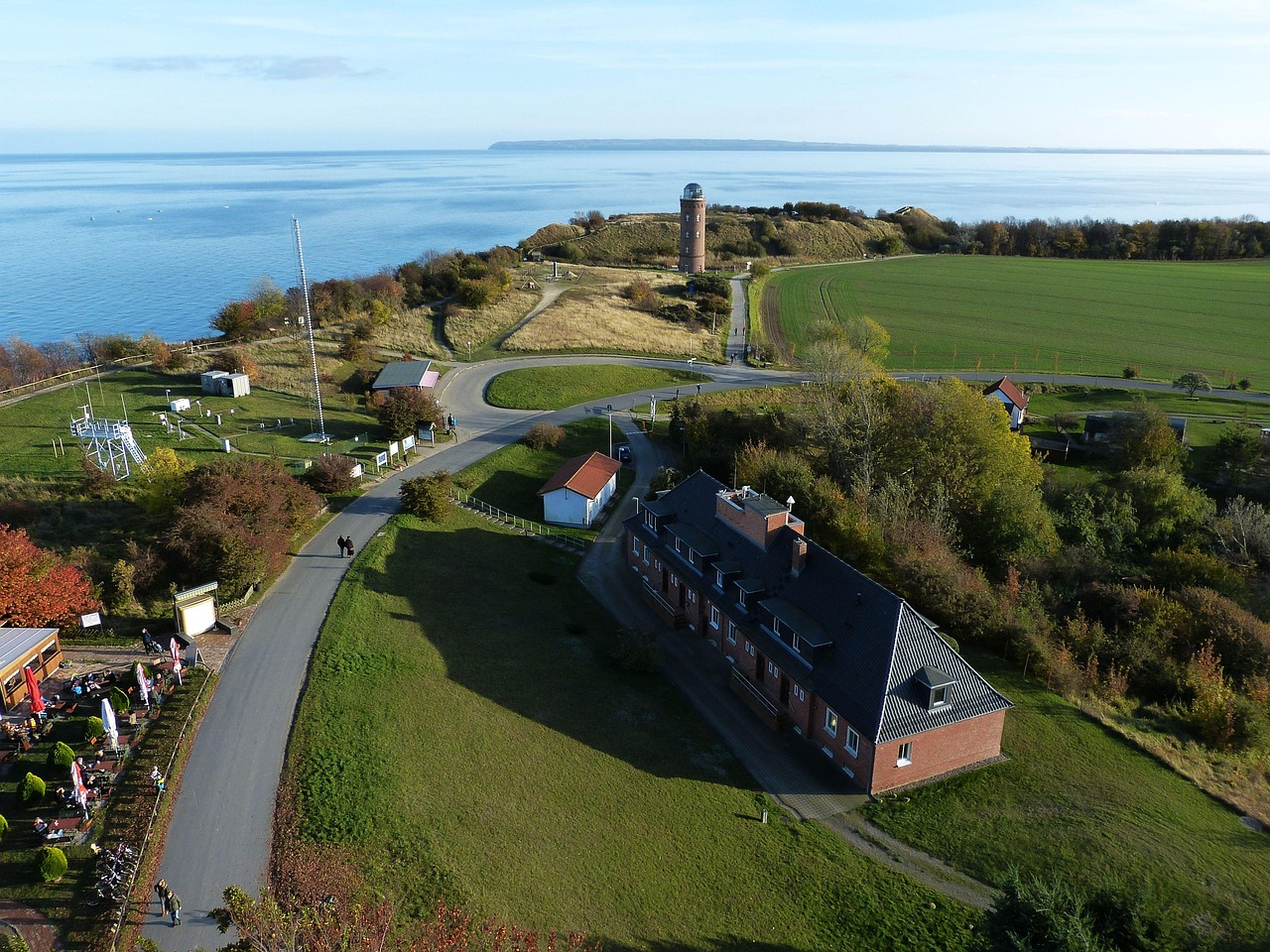
At Kap Arkona, the land simply runs out. When the wind is up, you feel it in your bones. Two lighthouses mark the headland, and below, chalk-tinged cliffs fall to a shingle beach.
Cars aren’t allowed all the way to the cape, so you park at Putgarten and either walk or take a shuttle train. I always choose to walk – the gradual approach through fields builds anticipation.
What to Do
- Climb the lighthouses: The view on a clear day stretches far along the coast and out to sea.
- Walk to Vitt: A tiny, thatched-roof fishing hamlet tucked in a bay. It feels frozen in time, though the odd souvenir stand reminds you it’s not.
- Coastal path: Trails connect Kap Arkona with nearby stretches of coast; bring a windproof layer.
Tip: Kap Arkona is an ideal half-day in any 5 or 6 day itinerary for Rügen. Pair it with a late lunch in Vitt (smoked fish on wooden benches, looking out over the bay) for maximum atmosphere.
8. Mönchgut Peninsula: Open Landscapes & Double Seas
The Mönchgut peninsula is where Rügen narrows into long, low fingers of land, surrounded on one side by the open Baltic and on the other by the calm Bodden waters. It’s a landscape of heaths, small hills, and fishing villages that I return to again and again.
On a mid-September trip, I spent a full day hiking from Göhren through grassy headlands and low cliffs, watching cormorants line up on sandbanks. It’s less dramatic than Jasmund, but more intimate and expansive at once.
Key Spots
- Lobbe: A quiet, beautiful beach with dunes.
- Middelhagen & Alt Reddevitz: Traditional villages with thatched houses and Bodden views.
- Thiessow: At the peninsula’s tip, with great views and often good wind for kite surfers.
Mönchgut fits nicely into a 6 or 7 day itinerary for Rügen when you want days that feel unhurried but full – perfect for walkers and cyclists.
9. Prora: Monumental History on the Beach
Nothing prepares you for your first close-up of Prora: a seemingly endless block of concrete stretching along a beautiful, pine-backed beach. Built in the 1930s as a Nazi “Strength Through Joy” resort, it was never completed as intended, then repurposed through the GDR years. Today, parts are renovated into apartments, hotels, and a youth hostel; other sections are still raw.
I usually approach Prora on foot from Binz along the shore – a strange experience, seeing the austere buildings slowly emerge behind the dunes as the beach remains gorgeous and inviting.
What to Do
- Visit the documentation centre: Exhibits detail the history of the complex and its changing roles.
- Enjoy the beach: Wide, often slightly less crowded than Binz’s central stretch.
- Photography: Great for moody, architectural shots contrasting nature and history.
Prora is a reminder that Rügen isn’t just pretty; it’s layered with difficult 20th-century history that’s still being negotiated in concrete and glass.
11. Ummanz: Windsurfing, Birds & Wide Skies
Ummanz is where I go when I’m done with promenades and piers. Linked to Rügen by a small bridge, it feels like the edge of the world: low-lying land, shallow Bodden waters, and big, weather-laden skies.
On a blustery October day, I watched dozens of kitesurfers carving across the water in front of a simple camping and surf base – wetsuits, dogs running on the shore, someone grilling sausages on a portable barbecue. In contrast, later that evening, cranes flew overhead, calling as they headed for their roosting grounds; Ummanz is a major stopover point during migration.
What to Do
- Windsurfing/kitesurfing: Shallow waters make it beginner-friendly (less intimidating if you fall).
- Birdwatching: Autumn is particularly spectacular for crane watching.
- Slow exploration: Cycle or drive quiet lanes between farms and small harbours.
For a 6 day itinerary for Rügen that mixes active and contemplative, adding a night or two near Ummanz balances the busier southeast coast.
12. Putbus & Lauterbach: Classic Architecture & Harbour Calm
Putbus is Rügen’s “white town” – a planned 19th-century classicist creation with a circular park (the Circus), white villas, and an almost theatrical air. Nearby Lauterbach is a small harbour village that feels like a deep breath after the busier resorts.
What to Do
- Stroll the Circus & park: The circular square is ringed by dignified white buildings.
- Visit the orangery and palace park: Remnants of Putbus’s princely past.
- Harbour of Lauterbach: Wooden jetties, small boats, and low-key waterside dining.
I like to use Putbus as a gentle final day in a 5 or 7 day itinerary for Rügen – it has the air of a place slightly removed from time, perfect for reflecting on your trip.
13. The Bodden Shores: Schaprode, Neuendorf & Quiet Water Worlds
The Bodden are shallow, lagoon-like waters that fringe Rügen’s western and southern edges. They’re less photographed than the chalk cliffs or main beaches, but they’re where I most often exhale.
Schaprode is the main ferry point to Hiddensee, but it’s also a sweet village in its own right, with thatched cottages and a small harbour. Further south, villages like Neuendorf sit quietly by reed-fringed shores, with a sense of old Rügen rhythms.
These are the places to put into a 7 day itinerary for Rügen once you’ve ticked off the headline attractions – where you wander, sit on a bench, and simply watch the light change on the water.
14. Inland Lakes & Forests: Nonnensee, Granitz & Hidden Corners
Rügen isn’t only about the sea. Inland lakes like Nonnensee near Bergen, and forests like Granitz between Binz and Sellin, offer a different kind of quiet.
Granitz, in particular, is worth a detour: beech forests criss-crossed with walking and cycling paths, and in the middle, Granitz Hunting Lodge, a 19th-century castle with a central tower that spirals up an iron staircase to wide island views.
I’ve cycled through Granitz in light rain, the beech trunks luminous grey and green, the sandy paths soft under the tyres – a complete contrast to the busy beach just a couple of kilometres away.
3–7 Day Itineraries for Rügen (2026)
Below are flexible, story-shaped itineraries. Adjust them depending on weather, energy, and whether you’re travelling as a couple, solo, or with kids. Each is designed to blend big-name sights with quieter corners and local food.
3 Day Itinerary for Rügen: First-Timer’s Highlights
This is how I’d show Rügen to a friend visiting for the first time in 2026 – staying without a car, based in Binz.
Day 1 – Binz & Prora: Arrival, Beach & History
Arriving mid-morning by train, I like to drop my bag at a guesthouse one or two streets behind the promenade – quieter, better value, and usually with more character than the big seafront hotels. Even if the room isn’t ready, most hosts will store your luggage.
Morning: Walk straight to the Binz promenade. The first hour is intentionally unstructured: stroll, feel the wind, find your bearings. If you’re travelling with kids, this is prime sandcastle time; if not, grab a coffee and just sit on the seawall.
Lunch: Take a casual lunch at a fish stall near the pier – I default to a matjes Fischbrötchen and a small beer or a sparkling apple juice. Consider this your baptism into local food in Rügen.
Afternoon: Walk or cycle to Prora. On foot along the beach, it takes roughly an hour; by rented bike (easily found in Binz), it’s 20–30 minutes via forest paths. Explore the seafront, visit the documentation centre to understand the site’s history, then decompress with a swim on the expansive beach – often a little less busy than central Binz.
Evening: Back in Binz, clean up and head out around sunset. The promenade softens; musicians sometimes play; kids lick ice creams. Dine at a second-row restaurant – I like simple dishes like Dorschfilet (cod fillet) or Bratkartoffeln (fried potatoes) with a salad.
Family-friendly: Very – minimal logistics, lots of sand.
Romantic: A walk on the shore after dark, when the pier lights glow, never feels cliché.
Day 2 – Jasmund National Park & Sassnitz
Morning: Take an early bus or train+bus combo to Sassnitz or directly to the Jasmund visitor centre (Hagen). I prefer to start in Sassnitz, especially if you’re into harbours. Stroll the waterfront as the town wakes, maybe grab a coffee and a simple pastry.
By mid-morning, catch the bus up to Jasmund National Park. Spend several hours hiking a section of the Hochuferweg, visiting viewpoints like Victoria-Sicht and, if you wish, Königsstuhl. I usually pack a simple picnic: bread, cheese, apples, and a thermos – prices at park kiosks are higher and options limited.
Afternoon: Return to Sassnitz, reward yourself with fresh fish at the harbour. If the weather is good and you have energy, consider a short boat trip along the cliffs from the harbour – the perspective from water is entirely different and gives you a sense of just how high those white walls are.
Evening: Back to Binz for a low-key dinner. If your legs aren’t too tired, an after-dinner beach walk is wonderfully grounding.
Adventurous angle: Longer hikes linking multiple cliff viewpoints; pack for sudden weather shifts.
Day 3 – Sellin & Baabe: Pier, Promenades & Dunes
Morning: After breakfast, hop on the local bus or Rasender Roland to Sellin. Walk down Wilhelmstraße and take the steps (or lift) to the pier. Spend time simply absorbing the view and, if you enjoy slightly touristy fun, visit the Tauchgondel.
Late Morning: Walk the beach or coastal path towards Baabe. This stretch – dunes, pines, soft sand – is one of my favourites for a lazy amble. Along the way, you’ll pass quieter sections of beach where you can spread a towel and swim.
Lunch: In Baabe, pick a casual fish shack or café. I often go for Fischsuppe (fish soup) on cooler days or fried herring on warmer ones.
Afternoon: Linger on Baabe’s beach or rent bikes for a short spin inland towards Middelhagen. If you only have 3 days in Rügen, this afternoon is your time to slow down and let the island sink in.
Evening: Return to Binz or, if you’re leaving early next morning, consider dining in Sellin before heading “home”. Sunset on the Sellin pier is a fitting farewell.
4 Day Itinerary for Rügen: Add the North
With an extra day, extend the 3-day plan by heading up to Kap Arkona & Vitt.
Day 4 – Kap Arkona & Vitt: The Island’s Edge
Start from Binz or Sassnitz and travel by car or bus to Putgarten. From the car park, choose to walk the 2 km to Kap Arkona or take the shuttle train. I’ve done both; walking wins every time for the gradual build-up and the open field views.
Spend the morning exploring the lighthouses and cliff-edge viewpoints. In clear weather, the Baltic feels vast here – you really sense how Rügen juts into it.
Lunch: Walk down to Vitt. The tiny bay, ringed by thatched cottages, is archetypal postcard Rügen. Have smoked fish or a simple plate of fried fish with potatoes at one of the rustic spots by the water. There’s nothing fancy about it; that’s exactly why it’s perfect.
Afternoon: After lunch, either walk back via a slightly different path or take the shuttle up if you’re tired. If you’re self-driving, consider a detour on the way back via some of the north coast villages, or even a quick stop in Glowe for a late-afternoon stroll on its long beach.
Romantic twist: Stay one night in or near Putgarten for a quieter, wind-blown evening away from the main resorts.
5 Day Itinerary for Rügen: Into Mönchgut
For 5 days in Rügen, I recommend spending the first three days as in the 3-day plan, day 4 at Kap Arkona, and then:
Day 5 – Mönchgut Peninsula: Open Horizons
Base yourself the night before in Göhren or Baabe to make today flow smoothly. Rent bikes or lace up walking shoes and set off along the Mönchgut peninsula.
Morning: Cycle towards Lobbe and Thiessow, alternating between quiet roads and dune-backed paths. Stop frequently – this is not a day for speed. The views change constantly: open Baltic on one side, Bodden glimpses on the other.
Lunch: In Thiessow, find a café or snack stand near the water. On a windy day, the kite surfers are mesmerizing; I’ve lost an hour more than once just watching them dance across the water.
Afternoon: Continue to small viewpoints, then loop back slowly towards your base. If walking, choose a shorter loop: for example, Göhren–Lobbe–Middelhagen–Göhren.
Evening: Celebrate your last night with a nicer dinner – perhaps in Sellin or Binz if you want more atmosphere – and a slow, contented walk home.
Family-friendly: Very, if your children are comfortable with moderate cycling; otherwise, shorten the route and build in plenty of beach breaks.
6 Day Itinerary for Rügen: Add Rural West & Ummanz
With 6 days in Rügen, you can split your time between the busy southeast and the mellow west. After following the 5-day outline, I’d add:
Day 6 – Ummanz & Bodden Tranquility
Early in the trip, arrange a one-night stay on or near Ummanz – a small guesthouse or simple apartment. After your Mönchgut day, travel west by car or bus+transfer to reach Ummanz by late afternoon.
Morning: Awake to silence broken only by birds. Have a slow breakfast, then head to one of the surf schools if you fancy trying windsurfing or kitesurfing. The instructors are used to beginners; the shallow water feels forgiving.
Lunch: Simple, often at the same surf base – grilled fish, sausages, or vegetarian plates, eaten with your feet in the sand.
Afternoon: Walk a section of Ummanz’s shoreline or cycle around the island. In autumn, bring binoculars for cranes and geese.
Evening: Sunset here is different from the open Baltic coast: the light spreads out over shallow water and sandbanks. It’s one of my favourite evening experiences on Rügen – low-key, magic, and deeply restful.
7 Day Itinerary for Rügen: The Full Arc (Including Hiddensee)
For 7 days in Rügen, weave everything together into a full island arc: southeast coast, Jasmund, Kap Arkona, Mönchgut, Ummanz, and Hiddensee.
Suggested Structure
- Days 1–3: Binz, Prora, Sellin, Baabe, and Jasmund (as in the 3-day plan).
- Day 4: Kap Arkona & Vitt.
- Day 5: Mönchgut peninsula from a base in Göhren/Baabe.
- Day 6: Transfer to the west & Ummanz (or Schaprode area).
- Day 7: Hiddensee day trip from Schaprode.
Day 7 – Hiddensee: Car-Free Finale
From your base near Schaprode, walk or drive to the harbour and catch a morning ferry to Hiddensee. The crossing is short but feels like a portal: cars disappear, and so does most visible modern clutter.
Morning: Arrive in Vitte or Neuendorf (depending on ferry). Rent bikes if you prefer not to walk everywhere. Head towards Kloster and then up to the Dornbusch lighthouse for a long view down the sliver of land.
Lunch: Choose a café or simple restaurant in Kloster – I’m partial to fish dishes and homemade cakes here. The pace is deliberately slow.
Afternoon: Walk or cycle to the wild west beach for a final Baltic dip or dune walk. Then meander back to the harbour for your return ferry, arriving on Rügen with that pleasantly empty-headed feeling that comes after a full day of sea air.
Evening: If you’re staying one more night, have a farewell dinner in Schaprode or back in Ummanz; if you’re heading onward, simply savour the ferry ride back as your unofficial goodbye.
Island Eating: Local Food in Rügen
Food on Rügen is anchored in the Baltic: fish, of course, but also potatoes, cabbage, apples, and hearty cakes. Over the years, I’ve compiled a mental map of favourite bites scattered across the island.
What to Eat
- Fischbrötchen: The essential snack – fresh or smoked fish in a bread roll with onions and sauce. Try matjes (young herring), Bismarck herring (pickled), or smoked mackerel.
- Räucherfisch: Smoked fish, often sold near harbours (Sassnitz, Vitt, Baabe, Lauterbach). Eat with bread, butter, and maybe a pickle.
- Fish soup: Baltic-style fish soups are lighter than some North Sea cousins but deeply comforting on cooler days.
- Labskaus: A traditional sailor’s dish (mashed corned beef, potatoes, beetroot) you’ll sometimes see on menus – not to everyone’s taste, but very North German.
- Cakes & pastries: Look for apple cakes, plum cakes, and Franzbrötchen (cinnamon pastries more typically Hamburg but common here too).
- Rügener Rapsöl: Local rapeseed oil – golden, often used in salads.
Where to Eat: Styles & Settings
- Harbour-side restaurants: Sassnitz, Lauterbach, and small Bodden harbours often have simple, excellent fish-focused places. Go at lunch for better value.
- Beach bars & kiosks: Binz, Baabe, Göhren, Sellin: perfect for casual snacks and drinks with your feet in the sand.
- Village inns (Landgasthöfe): Inland and in smaller villages, these serve hearty, traditional dishes; often family-run with seasonal menus.
- Market stalls: In summer, look for farmers’ markets in Bergen, Putbus, or near resort towns – local strawberries, cherries, honey, and cheeses.
My Personal Favourites
While I won’t name specific restaurants (to keep this guide evergreen and avoid the 2026 reshuffle of ownerships), I can say this: the best meals I’ve had on Rügen were rarely in the fanciest places. They were smoked fish eaten at wooden tables in Vitt and Baabe, cake in a small café in Putbus, and a simple grilled fish in Lauterbach as the harbour quieted at dusk.
Budget Tips
- Eat your main meal at lunch; many places have cheaper lunch menus.
- Use supermarkets for breakfasts and picnic supplies; island prices are slightly higher than mainland, but still reasonable.
- Alternate restaurant dinners with simple self-catered evenings if you have an apartment.
Island Evenings: Sunsets, Bars & Low-Key Nightlife
Rügen is not a party island in the Ibiza sense. Even in high summer, nightlife is relatively low-key: cocktails on terraces, live music on promenades, and the occasional festival or seasonal event.
Sunset Spots
- West-facing Bodden shores (Ummanz, Schaprode): Wide-open sunsets over shallow water.
- North coast near Kap Arkona: Longer summer light, dramatic when clouds cooperate.
- Sellin & Binz promenades: Not always direct sunsets, but lovely twilight colours.
Beach Bars & Promenade Life
Binz and Sellin have the liveliest evening scenes: families strolling with ice cream, couples sharing Aperol spritzes, and buskers adding soundtrack. I often end my days simply people-watching from a promenade bench.
Nightlife
Binz has a few bars that stay open late; in peak season, you’ll find DJs or live bands on certain nights. But the feel is more “holiday evenings” than “clubbing”. If you want a quiet retreat, stay in Baabe, Göhren, or especially on the Bodden side – after dark, the villages there settle into deep silence.
Seasonal & Special Events
In summer 2026, expect:
- Seebrückenfeste: Pier festivals in Binz, Sellin, and Göhren with live music, food stalls, and small fireworks displays.
- Open-air concerts: Occasional classical or jazz performances in resort parks or historic venues like Putbus.
- Harbour festivals: Sassnitz and Lauterbach usually host at least one harbour festival between June and August.
Cultural Etiquette & Local Customs
Rügen is part of northern Germany, and local manners reflect that: reserved but polite, not effusive, and appreciative of order.
Basic Etiquette
- Greetings: A simple “Guten Tag” (good day) or “Moin” (a common northern greeting) is always appreciated when entering shops or cafés.
- Punctuality: Trains, buses, tours, and restaurant reservations expect you on time.
- Quiet in nature: In forests, on rural paths, and especially in bird reserves, keep noise down; locals value these as quiet spaces.
- Beach norms: Topless sunbathing is common; there are also dedicated FKK (nudist) sections clearly marked. Respect these designations and don’t photograph people without consent.
Dining Customs
- Wait to be seated in most sit-down restaurants; in beach kiosks and some harbours, you order at the counter.
- Tipping is customary but modest: around 5–10% rounded up in cash, given directly to the server when paying.
- Tap water is safe to drink, but ordering just tap water in restaurants is less common; some will charge a small fee.
Local Attitudes
Tourism is a major part of Rügen’s economy, and visitors are generally welcome, especially when they show respect for local rhythms. A few German phrases, patience with slower service in peak season, and care for nature (no littering, staying on paths) go a long way.
Day Trips & Nearby Attractions
While you could easily spend a full week on Rügen alone, there are worthwhile nearby excursions.
Stralsund: Hanseatic Gateway
The mainland city of Stralsund is the main gateway to Rügen and a UNESCO-listed Hanseatic old town. Red-brick Gothic churches, gabled houses, and a lively harbour make it perfect for a day before or after your island stay.
- Getting there: Frequent trains from Bergen auf Rügen, Binz, and Sassnitz; by car via the Rügen Dam.
- Highlights: OZEANEUM aquarium, Gorch Fock I museum ship, old town squares and churches.
Greifswald & Usedom
Further afield, Greifswald offers another Hanseatic old town experience, and the island of Usedom (to the east) has its own chain of seaside resorts. These are more logical as separate trips, but if you’re on a longer regional tour, you can link them.
Events, Festivals & What’s New in 2026–2027
Rügen’s event calendar for 2026–2027 features a mix of recurring favourites and a few new developments.
Recurring & Seasonal Events
- Störtebeker Festspiele (Ralswiek, June–September): A long-running open-air theatre festival about the pirate Störtebeker, staged on the shores of the Great Jasmund Bodden with horses, ships, and fireworks.
- Harbour & pier festivals: Annual events in Sassnitz, Lauterbach, Binz, Sellin, and Göhren with music, food, and crafts.
- Crane migration (Ummanz & Bodden, September–October): Not a “festival” but a natural spectacle, with guided crane-watching tours increasingly popular.
Notable Trends for 2026–2027
- Expanded cycling infrastructure: Continued improvements to cycle paths, particularly linking Bodden villages and inland routes.
- Eco-lodges & farm stays: More small-scale sustainable accommodations appearing on the west side (Ummanz, Schaprode area) and in rural interiors.
- Jasmund visitor management: Fine-tuning of timed entry and shuttle systems around Königsstuhl to protect the cliffs, so check current details before visiting in 2026–2027.
Practical Travel Advice & Logistics for Rügen (2026)
Getting There
- By train: Regular services from Berlin, Hamburg, and other cities to Stralsund, then onward to Bergen auf Rügen, Binz, and Sassnitz. In summer 2026, additional direct Berlin–Binz services are expected.
- By car: Via the A20 motorway and B96 to the Rügen dam and bridge; traffic can back up on peak Saturdays in July–August.
- By bus: Long-distance buses from major German cities often stop in Bergen and Binz in high season.
- By air: No major airport on Rügen; nearest are Rostock-Laage and Berlin airports, then train or car.
Getting Around the Island
- Public transport: Buses and local trains connect main towns and resorts. Timetables are denser in summer; in shoulder seasons, plan ahead.
- Car rental: Available in Stralsund and some Rügen towns. A foreign driving licence from most countries is accepted; if in doubt, carry an International Driving Permit.
- Bike rental: Widely available in Binz, Sellin, Baabe, Göhren, and larger villages; perfect for Mönchgut, Bodden shores, and forest routes.
- Rasender Roland: Historic steam railway connecting resorts; both transport and attraction.
- Boats & ferries: Seasonal boat trips (e.g., Sassnitz–chalk cliffs) and ferries (Schaprode–Hiddensee).
Money-Saving Tips
- Travel in shoulder seasons (May–June, September) for lower accommodation prices and fewer crowds.
- Self-cater part of your meals; shop at supermarkets in Bergen, Binz, or Sassnitz.
- Use regional rail/bus passes where available; they can significantly cut transport costs.
- Stay in inland villages or on the Bodden side rather than directly on the main promenades for better rates.
SIM Cards, Connectivity & ATMs
- SIM cards: Prepaid SIMs from major German providers (Telekom, Vodafone, O2) are widely available in supermarkets and electronics stores in Stralsund and larger Rügen towns.
- Coverage: Generally good in towns and resorts; patchier in some rural and forested areas, but usually workable.
- ATMs: Found in all main towns and many villages; carry some cash for small fish shacks, rural cafés, and parking machines.
Visas & Entry Requirements
- Rügen is in Germany, which is part of the Schengen Area. EU/EEA/Swiss citizens can enter freely with ID.
- Many non-EU nationals (including US, UK, Canadian, Australian, and others) can enter visa-free for short stays; others require a Schengen visa. Always check the latest requirements with your local German embassy or official government sites before travel.
- No special island arrival taxes apply on Rügen, but you will usually pay a small daily tourist tax (Kurtaxe) via your accommodation, which grants you local benefits (like discounted bus fares in some areas).
Water Safety & Beach Etiquette
- Currents: Most main beaches (Binz, Sellin, Baabe, Göhren) are gently shelving and supervised in season. Always heed lifeguard flags and signs.
- Jellyfish: Non-dangerous jellyfish can appear in warmer months; usually more nuisance than risk.
- Dogs: Designated dog-friendly beach sections exist; follow local signage.
Best Seasons & Weather
- May–June: Fresh green, long days, moderate temperatures (15–22°C), fewer crowds – ideal for hiking, cycling, and a cool swim.
- July–August: Warmest (often 20–28°C), busiest, best for pure beach holidays and family trips.
- September–early October: Golden light, still-mild water, harvest time, and crane migrations – my personal favourite period.
- Late October–April: Quiet, often stormy or chilly (0–10°C). Not for swimming, but wonderful if you like empty beaches, big skies, and lower prices.
Where to Stay: Beachfront vs. Village vs. Eco-Lodge
- Beachfront resorts (Binz, Sellin): Perfect for first-time visitors and families wanting easy access; pricier, busier.
- Village stays (Baabe, Göhren, smaller Bodden villages): Balanced atmosphere; walking distance to beaches but quieter nights.
- Eco-lodges & farm stays (Ummanz, rural interiors): Best for slow travel, birdwatching, and starry nights; you’ll likely need a car or be comfortable with bikes and limited bus service.
Hidden Tips from Repeat Visits
- Start early: Popular spots like Jasmund and Kap Arkona are most magical before 10:00 and after 16:00.
- Watch the wind forecast: It shapes your day more than temperature; pick sheltered Bodden walks on gusty days and open coast on calm ones.
- Use inland routes on busy days: When promenade areas are crowded, head into Granitz forest or inland lakes for breathing room.
- Pack layers: Even in July, evenings can cool quickly by the sea; a windproof jacket is your best friend.
Summary: Key Takeaways & Final Recommendations
Rügen is not a single experience but a collection of them: chalk cliffs under beech forests, long beaches in front of spa villas, shallow Bodden waters shimmering at sunset, and quiet villages where time seems to soften.
- For a 3 or 4 day itinerary for Rügen, base in Binz or Sellin, focus on the southeast beaches, Jasmund, and a taste of Mönchgut.
- For 5 or 6 days in Rügen, add Kap Arkona, more time on Mönchgut, and at least one night in the quieter west (Ummanz or Bodden villages).
- For a full 7 day itinerary for Rügen, include Hiddensee and let your days stretch between resort promenades and rural calm.
- Best seasons: June and September are the sweet spots for most travelers; July–August for classic beach holidays; May and October for walkers and those who love a wilder edge.
After multiple trips in all seasons, what stays with me most isn’t a single viewpoint or meal, but the way Rügen’s moods shift: bright and playful one day, windswept and introspective the next. It’s an island that rewards both first-time curiosity and repeat, slow-burn affection – and in 2026, it remains one of Germany’s most compelling coastal escapes.