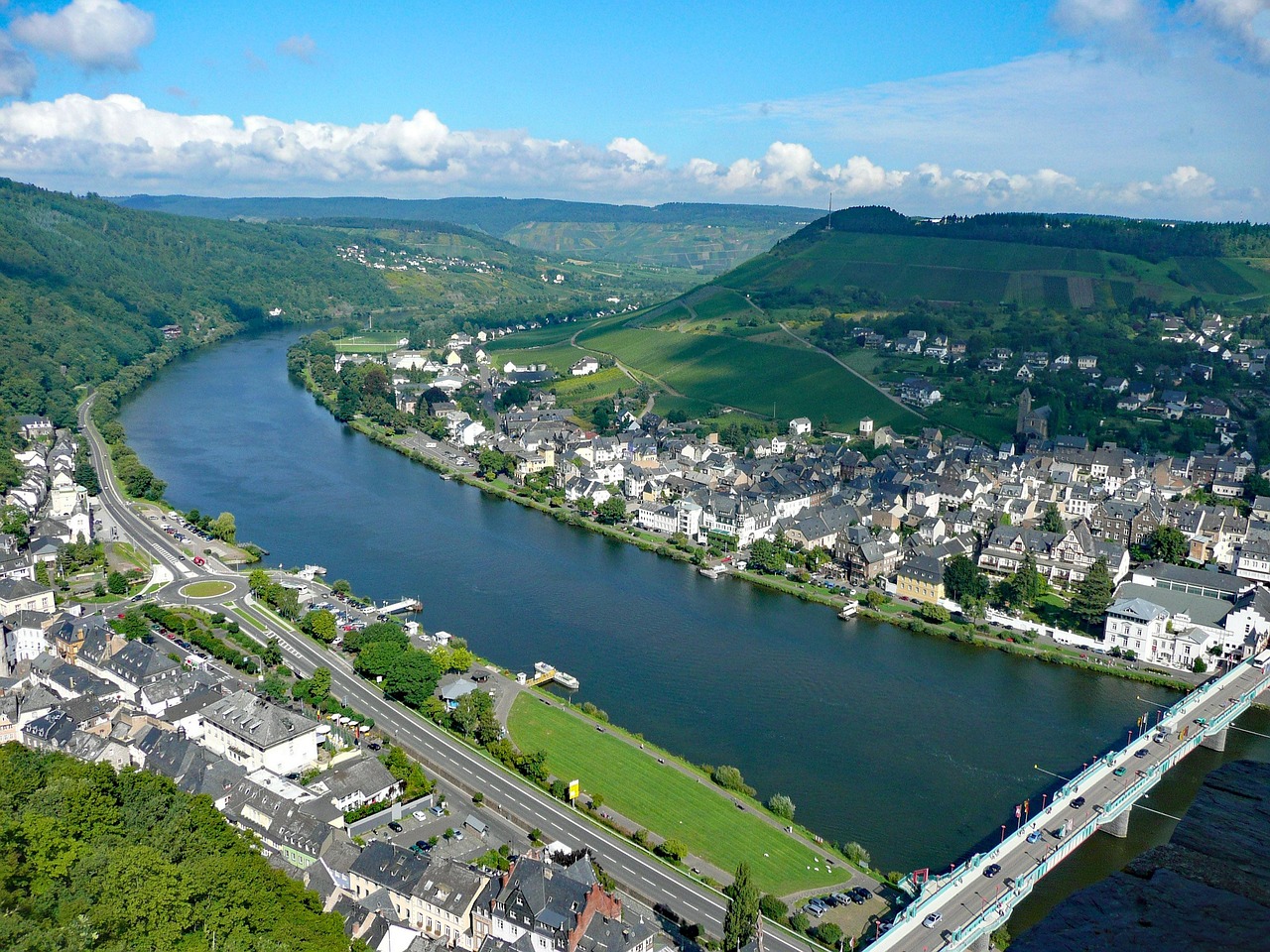
Why Visit Traben-Trarbach?
Traben-Trarbach is one of those places that gets under your skin slowly. At first glance, it’s “just” another pretty wine town on the Moselle River, but stay a few days and the layers start to show: Art Nouveau mansions glowing at sunset, steep vineyards that look impossible to farm, atmospheric wine cellars cut deep into the hillside, and a riverfront that feels both cinematic and deeply lived-in.
I’ve been coming here regularly for more than a decade, usually in late spring and again during the winter Weihnachtsmarkt in the underground wine cellars. Every time, I find a new reason to linger: a quirky wine grower happy to pour “just one more” sample, a forgotten viewpoint with a perfect bend of the Moselle, or a cozy café where time seems to melt. In 2026, with new events, refreshed riverfront promenades, and a slow but steady rise in food and wine quality, Traben-Trarbach feels more exciting than ever.
What makes Traben-Trarbach special:
- World-class Riesling from dizzyingly steep vineyards, often at surprisingly fair prices.
- Belle Époque / Jugendstil architecture that hints at the town’s former life as one of Europe’s richest wine trading hubs.
- Two towns in one – Traben and Trarbach sit on opposite sides of the Moselle, connected by a landmark bridge.
- Underground wine cellars and tunnels that become a magical Christmas market in winter.
- Endless hiking and cycling through forests, vineyards, and along the Moselle terraces.
- Romantic, family-friendly, and adventurous all at once: river cruises, castle ruins, rope parks, spa days, and wine tastings.
If you’re looking for a place in Germany that still feels authentic and slightly under the radar—but with enough infrastructure to make things easy—Traben-Trarbach is a perfect base for 3–5 days and beyond.
Table of Contents
- Quick Overview & When to Visit
- Neighborhoods & Areas of Traben-Trarbach
- 20 Must-See Attractions in Traben-Trarbach
- 3–5 Day Itineraries (Personal Stories)
- Local Food & Drink: Where and What to Eat
- Nightlife, Entertainment & Cultural Experiences
- What’s New in 2026–2027: Events & Festivals
- Best Day Trips from Traben-Trarbach
- Cultural Etiquette & Local Customs
- Practical Travel Advice & Money-Saving Tips
- Summary & Final Recommendations
Quick Overview & When to Visit Traben-Trarbach
Traben-Trarbach sits roughly halfway between Trier and Koblenz on a dramatic bend of the Moselle River in Rhineland-Palatinate. It’s easily accessible yet feels worlds away from big city life.
Best Seasons by Activity
- March–May: Spring blossoms, fewer crowds, perfect for hiking and budget-friendly stays.
- June–August: Lush green vineyards, long evenings, outdoor festivals—great for river cruises, families, and first-timers.
- September–October: Wine harvest, golden vineyards, wine festivals—ideal for wine lovers and photographers.
- Late November–December: The famous Traben-Trarbach Christmas Market in the wine cellars—pure romantic magic.
- January–February: Very quiet, some restaurants closed; good if you want solitude, cheap rooms, and misty, moody landscapes.
For a 3 day itinerary for Traben-Trarbach, I love late May or early September: warm enough for café terraces and hiking, but not as crowded—or expensive—as peak summer.
Neighborhoods & Areas to Explore
Traben-Trarbach is compact, but each part has its own character. Understanding the layout makes planning your 3 days in Traben-Trarbach or 4 days in Traben-Trarbach much easier.
Traben Riverside (North Bank)
This is the slightly quieter, more residential side, with elegant Belle Époque villas, leafy promenades, and a relaxed riverfront. I like staying here when I want peaceful evenings.
- Vibe: Calm, residential, grand old houses, local life.
- Highlights: Jugendstil villas, Moselle promenade, easy access to vineyards.
- Best for: Romantic stays, slow travel, morning runs or walks along the river.
Trarbach Old Town (South Bank)
Trarbach is where you feel the town’s wine trading history most strongly: narrow lanes, old wine merchant houses, cafés, and the entrance to the famous underground cellars.
- Vibe: Atmospheric, slightly busier, more restaurants and wine bars.
- Highlights: Brückentor (Bridge Gate), Grevenburg Castle ruins above, underground wine cellars.
- Best for: First-time visitors, nightlife (by Moselle standards), being in the middle of things.
Bridge & Central Promenade
The bridge area is the town’s focal point, with views up and down the Moselle. I often start my mornings here with a coffee and watch the riverboats go by.
- Vibe: Lively, scenic, practical.
- Highlights: Landmark bridge, river cruise departures, evening strolls.
- Best for: People-watching, photography, quick access to both sides of town.
Vineyards & Hillsides
Climb just a few minutes from the river and you’re in a different world: vineyards, forest paths, and viewpoints. Many of my favorite memories from Traben-Trarbach are on these hillsides, walking at golden hour with a bottle of local Riesling in my backpack.
- Vibe: Quiet, natural, dramatic views.
- Highlights: Grevenburg ruins, Mont Royal fortress plateau, Moselsteig trail sections.
- Best for: Hikers, trail runners, photographers, anyone wanting to escape town for a few hours.
20 Must-See Attractions & Experiences in Traben-Trarbach
These are the best places to visit in Traben-Trarbach, from iconic sights to local favorites. I’ll mix history, personal anecdotes, and practical travel tips for Traben-Trarbach so you can decide which fit your style and how to plan your own 3–5 day itinerary for Traben-Trarbach.
1. Grevenburg Castle Ruins (Grevenburg Ruine)
Perched above Trarbach, the Grevenburg ruins are my favorite place to watch the sunset in town. The climb is part of the experience: a short but steep hike that weaves through woods and vineyards before suddenly opening up to a panorama of the Moselle valley.
History & significance: Built in the 14th century, Grevenburg was once an important defensive fortress guarding this stretch of the Moselle. It saw multiple sieges and was finally destroyed in the 18th century. Today, it’s a romantic ruin with crumbling walls, old stone vaults, and sweeping views of Traben-Trarbach and the river’s S-curve.
My experience: The first time I hiked up, I underestimated the incline and arrived a bit breathless—but the view made me forget all that. I’ve been up in every season: in the spring with wildflowers along the path, in autumn with vineyards blazing gold, and once in winter after light snow, when the whole valley looked monochrome except for the dark ribbon of the Moselle.
Practical tips:
- How to get there: From Trarbach old town, follow the well-marked “Grevenburg” trail; it’s about 30–45 minutes up, depending on your pace.
- Best time: Late afternoon into sunset. Bring a light jacket; it can be breezy on top.
- Food & drink: In high season, a small seasonal café sometimes operates near the ruins. I usually pack a picnic from a local bakery and a half-bottle of Riesling (many shops sell small “piccolo” bottles).
- Family-friendly? Yes, for active kids. Keep an eye on little ones around the ruins—there are unfenced drops.
- Romantic factor: High. This is one of the best date spots in Traben-Trarbach.
2. Brückentor (Bridge Gate) & Moselle Bridge
The Brückentor is the picturesque gate tower anchoring the Trarbach side of the bridge. You’ll pass it several times a day, and it never gets old—especially at night when it’s lit up and reflected in the water.
History & significance: Built in the early 20th century in a playful, fairy-tale style, it symbolises the town’s prosperity during its wine-trading heyday. The bridge itself replaced older crossings and firmly connected Traben and Trarbach, which until then had been more separate communities.
My experience: I like to cross the bridge slowly at different times of day: misty mornings, bright midday, and blue hour when the sky and river are the same deep color. Once, during a summer wine festival, the bridge was lined with stands and filled with locals chatting and sipping Riesling—it felt like the heart of the Moselle.
Practical tips:
- Photography: Best shots are from the Traben promenade facing Trarbach, or from slightly upriver to catch the curve of the bridge.
- Accessibility: Fully walkable and suitable for strollers and wheelchairs.
- Combine with: A stroll through Trarbach old town and a riverfront coffee.
3. Underground Wine Cellars & Tunnel Network
Below Traben-Trarbach lies a labyrinth of old wine cellars and tunnels, carved into the slate hillsides when the town was one of the world’s top wine trading centers. Exploring these cellars is one of the most unique cultural experiences in Traben-Trarbach.
History & significance: In the late 19th and early 20th centuries, Traben-Trarbach was the second-largest wine trading hub in Europe (after Bordeaux). Merchants dug massive cellars to store the region’s Rieslings, creating an underground city. Some of these cellars are still actively used, others are open for tours or special events, like the winter Christmas market.
My experience: The first time I joined a cellar tour, I remember the sudden coolness as we descended the stone steps—even in July, it felt like a natural air-conditioner. The guide turned off the lights briefly, and in the darkness you could almost hear the history: footsteps of workers, barrels creaking. Later, during the Christmas market, I wandered between glowing stalls in these same tunnels, warmed by mulled wine and candlelight. It felt like a secret world.
Practical tips:
- Tours: Check the tourist office or official town website for current Kellerführungen (cellar tours) in 2026. English-language tours are often available in high season.
- Clothing: Bring a light sweater—temperatures underground stay cool year-round.
- Accessibility: Many cellars have stairs and uneven floors; check ahead if you have mobility issues.
- Family-friendly? Older kids usually find it fascinating; younger ones may be spooked by the darkness.
4. Art Nouveau / Jugendstil Architecture Walk
One of the joys of Traben-Trarbach is simply wandering and looking up. Many riverfront villas and townhouses were built in the late 19th and early 20th centuries in the Jugendstil (Art Nouveau) style, with ornate facades, stained glass, and playful towerlets.
History & significance: Wine wealth funded an architectural boom, and ambitious merchants hired some of the era’s best architects to build showpiece homes and wine cellars. The result is a compact but impressive collection of Belle Époque buildings, rare in such a small town.
My experience: On one drizzly afternoon, I walked the Traben side with no agenda, just following interesting facades. I ended up ducking under ornate balconies to avoid the rain and found hidden details—grape motifs, carved faces, tiny stained-glass windows—that I’d never noticed before. It turned into one of my favorite slow days in town.
Practical tips:
- How to do it: The tourist office offers maps for a self-guided Jugendstil walk. It’s easy to follow and takes 1–2 hours at a leisurely pace.
- Photography: Morning light from the east and evening light from the west both work well, depending on which side of the river you’re on.
- Combine with: Coffee and cake at a riverside café mid-walk.
5. Buddha Museum & Pagoda (Buddhist Center)
One of the more surprising hidden gems in Traben-Trarbach is the Buddha Museum, with its serene courtyard and pagoda-like structure. It feels worlds away from wine and half-timbered houses.
History & significance: Housed in a former wine warehouse, the museum contains a large private collection of Buddha statues and Asian art, curated to show the diversity of Buddhist iconography across centuries and regions. It’s an unusual, contemplative counterpoint to the town’s wine-focused attractions.
My experience: I popped in one hot afternoon, mostly to escape the sun, and ended up staying for nearly two hours. The quiet, the soft lighting, and the intricate details on the statues drew me in. From the upper floors, you get unexpected views over the Moselle through old warehouse windows.
Practical tips:
- Opening times: Vary by season; in 2026, expect reduced hours in winter. Always check ahead.
- Best time: Midday, when the sun is strongest and you want a calm indoor break.
- Family-friendly? Yes, if your kids enjoy museums and calm spaces; less so for toddlers who want to run around.
6. Mittelmosel Museum
Set in a baroque former wine merchant’s house, the Mittelmosel Museum is the best place to understand how Traben-Trarbach became such an important wine hub—and how people actually lived here centuries ago.
History & significance: The museum covers regional history from Roman times through the town’s wine-trading boom. Rooms are furnished in period styles with original objects, giving you a sense of daily life and trade.
My experience: I first visited on a rainy day when hiking plans fell apart. It ended up being unexpectedly absorbing: tiny details like travel trunks, handwritten ledgers, and old wine-making tools made the past feel tangible. The staff were proud and full of stories, happy to answer questions in German and simple English.
Practical tips:
- Good for: History lovers, rainy days, anyone curious about how wine shaped the region.
- Language: Most labels are in German; ask for any available English summaries or simply enjoy the visuals.
- Time needed: 60–90 minutes.
7. Moselle River Cruises
Seeing Traben-Trarbach from the water is essential. The hills look steeper, the vineyards greener, and the towns cozier from a boat deck. Cruises run both upstream and downstream, often as round trips.
My experience: I’ve done short 1–2 hour cruises with visiting friends and longer half-day jaunts. One late June evening, we took an early evening cruise, sat on the top deck with light jackets, and watched the sun slide behind the vineyards. The captain pointed out famous vineyards and little chapels we could barely see from town.
Practical tips:
- Booking: In high season, buy tickets at the riverfront kiosks; in shoulder season, check online schedules.
- Best for families: Short 1-hour cruises with commentary—kids love the boat aspect.
- Romantic: Look for sunset or evening cruises in 2026; some include wine tastings on board.
- Budget tip: Basic daytime cruises are usually affordable; bring your own snacks if allowed.
8. Moselsteig Hiking Trail (Local Sections)
The Moselsteig is a long-distance trail following the Moselle from Perl to Koblenz, but you don’t need to be a thru-hiker to enjoy it. Sections around Traben-Trarbach offer some of the most dramatic views over vines and the river.
My experience: On a clear September day, I hiked a loop that climbed from Trarbach up through vineyards to forested ridges, then back down via a small chapel with a perfect view. I met maybe three other hikers in four hours and spent most of the time listening to birds and crunching on fallen leaves. It felt wild yet reassuringly close to town.
Practical tips:
- Difficulty: Short local loops can be moderate; expect steep climbs, but distances are manageable.
- Gear: Sturdy shoes, especially after rain; the slate can be slippery.
- Navigation: Trails are well marked, but I always download an offline map (e.g., Komoot or Maps.me) just in case.
- Family-friendly? Older kids who like hiking will be fine; choose shorter loops for families.
9. Mont Royal Fortress Plateau
Across the river from Traben lies the Mont Royal plateau, once home to a massive fortress designed by Vauban, Louis XIV’s famous military architect. Today, the remains are subtle—earthworks, low walls—but the plateau offers wide-open space, forest, and views down to the Moselle.
History & significance: Built in the late 17th century, Mont Royal was part of France’s defensive network along the Rhine and Moselle. It was later dismantled, but its footprint still shapes the landscape.
My experience: I love the contrast: after days of narrow streets and steep slopes, the plateau feels expansive. One spring morning, I walked a circuit here with coffee in a thermos and met only a few dog walkers. The forest was full of birdsong, and occasional informational panels explained where bastions and barracks once stood.
Practical tips:
- Getting there: Drive or cycle over the bridge and follow signs to “Mont Royal.” There’s parking on the plateau.
- Activities: Hiking, historical walks, and for families, the nearby adventure park (see below).
- Time: 2–3 hours for a relaxed circuit and photo stops.
10. Adventure Ropes Course (Kletterpark Mont Royal)
If you’re craving something more adventurous than wine tasting, the high ropes course on Mont Royal is a blast. Suspended obstacles, zip lines, and platforms among the trees provide a playful adrenaline rush.
My experience: I went with friends one overcast afternoon, thinking it’d be “for kids.” We ended up laughing our way through wobbling bridges and low-key challenges that still felt exciting. The zip lines over the forest were a highlight.
Practical tips:
- Good for: Families, groups of friends, active couples.
- Age/height limits: Courses vary; check the park’s website for 2026 rules.
- Clothing: Closed shoes, comfortable clothes you don’t mind getting a bit dirty.
- Reservations: Recommended in peak season and weekends.
11. Moselle Promenade & Riverside Parks
The simple act of strolling along the river might be the most “Traben-Trarbach” thing you can do. Benches face the water, locals walk their dogs, and kids ride bikes along the flat paths.
My experience: My daily ritual when I’m in town is a morning or evening walk along the promenade. I’ve watched heavy barges push upstream in the mist, seen swans drift past in perfect lines, and once caught a spontaneous brass band performance near the boat dock.
Practical tips:
- Best time: Early morning for solitude, or evening when the sky colors the river.
- Accessibility: Flat and fully accessible; great for wheelchairs and strollers.
- Combine with: Ice cream in summer, mulled wine in winter, or just a takeaway coffee.
12. Trarbach Town Hall Square & Old Streets
The small square around the town hall in Trarbach is where I often meet friends before dinner. It’s ringed with traditional houses, small shops, and occasionally market stalls.
My experience: I’ve sat here in all kinds of weather, from hot summer evenings with outdoor tables spilling onto the cobblestones, to December afternoons under a light drizzle, warming my hands on a paper cup of Glühwein. It’s a people-watching spot more than a big “sight,” but essential to the town’s feel.
Practical tips:
- Good for: Coffee breaks, quick snacks, browsing small boutiques.
- Combine with: A loop through the back alleys behind the square, where you’ll find vine-covered walls and quiet corners.
13. Local Wineries & Wine Tastings
Riesling is the lifeblood of Traben-Trarbach. Visiting at least one Weingut (winery) for a tasting is non-negotiable if you want to understand the town. The range—from bone-dry to lusciously sweet—is astonishing.
My experience: Over the years, I’ve developed favorite producers I return to, but I also enjoy popping into smaller, family-run estates. Some tastings have turned into long conversations about vintages and slopes; others were simple, friendly pours at a standing bar. I still remember the first time a winemaker poured me a mature Riesling from the 1990s: honeyed, petrolly, but still bright—like drinking bottled sunlight.
Practical tips:
- Booking: Some wineries welcome walk-ins; others require appointments, especially for groups.
- Cost: Tasting fees are often modest and sometimes waived with purchase.
- Driving: Don’t drink and drive; the town is compact enough to walk between many wineries, or use taxis.
- Shipping: Many wineries will ship internationally; ask about 2026 shipping deals if you want a case sent home.
14. Spa & Wellness Experiences
Between hikes, tastings, and sightseeing, a spa day is a welcome pause. Several hotels and wellness centers offer saunas, pools, and massages open to non-guests.
My experience: One chilly November, I spent a rainy afternoon in a riverside spa, moving between hot and cold pools and watching the mist rise off the Moselle through large windows. Later, I walked back to my guesthouse in a daze of relaxation and slept like a rock.
Practical tips:
- Reservations: Book treatments in advance, especially weekends and holiday periods.
- Sauna culture: In German saunas, nudity is the norm and mixed-gender areas are common; see etiquette section below.
- Best for: Couples’ getaways, solo relaxation days, winter visits when outdoor options are limited.
15. Historic Churches & Chapels
The town’s churches might not be globally famous, but they are quietly beautiful, with stained glass and hilltop chapels that double as viewpoints.
My experience: I often duck into churches when I hear organ music. Once, in early spring, I stumbled upon a short afternoon concert; only a handful of people sat scattered in the pews, but the sound filled the whole nave. On the hills, small chapels offer benches with some of the most peaceful views over vineyards.
Practical tips:
- Respect: Dress modestly and keep voices low; avoid visiting during services unless you intend to attend.
- Combine with: Hikes or walks, as many chapels are on viewpoints overlooking the river.
16. Weekly Markets & Specialty Shops
For a taste of everyday life and local food in Traben-Trarbach, check out the weekly markets and small specialty shops selling regional products: honey, mustard, jams, sausages, and of course, wine.
My experience: I like to assemble picnic supplies here: fresh bread, local cheese, cured meats, and maybe a jar of spicy mustard. Once, a stallholder insisted I try a new smoked sausage, then refused to take money for the sample. “Just remember us next time,” he said with a grin.
Practical tips:
- Market days: Vary by season; ask at your accommodation or the tourist office for 2026 schedules.
- Payment: Cash is still king at smaller stalls.
- Souvenirs: Edible souvenirs (mustard, jam, wine) are easy to pack and actually get used.
17. Christmas Market in the Wine Cellars
Traben-Trarbach’s Christmas market is one of the most atmospheric in Germany, precisely because it’s mostly underground. Instead of shivering outside, you wander through candlelit tunnels lined with stalls selling crafts, food, and hot drinks.
My experience: The first time I went, I emerged from the cold street into a warmly lit cellar and immediately smelled cinnamon, wine, and beeswax candles. We spent hours meandering through different cellars, each with its own vibe—some cozy and quiet, others lively with music. Outside, light snow began to fall. It was one of those winter evenings that feels almost too perfect.
Practical tips:
- Dates (2026–2027): Typically late November through late December; exact dates announced annually.
- Accommodation: Book well in advance—this is peak season.
- Dress: It’s cool but not freezing in the cellars; layers work best.
- Family-friendly? Very, though weekends can get crowded.
18. Cycling the Moselle River Path
The Moselle cycle path is famously scenic and mostly flat, making it accessible for all levels. Traben-Trarbach is a perfect base for day rides to neighboring wine towns.
My experience: I’ve done leisurely rides to Enkirch and Bernkastel-Kues, stopping often for photos and occasional wine tastings (on days I wasn’t riding far). One time, I rented an e-bike and felt almost guilty as I glided past people huffing up slight inclines—almost.
Practical tips:
- Bike rental: Several shops and hotels rent bikes and e-bikes; book ahead in summer.
- Safety: Helmets are recommended; paths are mostly separate from car traffic but watch for farm vehicles and other cyclists.
- Family-friendly? Yes—consider child seats or trailers for younger kids.
19. Viewpoints & Photo Spots Around Town
Beyond Grevenburg and Mont Royal, there are smaller, lesser-known viewpoints where you can have the whole panorama to yourself.
My experience: A local once pointed me toward a small bench above Traben, reachable by a narrow path between houses. From there, I could see the entire town, bridge, and river bend framed by leaves. I watched the sky shift from orange to purple, with only birds and the occasional church bell for company.
Practical tips:
- Ask locals: People are usually happy to share their favorite spots if you ask politely.
- Bring: A small tripod if you’re serious about photography; a lightweight jacket for evenings.
3–5 Day Itineraries for Traben-Trarbach (With Personal Stories)
Whether you have 3 days in Traben-Trarbach, 4 days in Traben-Trarbach, or you’re planning a full 5 day itinerary for Traben-Trarbach, the town rewards both planners and wanderers. Here are flexible, story-driven itineraries you can adapt to your pace and interests.
3 Day Itinerary for Traben-Trarbach
This 3-day itinerary balances iconic sights, wine, and gentle adventure—perfect for a first visit.
Day 1: First Impressions – River, Architecture & Wine
I like to start my first day slowly, letting the Moselle set the rhythm.
Morning: After arriving and dropping your bags, head straight to the river promenade on the Trarbach side. On my last trip, I landed around 10:00, slightly sleepy from the train, and revived myself with a strong coffee and a slice of Apfelkuchen at a riverside café. Sit facing the water; watch barges, tour boats, and the play of light on the surface.
Once caffeinated, cross the bridge toward Traben and take the self-guided Art Nouveau architecture walk. Notice the curves, floral motifs, and towers on the villas—each one tells a story about former wine riches. Stop wherever catches your eye; I often linger in front of a single doorway, imagining the merchants who once stepped through it.
Lunch: Pick a casual spot along the river for your first taste of local food in Traben-Trarbach: perhaps a plate of Flammkuchen (Alsatian-style thin pizza) or a simple Bratwurst with potato salad. I usually order a Schoppen (glass) of dry Riesling with lunch—when in Moselle...
Afternoon: Visit the Mittelmosel Museum to ground yourself in local history. As you move through the rooms, imagine barrels of wine being rolled through the streets outside. Afterward, wander the lanes of Trarbach old town without a strict plan: pop into small shops, peek into church doorways, and let your curiosity guide you.
Later in the afternoon, it’s time for your first wine tasting. Choose a winery in or near town; I like to book ahead and let the winemaker know I’m particularly interested in understanding the differences between slopes and sweetness levels. Ask to taste a range from dry (trocken) to off-dry (feinherb) and maybe a late-harvest or dessert wine. Don’t be shy about spitting or pouring out; locals won’t be offended.
Evening: Stroll back toward the bridge as blue hour falls. The Brückentor glows warmly, and the reflections in the water double the magic. For dinner, choose a wine tavern (Weinstube) with hearty regional dishes: maybe Sauerbraten (marinated roast) or trout from the Moselle. I like to end my first night with a short walk on the promenade, listening to the river before turning in.
Day 2: Hills & History – Grevenburg & Moselsteig
On your second day, you’ll climb above town for views and fresh air.
Morning: After breakfast (ideally at your guesthouse, with crusty rolls and local jam), set out for the Grevenburg Castle ruins. Choose one of the marked trails from Trarbach and take your time—the climb is steep but rewarding. I like to stop occasionally and look back at how the town shrinks and the river widens below.
At the top, explore the ruins: peek through old windows, walk along surviving walls, and imagine soldiers standing guard centuries ago. Find a spot to sit and just absorb the view. On one visit, I sat here nearly an hour, sharing a quiet moment with a couple from Belgium who’d been coming to Traben-Trarbach every autumn for 20 years.
Lunch: Either grab a light lunch at the seasonal café near the ruins (if open in 2026) or bring a picnic. Simple bread, cheese, and fruit taste extraordinary with that view.
Afternoon: From Grevenburg, consider extending your hike along a Moselsteig loop. Local maps show routes that traverse vineyard slopes and forest before circling back to town. The trails are well-marked, but I always carry a digital map just in case.
By mid-afternoon, return to town for a reward: maybe an ice cream, a slice of cake, or just a cold drink on a shaded terrace. If your legs are tired, treat yourself to an hour or two at a spa, easing muscles in a warm pool or sauna.
Evening: Tonight, consider a slightly nicer dinner—there are a few places in town striving for more refined cuisine, pairing local produce with creative takes on classic dishes. I once had a plate of pan-fried river fish with herb butter and new potatoes that I still think about years later.
After dinner, walk to a small viewpoint above town (ask your host for a favorite suggestion) and watch lights flicker on along the riverbank.
Day 3: Water & Underground Wonders
Your final day focuses on the river itself and the world hidden beneath the streets.
Morning: Start with a Moselle river cruise. Choose a route that either doubles back to Traben-Trarbach or drops you in another town from which you can easily return by train or bus. I like the loop cruises that give you commentary without requiring logistics.
On board, sit on the upper deck if weather permits. Bring a light jacket; the breeze can be cool even in summer. Listen to the guide’s stories about vineyards and villages. Take photos, but also put your phone down and just watch the water sometimes.
Lunch: Back in town, have a relaxed lunch by the river. On my last “farewell day,” I chose a simple plate of Spundekäs (a creamy cheese spread) with pretzels and a glass of off-dry Riesling, savoring every bite.
Afternoon: It’s time to go underground with a cellar tour. Depending on the 2026 schedule, join a guided group or arrange a private tour. As you descend into the cool darkness, you’ll feel like you’re entering a hidden city. Listen for echoes, notice old inscriptions on the walls, and imagine the thousands of barrels that once rested here.
If the Buddha Museum appeals, you can either visit before or after the cellar tour for a completely different kind of calm.
Evening: For your last night, revisit a spot you loved—maybe the bridge at dusk, your favorite wine bar, or that bench along the promenade where you watched the river on day one. I like to buy one special bottle of wine to take home and open it months later, letting the first sip take me straight back to the Moselle.
4 Day Itinerary for Traben-Trarbach
With 4 days in Traben-Trarbach, you can slow down and add a day of exploration on the Mont Royal plateau, plus more time to simply be.
Day 4: Mont Royal, Forests & Ropes
Morning: Cross the bridge and head for Mont Royal. If you have a car, it’s a short drive; otherwise, consider renting bikes or using local buses/taxis. Once on the plateau, start with a historical walk tracing the outlines of the old fortress. The information boards (in German, often with diagrams) help you visualize bastions and barracks.
Walk through open fields and into the forest. The contrast with the steep, tight valley below is striking—here, everything feels airy and wide. On one visit, I walked in a light fog that made the earthworks look like mysterious humps disappearing into the mist.
Lunch: Bring a picnic or eat at a simple restaurant or kiosk on the plateau (check 2026 opening times). I like to find a quiet bench and eat with the smell of pine and earth all around.
Afternoon: If you’re up for adventure, spend a few hours at the Adventure Ropes Course. It’s a fun test of balance and courage, but well-supervised and designed for a wide range of ages. Alternatively, continue exploring forest paths or just lie in a meadow with a book.
Evening: Back in town, keep dinner simple: perhaps a pizza or casual regional place. Sometimes by day four, I crave a break from heavy German food and pick something lighter. Take an evening stroll, and if you’re staying near the Traben side, enjoy the quieter, residential atmosphere.
5 Day Itinerary for Traben-Trarbach
A 5 day itinerary for Traben-Trarbach gives you space for deeper local immersion and a mini day trip without feeling rushed.
Day 5: Slow Travel, Local Life & A Mini Day Trip
Morning: Start at the weekly market or a local bakery. Build a breakfast or picnic from fresh rolls, cheeses, and fruit. Take your time, chat with stallholders, and ask questions about products. This is where you’ll feel like a temporary resident rather than a tourist.
After breakfast, wander through your favorite part of town again, but more slowly. Sit on a bench you haven’t tried yet. Visit any small museum or church you missed earlier.
Midday & Afternoon: Use the afternoon for a short day trip to a nearby village like Enkirch or Kröv (details in the day trip section below). Take the boat or cycle, have lunch there, and explore their own wine culture and architecture. On one five-day stay, I took a boat to Bernkastel-Kues, spent a lazy afternoon amid its half-timbered houses, and returned in the evening when Traben-Trarbach was peaceful again.
Evening: For your final night, choose a special restaurant or wine tavern you haven’t tried yet. Order something distinctly regional and a bottle of Riesling that you’ll remember. After dinner, walk the river one last time, perhaps crossing the bridge slowly, saying a quiet goodbye to both sides of town.
Local Food & Drink in Traben-Trarbach
Food in Traben-Trarbach leans hearty and regional, but there’s increasing variety, especially in 2026 as more younger chefs experiment with lighter dishes and international influences. Still, you’re in wine country—so expect dishes that pair well with Riesling.
Must-Try Local Dishes
- Riesling in all forms: Dry, off-dry, sweet, sparkling—Riesling is the main event.
- Flammkuchen: Thin, crispy flatbread with crème fraîche, onions, and bacon or vegetables.
- Spundekäs: Creamy cheese spread, often with paprika, served with pretzels.
- Winzersteak: “Winegrower’s steak,” usually pork, marinated and grilled.
- Trout from the Moselle: Pan-fried or grilled, delicate and fresh.
- Potato dishes: Expect everything from fried potatoes to hearty dumplings.
- Seasonal specialties: White asparagus in spring, wild mushrooms in autumn, game dishes in late year.
Where to Eat (Types of Places)
Instead of listing specific names that may change by 2026, here are the types of places to look for and how I use them:
- Weinstuben (Wine Taverns): My go-to for rustic, cozy dinners with regional dishes and great wine lists.
- Cafés & Konditoreien (Cake Shops): Ideal for mid-morning or afternoon breaks; try seasonal fruit cakes.
- Hotel Restaurants: Often more refined; good for a “splurge” night with multi-course menus.
- Imbiss & Snack Stands: Budget-friendly options for sausages, fries, and simple meals.
- Wine Bars: For tasting multiple wines by the glass with small plates.
How to Save Money on Food & Drink
- Lunch vs dinner: Make lunch your main sit-down meal; have a lighter dinner of snacks, bread, and cheese.
- Picnics: Shop at markets and bakeries; eat your meal with a view on a bench above town.
- House wines: Order the house Riesling in taverns—it’s usually excellent and cheaper than bottled options.
- Tap water: Ask for Leitungswasser (tap water); some places may still insist on bottled, but it’s increasingly accepted.
Nightlife, Entertainment & Cultural Experiences
Nightlife in Traben-Trarbach is mellow, centered on wine bars, cozy pubs, and seasonal festivals rather than clubs. But that fits the town’s mood perfectly.
Evening Options
- Wine Bars & Tavern Evenings: Sip Riesling, chat with locals, and enjoy quiet music.
- Riverfront Strolls: A simple walk along the water, watching reflections, is my favorite “night out.”
- Seasonal Festivals: Wine festivals and the Christmas market keep evenings lively in peak seasons.
- Live Music: Some bars and hotels host small concerts; ask around for 2026 schedules.
Cultural Experiences
- Guided cellar tours: Both educational and atmospheric.
- Museum visits: Mittelmosel Museum and Buddha Museum for deeper context.
- Church concerts: Watch for posters advertising organ or choir performances.
- Wine-related workshops: Occasionally, wineries offer tastings focused on specific vineyards or vintages.
For romantic evenings, I recommend an early dinner, a slow walk across the bridge at blue hour, and a glass of wine on a balcony or bench overlooking the river. For families, early dinners and riverfront walks work well; kids enjoy watching boats and ducks even after dark.
What’s New in 2026–2027: Events & Festivals
Event schedules can change, but here’s what to watch for in 2026–2027 in and around Traben-Trarbach:
- Wine Festivals (Weinfeste): Typically late summer and early autumn, with stands, live music, and evening events along the river.
- Traben-Trarbach Christmas Market in the Wine Cellars (2026 & 2027): Late November to late December, with possible extended hours on weekends.
- Riesling-focused Events: Occasional regional Riesling celebrations, often with special tastings and vineyard tours.
- Outdoor Concerts & Cultural Days: Summer events on the riverfront or town squares—ask at the tourist office for up-to-date 2026–2027 calendars.
By 2026, Traben-Trarbach is also continuing to invest in sustainable tourism: improved cycling paths, better signage for hiking trails, and more eco-conscious accommodation options. Expect more e-bike rentals and potentially additional electric boat or shuttle services.
Best Day Trips from Traben-Trarbach
Traben-Trarbach makes a great base for exploring the wider Moselle region. If you have 4 or 5 days, I strongly recommend at least one short day trip.
Enkirch
A charming wine village upstream, known for its half-timbered houses and narrow lanes.
- How to get there: Short boat ride, bike along the river path, or local bus.
- What to do: Wander the old town, visit a winery, have lunch at a local tavern, and stroll the riverfront.
Bernkastel-Kues
More touristy than Traben-Trarbach but incredibly picturesque, with a famous market square and castle ruins above.
- How to get there: Boat (longer but scenic), bus, car, or a longer bike ride.
- What to do: Explore the half-timbered center, climb to the castle, enjoy cafes and wine bars.
Kröv & Wolf
Smaller wine villages offering quiet lanes and intimate wineries.
- How to get there: Bike or bus along the Moselle.
- What to do: Tastings, river walks, and simple country meals.
Trier or Cochem (Longer Day Trips)
If you’re willing to travel further, Trier’s Roman ruins or Cochem’s fairytale castle make memorable full-day outings.
- How to get there: Train from nearby Wittlich or by car; plan travel time carefully.
- What to do: In Trier, explore the Porta Nigra, Roman baths, and cathedral; in Cochem, tour the castle and stroll the old town.
Cultural Etiquette & Local Customs in Traben-Trarbach
Understanding local customs in Traben-Trarbach will make your visit smoother and more enjoyable.
General Etiquette
- Greetings: A simple “Guten Tag” (good day) or “Hallo” is appreciated when entering small shops or cafés.
- Quiet hours: Residential areas tend to be quiet, especially after 22:00; keep noise down at night.
- On trails: Greet fellow hikers and step aside on narrow paths when needed.
Wine Culture
- Tastings: It’s normal to spit or pour out wine you’re only tasting—no offense taken.
- Buying: If you’ve had a generous tasting, it’s polite to buy at least one bottle if you liked something.
- Toasting: Say “Prost!” and make eye contact when clinking glasses.
Dining
- Reservations: Recommended for dinner, especially on weekends and in high season.
- Paying: Ask “Zusammen oder getrennt?” (together or separate) if you’re splitting the bill.
- Tipping: Round up or add ~5–10% for good service; hand it directly to the server when paying.
Sauna & Spa
- Nudity: In German saunas, nudity is normal; swimsuits often not allowed inside the sauna cabins.
- Towels: Always sit or lie on a towel in the sauna (for hygiene).
- Quiet: Spas are quiet zones; keep conversation low.
Practical Travel Advice for Traben-Trarbach
Here’s the nuts-and-bolts travel advice for Traben-Trarbach to help you plan efficiently and save money.
Getting There
- By train: Regional trains connect via Bullay or Wittlich; you’ll often change to a local branch line or bus.
- By car: Driving gives flexibility for day trips; roads are generally good but can be narrow in villages.
- By bike: Part of a Moselle cycling trip? Traben-Trarbach makes a great overnight stop.
Getting Around
- On foot: The town itself is very walkable; most things to do in Traben-Trarbach are reachable on foot.
- Public transport: Buses and local trains connect nearby villages and towns; check regional apps or DB Navigator.
- Bikes & e-bikes: Ideal for riverside trips; rent from local shops or hotels.
- Car rental: More useful if you want to explore beyond the Moselle; rent in larger nearby towns or at airports.
SIM Cards & Connectivity
- EU visitors: Roaming is usually included; check your plan.
- Non-EU visitors: Buy a prepaid SIM from providers like Telekom, Vodafone, or O2 in larger towns or airports; many offer ample data for 1–2 weeks.
- Wi-Fi: Available in most hotels, many cafés, and some public areas; speeds are generally good.
Money & Costs
- Currency: Euro (€).
- Cards vs cash: Cards increasingly accepted, but small shops and markets may be cash-only.
- Budget tips: Stay in guesthouses rather than big hotels, use picnics for some meals, and focus on free activities like hikes and viewpoints.
Visa Requirements & Driving Licenses
- Visas: Germany is in the Schengen Area. Many nationalities (including EU, UK, US, Canada, Australia, etc.) can enter visa-free for short stays; always check the latest requirements for 2026 based on your passport.
- Driving licenses: EU licenses are valid. Many non-EU licenses are accepted; an International Driving Permit (IDP) is recommended if your license is not in Roman script or if required by German authorities in 2026.
Safety & Health
- Safety: Traben-Trarbach is generally very safe; usual common sense applies.
- Health: Tap water is safe; pharmacies (Apotheken) are well-stocked.
- Hiking safety: Wear proper footwear, carry water, and watch for slippery slate after rain.
Best Seasons for Different Activities
- Hiking & cycling: April–June, September–October.
- Wine festivals & harvest: September–early October.
- River cruises: May–September (some shoulder season options).
- Christmas market: Late November–December.
- Budget-friendly stays: March, early April, and January–February (quieter, some closures).
Summary & Final Recommendations
Traben-Trarbach is not a place you tick off a list; it’s a place you sink into. Over 3 days in Traben-Trarbach, you’ll get a feel for the river, the architecture, and the wine. With 4 days or a full 5 day itinerary for Traben-Trarbach, you can explore hills and plateaus, take slow day trips, and start to recognize faces in town.
For most travelers, the best time to visit is late spring (May–June) or early autumn (September–early October), when weather is pleasant, vineyards are beautiful, and crowds are manageable. Winter rewards those who value atmosphere over sun—with the underground Christmas market as the crown jewel.
However you structure your travel guide for Traben-Trarbach into a personal journey, leave space in your schedule for unplanned discoveries: a new favorite viewpoint, a conversation with a vintner, or a quiet afternoon on a bench above the river. Those small, unscripted moments are what will call you back here again—and again.